bokodji
Elodie Dérond and Tania Doumbe Fines
Martinique
Elodie Dérond and Tania Doumbe Fines
Martinique
%20Large.jpeg)
“This is about racing Swann to the Jambolan;
My mom using a kitchen knife in her garden.
Space needing to be filled.
The way kids see things;
Pink flowers;
Stolen yams.
I’m picking memories like flowers.
I remember my uncles setting the date to visit their grandmother’s land,
and I remember going home with a dozen avocados.
This is something worth filming.
Since grandma died, most things are.
Mom is joining us. She knows a story about this place.
We know the story about this place;
My great-grandmother Elvire had left to stay with her youngest daughter Émire.
A rock from up on the hill, rushed down, crashed into her house, rested on her bed.
From my grandmother’s sister Josette, I learned that they left everything inside.
From my godfather, that you could see the imprint of a snake under the rock.
That the house had two rooms.
If he could picture his grandmother doing something somewhere,
she had lived there, and we were still within limits of home.
Still, we ventured beyond the point where he could no longer imagine her.
I remember Aunt Josette from my grandmother’s funeral:
The comforting gravity of her grief.
Her clothes, just like hers.
She said: the land has its own life.
They picked memories like fruits.
We cleared a trace in the sand.
Mapped out the original path,
And the sacred knowledge that
This mango tree was once rooted closer to the house.
He laughed: memories are rushing back.
Guineps hanging at the end of branches.
He mused: we could all come here.
Repetitions.
I could have repeated this moment more.
I could have spread my reach.
This photo is still complete.
As each of us bears one another.
May our care live its own life.”
My mom using a kitchen knife in her garden.
Space needing to be filled.
The way kids see things;
Pink flowers;
Stolen yams.
I’m picking memories like flowers.
I remember my uncles setting the date to visit their grandmother’s land,
and I remember going home with a dozen avocados.
This is something worth filming.
Since grandma died, most things are.
Mom is joining us. She knows a story about this place.
We know the story about this place;
My great-grandmother Elvire had left to stay with her youngest daughter Émire.
A rock from up on the hill, rushed down, crashed into her house, rested on her bed.
From my grandmother’s sister Josette, I learned that they left everything inside.
From my godfather, that you could see the imprint of a snake under the rock.
That the house had two rooms.
If he could picture his grandmother doing something somewhere,
she had lived there, and we were still within limits of home.
Still, we ventured beyond the point where he could no longer imagine her.
I remember Aunt Josette from my grandmother’s funeral:
The comforting gravity of her grief.
Her clothes, just like hers.
She said: the land has its own life.
They picked memories like fruits.
We cleared a trace in the sand.
Mapped out the original path,
And the sacred knowledge that
This mango tree was once rooted closer to the house.
He laughed: memories are rushing back.
Guineps hanging at the end of branches.
He mused: we could all come here.
Repetitions.
I could have repeated this moment more.
I could have spread my reach.
This photo is still complete.
As each of us bears one another.
May our care live its own life.”
For several years now we have been driven by a persistent question: how do spaces carry, shape, and transform what we remember, feel, and become?
Moving between conversations, film, sculpture, design, and lived experience, we have tried to approach the home as a force in motion, something that witnesses and acts upon bodies
and memory. A space that doesn’t simply surround us, but touches us, alters us, and often speaks through us in ways we struggle to name.
With bokodji, we continued this exploration. During the making of the film, we invited peers to respond to a set of questions, extending the research into dialogue. These testimonies
are fragments of situated perception, tracing how inheritance, spaces, and memory echo differently in each body.
Together, they open a space of resonance, where meaning is not fixed, but gradually assembled through reflection, association, and drift.
The voices and texts that follow, gathered from reflections across the globe, are offered as a polyphony of responses. In them, what matters is less what is said about homes and the architecture of our families, than what is quietly awakened in return.
Moving between conversations, film, sculpture, design, and lived experience, we have tried to approach the home as a force in motion, something that witnesses and acts upon bodies
and memory. A space that doesn’t simply surround us, but touches us, alters us, and often speaks through us in ways we struggle to name.
With bokodji, we continued this exploration. During the making of the film, we invited peers to respond to a set of questions, extending the research into dialogue. These testimonies
are fragments of situated perception, tracing how inheritance, spaces, and memory echo differently in each body.
Together, they open a space of resonance, where meaning is not fixed, but gradually assembled through reflection, association, and drift.
The voices and texts that follow, gathered from reflections across the globe, are offered as a polyphony of responses. In them, what matters is less what is said about homes and the architecture of our families, than what is quietly awakened in return.
1. Can you describe a specific house or place from your family?
%201.jpg)
%202.jpg)
%203.jpg)
%204.jpg)
%205.jpg)
Afi Venessa Appiah, Ghana/Canada/USA
422 Jarry Est.
The address comes before the name, because that’s how I knew it first: as a destination, a place I would routinely take the 139, then the 193 buses alone after school, stopping at Jarry/Pie-IX for cookies at Subway or Tim Hortons at the transfer, to arrive somewhere that was not quite home, but more formative, as it is where I spent most of my time.
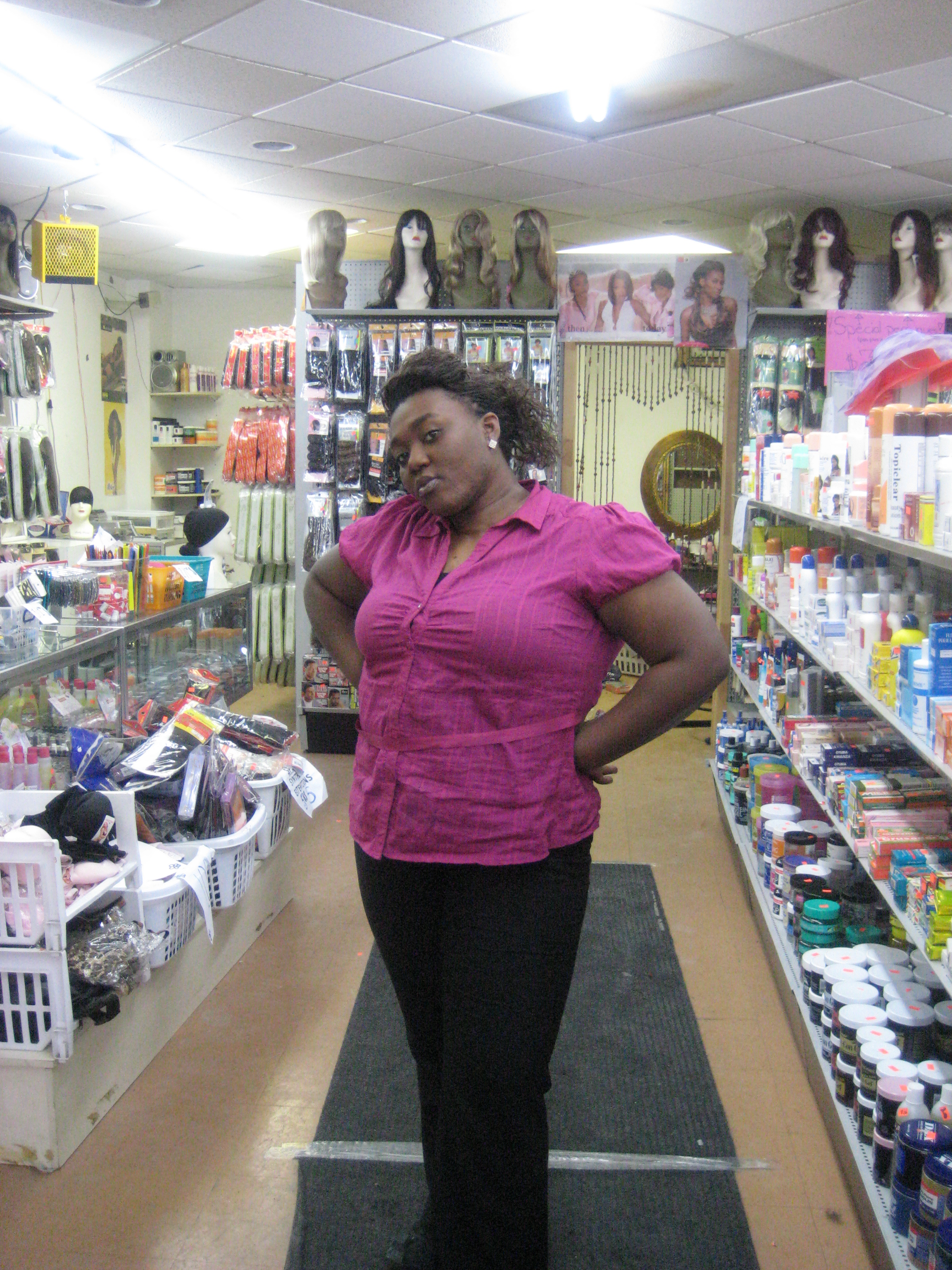
It was a beauty supply store & a hair salon. My family named it
The address comes before the name, because that’s how I knew it first: as a destination, a place I would routinely take the 139, then the 193 buses alone after school, stopping at Jarry/Pie-IX for cookies at Subway or Tim Hortons at the transfer, to arrive somewhere that was not quite home, but more formative, as it is where I spent most of my time.
It was a beauty supply store & a hair salon. My family named it
MAA TESS BEAUTY HOUSE,
after my mother Theresa.
The sweetness of a nickname held in cursive storefront letters. They were golden against a velvety purple background.
This place was run by my parents, my sisters Ama & Lissa & me; between my tender ages of ~9–17, which is to say time growing there.
From my teen perspective, the ceilings were so high. On high shelves of all four walls, wigs rested on mannequin heads in rows, a chorus of stoic companions & veiled on the blue stool to reach.
I went up & down that stool so many times I stopped noticing I was climbing.
What I noticed was the change transformation that occurred when the right wig met the right person.
Something settles into place.
I was learning that forms of beauty can be forms of masking, forms of arriving, forms of becoming.
At a quite young age I was helping women presenting individuals of all ages, sex workers, drag queens, cancer survivors find their ideal look. With experience, the extreme of their stories became mundane within our family.
Our queer clientele arrived seeking themselves in our bronze-contoured oval mirrors the way everyone does, and quietly, I would observe them find. Within this rawness & vulnerability, I was also transforming, unlearning what I had been taught to dismiss in a Christian Ghanaian household.
Some things I learned at home, I’d relearn at the store.
I didn’t have the language, but I learned through the images of lived experience, of person and the glimmer of their own reflection as they reconcile all parts of themselves.
The floor was tile when I first knew it, later, as years passed, it was renovated into a caramel-colored wood, and I remember those two weeks the store closed for renovations being one of the only “vacation” and taste of teen freedom I experienced.
And I remembered thinking the store had grown up too. It evolved as each member of the family did & so did the wedge between us, where our overworking and sacrifice became, eventually, what made it implode.
I have stared a lot at those floors.
Years of women & men in chairs, my sisters’ hands working, leaving me the ends to finish braiding.
I would stare at that floor in the particular silence of a 7 hour box braid appointment, sweeping the numerous types of hair off those floors. The smell of heating tools, the smell of the citrus conditioner I loved before a customer’s blowout.
It was in the back that we did hair.
It was filled by the sound of women chatting as they gave fine pieces of Kanekalon to my sisters, that kind of talk that happens when your hands are occupied and your guard is down.
My sister Ama, 12 years my senior, store manager & lead stylist, was slowly becoming someone the neighbourhood relied on.
I witnessed her become that.
The centering shelves that filled the store were metallic, industrial, the kind you can reposition, adjust to different heights. As the youngest, my main position was stockist, which grew, with time, to receptionist & cashier.
I learned early to maneuver those shelves, to build order from abundance or from the scarcity of our family’s tight financial patches.
Regardless, I’d make it a mission to make sure our visitors felt like we had everything!
Shampoos, conditioners, butters, oils, edge controls, & on & on. In every brand too. Weaves, synthetic to virgin, braiding extensions, ponytail attachments; the over maximalism of the black beauty care industry. We even carried the popular and lucrative skin brightening products of the time…
Something I still turn over in my conscience is how we were part of a system our Pan African upbringing rejects.
The basement held our stock. I carried boxes up those stairs more times I can count; filling shelves, taking inventory, learning the weight of things.
I went up & down those stairs so many times I stopped noticing I was climbing.
That is its own kind of knowledge, an epistemology of a tense body that has learned not to count its own labor.
My coworkers in this familial space of “child labor” were my sisters, mother & periodically my father, whose presence imposed we change the radio to pop TOP40 “to attract the widest audience.”
I was the youngest & it was in that store space I learned how to take space. To have an opinion that mattered within a collective effort towards our livelihood.
That is where I learned work ethic. That is, I think, why I push myself the way I do now, sometimes too hard. I learned resourcefulness & the sense of initiative. To speak before having to be asked to.
The way you push when you have been taught that labor & effort is love; towards self, towards family, towards sacrifices.
That store is where I learned the uses of the erotic as Audre Lorde names. In beautification as philosophy. There is a cinematic quality to the everyday performativity that black individuals invest in studying & constructing their allure.
The time, the ritual, the negotiation between self & reflection.
The sweetness of a nickname held in cursive storefront letters. They were golden against a velvety purple background.
This place was run by my parents, my sisters Ama & Lissa & me; between my tender ages of ~9–17, which is to say time growing there.
From my teen perspective, the ceilings were so high. On high shelves of all four walls, wigs rested on mannequin heads in rows, a chorus of stoic companions & veiled on the blue stool to reach.
I went up & down that stool so many times I stopped noticing I was climbing.
What I noticed was the change transformation that occurred when the right wig met the right person.
Something settles into place.
I was learning that forms of beauty can be forms of masking, forms of arriving, forms of becoming.
At a quite young age I was helping women presenting individuals of all ages, sex workers, drag queens, cancer survivors find their ideal look. With experience, the extreme of their stories became mundane within our family.
Our queer clientele arrived seeking themselves in our bronze-contoured oval mirrors the way everyone does, and quietly, I would observe them find. Within this rawness & vulnerability, I was also transforming, unlearning what I had been taught to dismiss in a Christian Ghanaian household.
Some things I learned at home, I’d relearn at the store.
I didn’t have the language, but I learned through the images of lived experience, of person and the glimmer of their own reflection as they reconcile all parts of themselves.
The floor was tile when I first knew it, later, as years passed, it was renovated into a caramel-colored wood, and I remember those two weeks the store closed for renovations being one of the only “vacation” and taste of teen freedom I experienced.
And I remembered thinking the store had grown up too. It evolved as each member of the family did & so did the wedge between us, where our overworking and sacrifice became, eventually, what made it implode.
I have stared a lot at those floors.
Years of women & men in chairs, my sisters’ hands working, leaving me the ends to finish braiding.
I would stare at that floor in the particular silence of a 7 hour box braid appointment, sweeping the numerous types of hair off those floors. The smell of heating tools, the smell of the citrus conditioner I loved before a customer’s blowout.
It was in the back that we did hair.
It was filled by the sound of women chatting as they gave fine pieces of Kanekalon to my sisters, that kind of talk that happens when your hands are occupied and your guard is down.
My sister Ama, 12 years my senior, store manager & lead stylist, was slowly becoming someone the neighbourhood relied on.
I witnessed her become that.
The centering shelves that filled the store were metallic, industrial, the kind you can reposition, adjust to different heights. As the youngest, my main position was stockist, which grew, with time, to receptionist & cashier.
I learned early to maneuver those shelves, to build order from abundance or from the scarcity of our family’s tight financial patches.
Regardless, I’d make it a mission to make sure our visitors felt like we had everything!
Shampoos, conditioners, butters, oils, edge controls, & on & on. In every brand too. Weaves, synthetic to virgin, braiding extensions, ponytail attachments; the over maximalism of the black beauty care industry. We even carried the popular and lucrative skin brightening products of the time…
Something I still turn over in my conscience is how we were part of a system our Pan African upbringing rejects.
The basement held our stock. I carried boxes up those stairs more times I can count; filling shelves, taking inventory, learning the weight of things.
I went up & down those stairs so many times I stopped noticing I was climbing.
That is its own kind of knowledge, an epistemology of a tense body that has learned not to count its own labor.
My coworkers in this familial space of “child labor” were my sisters, mother & periodically my father, whose presence imposed we change the radio to pop TOP40 “to attract the widest audience.”
I was the youngest & it was in that store space I learned how to take space. To have an opinion that mattered within a collective effort towards our livelihood.
That is where I learned work ethic. That is, I think, why I push myself the way I do now, sometimes too hard. I learned resourcefulness & the sense of initiative. To speak before having to be asked to.
The way you push when you have been taught that labor & effort is love; towards self, towards family, towards sacrifices.
That store is where I learned the uses of the erotic as Audre Lorde names. In beautification as philosophy. There is a cinematic quality to the everyday performativity that black individuals invest in studying & constructing their allure.
The time, the ritual, the negotiation between self & reflection.
.JPG)
.JPG)
Yannis Guibinga, Gabon/Canada
My grandmother’s house is preceded by a wide slope once you enter through the gates. As the hub of the familial unit, conversations and people talking is always heard from the entrance regardless of the time of day. There are several doors depending on where you want to enter the house and small dogs can be heard barking and seen running around the place.
Jonathan Labirin, Guadeloupe
Eh bien, pour moi, c’est la maison de mamie, enfin de mes grands-parents, qui ne sont plus là.
C’était au bord d’une route, donc entrée au bord d’une route, la route, une sorte de route, une route quoi. Et je me rappelais d’une haie, une haie qui délimite entre la rue donc, et la maison, une sorte de haie avec des, j’oublie comment on appelle ces arbustes-là, mais les arbustes, tu vois, un peu jaunes, rouges, des feuilles qui ont des tons jaunes, oranges, rouges, verts, j’oublie comment ça s’appelle. Et, j’me rappelle, il y a quelques arbres quand même, tu vois, qui délimitent entre le goudron là et la maison.
Ensuite, la maison en elle-même, je me rappelle, [rires] il y avait plein de trucs, pleins de bibelots, tu vois? Je ne sais pas si c’est le bon terme, elle est pleine d’objets, de photos, d’objets en porcelaine, dans la maison, c’était comme un musée hein en vrai, je me rappelle. Comme un musée, et les carreaux, c’était les tout petits carreaux jaunes et marrons un peu.
Et je me rappelle, ce truc, ça faisait vraiment un musée, pas beaucoup de lumière à l’intérieur, la radio qui joue en continu comme ça. À côté de la radio il y a un rocking chair, une berceuse là, où mon papi se posait, et ouais, le son et l’odeur?
Euhm, le son, il y a toujours un chien qui aboie, on sait pas lequel, à qui, tout ça, parce que eux ils avaient pas — enfin si papi il avait un chien, mais il était loin, donc là c’est lui, et le son des coqs qui chantent autour, donc le chant des coqs comme ça, et la radio aussi, la radio [rires], la radio de fou, et la télé aussi des fois, mais c’était plus la radio je crois.
Et l’odeur, moi je me souviens un peu de cette odeur de bananier, parce que pas loin il y a un champ de bananes, et je trouvais que ça avait une odeur un peu spéciale, et même la fameuse haie à l’entrée, elle avait une sorte d’odeur aussi tu vois, une odeur, je ne sais pas, de feuillage comme ça, c’était un peu ça.
Donc ouais, c’était vraiment ce truc où tu rentres, il y a la route, t’as la route, une route qui monte, après tu arrives, c’est en bord de route vraiment, et tu passes dans cette barrière feuillage là un peu, très petite hein, mais bon, et tu prends les escaliers, tu pénètres sur un préau, et tu rentres dans la maison.
Mais ouais, je me rappelle surtout de ce côté très musée comme je t’ai dit, des sodas, des trucs sucrés comme ça en même temps, tu vois, de mamie, [rires] elle me donnait toujours un truc bien chimique, [rires] à boire, et voilà [rires] !
C’était au bord d’une route, donc entrée au bord d’une route, la route, une sorte de route, une route quoi. Et je me rappelais d’une haie, une haie qui délimite entre la rue donc, et la maison, une sorte de haie avec des, j’oublie comment on appelle ces arbustes-là, mais les arbustes, tu vois, un peu jaunes, rouges, des feuilles qui ont des tons jaunes, oranges, rouges, verts, j’oublie comment ça s’appelle. Et, j’me rappelle, il y a quelques arbres quand même, tu vois, qui délimitent entre le goudron là et la maison.
Ensuite, la maison en elle-même, je me rappelle, [rires] il y avait plein de trucs, pleins de bibelots, tu vois? Je ne sais pas si c’est le bon terme, elle est pleine d’objets, de photos, d’objets en porcelaine, dans la maison, c’était comme un musée hein en vrai, je me rappelle. Comme un musée, et les carreaux, c’était les tout petits carreaux jaunes et marrons un peu.
Et je me rappelle, ce truc, ça faisait vraiment un musée, pas beaucoup de lumière à l’intérieur, la radio qui joue en continu comme ça. À côté de la radio il y a un rocking chair, une berceuse là, où mon papi se posait, et ouais, le son et l’odeur?
Euhm, le son, il y a toujours un chien qui aboie, on sait pas lequel, à qui, tout ça, parce que eux ils avaient pas — enfin si papi il avait un chien, mais il était loin, donc là c’est lui, et le son des coqs qui chantent autour, donc le chant des coqs comme ça, et la radio aussi, la radio [rires], la radio de fou, et la télé aussi des fois, mais c’était plus la radio je crois.
Et l’odeur, moi je me souviens un peu de cette odeur de bananier, parce que pas loin il y a un champ de bananes, et je trouvais que ça avait une odeur un peu spéciale, et même la fameuse haie à l’entrée, elle avait une sorte d’odeur aussi tu vois, une odeur, je ne sais pas, de feuillage comme ça, c’était un peu ça.
Donc ouais, c’était vraiment ce truc où tu rentres, il y a la route, t’as la route, une route qui monte, après tu arrives, c’est en bord de route vraiment, et tu passes dans cette barrière feuillage là un peu, très petite hein, mais bon, et tu prends les escaliers, tu pénètres sur un préau, et tu rentres dans la maison.
Mais ouais, je me rappelle surtout de ce côté très musée comme je t’ai dit, des sodas, des trucs sucrés comme ça en même temps, tu vois, de mamie, [rires] elle me donnait toujours un truc bien chimique, [rires] à boire, et voilà [rires] !
Well, for me, it’s my grandma’s house, my grandparents’ house, really. They’re no longer here.
It was by the side of a road, right along the roadside. A road, kind of a road, just… a road. And I remember this hedge, a hedge separating the street from the house. A sort of hedge with, I forget what those shrubs are called, but you know, those plants with yellow, red leaves, tones of yellow, orange, red, green… I can’t remember the name. And I remember there were a few trees too, marking the boundary between the asphalt and the house.
Then the house itself… [laughs] I remember there were things everywhere, all these little ornaments, you know? I don’t know if that’s the right word. It was full of objects, photographs, porcelain decorations. Honestly, it felt like a museum inside, that’s what I remember. Like a museum. And the tiles were these tiny yellow-and-brown tiles.
And I remember that feeling, it really felt like a museum. Not much light inside. The radio always playing nonstop. Next to the radio there was a rocking chair, where my grandpa used to sit.
And yeah, the sounds and the smells…
The sounds, there was always a dog barking somewhere, you never knew whose dog or who it was barking at, because they didn’t really have one. Well, actually my grandpa did have a dog, but it stayed farther away, so maybe it was him. And then the sound of roosters crowing all around, the roosters crowing like that, and the radio too, [laughs], definitely the radio, and sometimes the television as well, though I think it was mostly the radio.
And the smell… I remember this faint smell of banana trees, because there was a banana field not far away, and I thought it had this very particular scent. Even that hedge at the entrance had its own smell too, you know, a smell of leaves and greenery, something like that.
So yeah, it was really this feeling where you arrive from the road, the road climbing upward, and the house is right there on the roadside. You pass through this little leafy barrier, very small really, and you walk up the stairs onto a covered porch, and then you enter the house.
But mostly, what I remember is that museum-like feeling I told you about. And sodas, sweet things everywhere too, you know, from grandma. [laughs] She would always give me something super artificial, [laughs], some brightly colored sugary drink or something to sip, and that’s it. [laughs.]
It was by the side of a road, right along the roadside. A road, kind of a road, just… a road. And I remember this hedge, a hedge separating the street from the house. A sort of hedge with, I forget what those shrubs are called, but you know, those plants with yellow, red leaves, tones of yellow, orange, red, green… I can’t remember the name. And I remember there were a few trees too, marking the boundary between the asphalt and the house.
Then the house itself… [laughs] I remember there were things everywhere, all these little ornaments, you know? I don’t know if that’s the right word. It was full of objects, photographs, porcelain decorations. Honestly, it felt like a museum inside, that’s what I remember. Like a museum. And the tiles were these tiny yellow-and-brown tiles.
And I remember that feeling, it really felt like a museum. Not much light inside. The radio always playing nonstop. Next to the radio there was a rocking chair, where my grandpa used to sit.
And yeah, the sounds and the smells…
The sounds, there was always a dog barking somewhere, you never knew whose dog or who it was barking at, because they didn’t really have one. Well, actually my grandpa did have a dog, but it stayed farther away, so maybe it was him. And then the sound of roosters crowing all around, the roosters crowing like that, and the radio too, [laughs], definitely the radio, and sometimes the television as well, though I think it was mostly the radio.
And the smell… I remember this faint smell of banana trees, because there was a banana field not far away, and I thought it had this very particular scent. Even that hedge at the entrance had its own smell too, you know, a smell of leaves and greenery, something like that.
So yeah, it was really this feeling where you arrive from the road, the road climbing upward, and the house is right there on the roadside. You pass through this little leafy barrier, very small really, and you walk up the stairs onto a covered porch, and then you enter the house.
But mostly, what I remember is that museum-like feeling I told you about. And sodas, sweet things everywhere too, you know, from grandma. [laughs] She would always give me something super artificial, [laughs], some brightly colored sugary drink or something to sip, and that’s it. [laughs.]
Karl Obakeng Ndebele, South Africa/Zimbabwe
I think I’m grateful to my father who raised me for that. We used to go every December, and if it wasn’t December, he once had a business of importing and exporting Nike Cortez. Nike Cortez was shipped to Zimbabwe exclusively in the early 2000s, and we didn’t understand how. So he would go there and buy a bunch of Nike Cortez sneakers and come sell them in South Africa. So sometimes I would go with him on those trips. It would take a day. Like we would go today, come back tomorrow, and he would leave me at my grandmother’s house. My great-grandmother’s house. So when he would leave me at my great-grandmother’s house, which was along the way, I had friends there. I would walk around, and people, adults, would call my name and say, oh, Nimino, you’re back! And I’m like, I don’t know you, man. Those people knew me from when I was a baby growing up there. So from that feeling, at home starts there. Like on those trips where we would go every December and be there for about six weeks, four weeks, for the whole school holiday, come back, and all these kids are talking about going to Europe or going to their homeland in the Zulu land or these other tribes that we have in South Africa. And I was from Zimbabwe. And as a kid, I didn’t know that that was a touchy topic. I was telling everybody. I mean, as I got older, I was like, oh, I’m actually illegitimate. But I’m not illegitimate. I was born in South Africa. So what? I have an ID. They could never deport me. And my mom was like… And you have your ID, too. You are now citizens of this country. You’re fine. Don’t be scared. You’re safe. So yeah, that was fine. I became proud a long time ago, primarily because of those trips, because of, you know, I think I related to like a lot of people who grew up in the UK and France, places like UK and France specifically, because they have such huge diasporas from Africa. So there’s this part where it’s like I came to really still understand myself as a Zimbabwean and like love that place and know it from growing up and going there. If it wasn’t for going there often… Going to Zimbabwe allowed me to experience a side that was very different from the place I was growing up in. And when I go there, they’re surprised that I can speak all the languages fluently. And then when they see me in South Africa, they’re surprised I can speak all these languages fluently too. It’s like I’m a polyglot, for real, for real. And the last time I went to Zimbabwe was 2018 with my dad just before I left for Canada. Like I landed in South Africa and the next day I flew to Canada.
So I think it was just like a last trip where he wanted to take me [before he passed away]. I don’t know. Like if I hadn’t gone with him that last trip, that memory would have been something I would have always wanted to have. And I’m glad I have it. Like I’m glad I actually have it. This is home as well. As well, yeah.
So I think it was just like a last trip where he wanted to take me [before he passed away]. I don’t know. Like if I hadn’t gone with him that last trip, that memory would have been something I would have always wanted to have. And I’m glad I have it. Like I’m glad I actually have it. This is home as well. As well, yeah.
Inès-Aswan Abdirahman Mohamed Moussa, Djibouti/Algeria/France
En tant qu’enfant de la diaspora, c’est dur de choisir un seul lieu, entre l’Algérie, Djibouti ou la France, j’ai hésité. Je ne pensais pas que cette réponse allait être aussi difficile. J’ai à la fois l’impression que les lieux sont multiples, éclatés entre plusieurs pays, plusieurs villes, plusieurs vies, et à la fois l’impression qu’ils sont peu.
J’ai quand même décidé de décrire la maison à Saint-Étienne, en France. C’est une maison ordinaire : murs en pierre, crépi gris, volets noirs. Une fois la porte d’entrée ouverte, la première chose qui nous accueille est une odeur : celle du dabqad, un encensoir en céramique qu’on utilise à Djibouti pour parfumer la maison. Cette odeur, c’est celle qui nous relie sensoriellement à un autre chez nous.
Un tapis en rotin au sol. À gauche de la porte, une photo de mes grands-parents maternels. À droite, une photo de mes grands-parents paternels. Deux lignées qui se regardent en silence depuis le couloir d’entrée.
J’entends ma famille, il y a toujours du bruit, toujours une voix qui couvre une autre, toujours quelqu’un qui arrive ou qui repart. C’est là que toute ma famille maternelle se réunit. On est plus d’une centaine dans la ville. Cette maison, c’est notre point de gravité.
J’ai quand même décidé de décrire la maison à Saint-Étienne, en France. C’est une maison ordinaire : murs en pierre, crépi gris, volets noirs. Une fois la porte d’entrée ouverte, la première chose qui nous accueille est une odeur : celle du dabqad, un encensoir en céramique qu’on utilise à Djibouti pour parfumer la maison. Cette odeur, c’est celle qui nous relie sensoriellement à un autre chez nous.
Un tapis en rotin au sol. À gauche de la porte, une photo de mes grands-parents maternels. À droite, une photo de mes grands-parents paternels. Deux lignées qui se regardent en silence depuis le couloir d’entrée.
J’entends ma famille, il y a toujours du bruit, toujours une voix qui couvre une autre, toujours quelqu’un qui arrive ou qui repart. C’est là que toute ma famille maternelle se réunit. On est plus d’une centaine dans la ville. Cette maison, c’est notre point de gravité.
As a child of the diaspora, it’s hard to choose just one place, between Algeria, Djibouti, and France, I hesitated. I didn’t think this answer would be so difficult. At once, I feel like these places are multiple, scattered across several countries, several cities, several lives, and at the same time, I feel like there are very few of them.
Still, I decided to describe the house in Saint-Étienne, France. It’s an ordinary house: stone walls, grey rendering, black shutters. Once the front door opens, the first thing that welcomes us is a smell, the scent of the dabqad, a ceramic incense burner used in Djibouti to perfume the home. That smell is what connects us, through the senses, to another home of ours.
A woven rattan mat lies on the floor. To the left of the door, a photograph of my maternal grandparents. To the right, a photograph of my paternal grandparents. Two family lineages silently facing one another from the entrance hallway.
I hear my family, there is always noise, always one voice overlapping another, always someone arriving or leaving. This is where my entire maternal family gathers. There are more than a hundred of us in the city. This house is our center of gravity.
Still, I decided to describe the house in Saint-Étienne, France. It’s an ordinary house: stone walls, grey rendering, black shutters. Once the front door opens, the first thing that welcomes us is a smell, the scent of the dabqad, a ceramic incense burner used in Djibouti to perfume the home. That smell is what connects us, through the senses, to another home of ours.
A woven rattan mat lies on the floor. To the left of the door, a photograph of my maternal grandparents. To the right, a photograph of my paternal grandparents. Two family lineages silently facing one another from the entrance hallway.
I hear my family, there is always noise, always one voice overlapping another, always someone arriving or leaving. This is where my entire maternal family gathers. There are more than a hundred of us in the city. This house is our center of gravity.
Pascale Chroné, Martinique
J’ai pensé à plusieurs lieux parce que du côté de mes deux parents, il y en a. Mais forcément, le lieu qui me rappelle le plus de souvenirs, je dirais que c’est le Vauclin. Parce que c’est ce que j’ai le plus vu, connu, et là où j’ai le plus été. Après, au Vauclin, c’est beaucoup de lieux, parce qu’il y a des terrains qui sont construits et où ma famille habite, et il y a le terrain de ma mère, qui est propre à elle, mais que j’ai connu plus tard.
Pour moi, le Vauclin, c’est chez moi, tout autant que Fort-de-France où j’habite, sinon plus. Quand j’étais plus jeune, on allait tout le temps au Vauclin. On montait au Vauclin, mais on ne savait pas forcément où on allait; par exemple, les dîners de famille se faisaient soit chez une tatie, soit chez l’autre, vu qu’il y en a trois qui y habitent. Il y a aussi une quatrième maison qui a été construite où il y avait aussi des rassemblements. Donc ça dépendait : on disait « ah, on va chez Tatie Sonia », « ah non, on va chez Tatie Jocelyne », « ah non, on va chez Tatie Livie ». Du coup, ça, c’est côté maman.
Mais je pense aussi à Fort-de-France, où il y avait chez ma mamie paternelle. Mais pour moi, ce n’est pas pareil. Au Vauclin, on dormait des fois là-bas. On faisait les repas de famille, en fait, tous les repas de famille, Noël, les communions, les trucs comme ça, c’était toujours là. Et j’ai eu l’occasion de dormir chez plusieurs de mes taties. Je me sentais à l’aise. Pour moi, c’était chez moi, même si j’étais chez ma tatie.
Et puis le matin, tu te réveilles et tu vas chez d’autres taties, et on te dit : « va chercher ça », « viens prendre ci, ça ». C’est un peu comme si c’était notre quartier, chez les Welter. Et du coup, tous les voisins aussi, on les connaît ; ils savent que c’est la même famille.
Je me souviens encore de l’odeur de ma mamie.
Pour moi, le Vauclin, c’est chez moi, tout autant que Fort-de-France où j’habite, sinon plus. Quand j’étais plus jeune, on allait tout le temps au Vauclin. On montait au Vauclin, mais on ne savait pas forcément où on allait; par exemple, les dîners de famille se faisaient soit chez une tatie, soit chez l’autre, vu qu’il y en a trois qui y habitent. Il y a aussi une quatrième maison qui a été construite où il y avait aussi des rassemblements. Donc ça dépendait : on disait « ah, on va chez Tatie Sonia », « ah non, on va chez Tatie Jocelyne », « ah non, on va chez Tatie Livie ». Du coup, ça, c’est côté maman.
Mais je pense aussi à Fort-de-France, où il y avait chez ma mamie paternelle. Mais pour moi, ce n’est pas pareil. Au Vauclin, on dormait des fois là-bas. On faisait les repas de famille, en fait, tous les repas de famille, Noël, les communions, les trucs comme ça, c’était toujours là. Et j’ai eu l’occasion de dormir chez plusieurs de mes taties. Je me sentais à l’aise. Pour moi, c’était chez moi, même si j’étais chez ma tatie.
Et puis le matin, tu te réveilles et tu vas chez d’autres taties, et on te dit : « va chercher ça », « viens prendre ci, ça ». C’est un peu comme si c’était notre quartier, chez les Welter. Et du coup, tous les voisins aussi, on les connaît ; ils savent que c’est la même famille.
Je me souviens encore de l’odeur de ma mamie.
I thought about several places, because on both sides of my family, there are many. But naturally, the place that brings back the most memories for me would be Vauclin because it’s the place I saw the most, knew the most, and spent the most time in. Then again, in Vauclin, it’s really many places at once, because there are several family plots where relatives have built homes, and there’s also my mother’s land, which belongs to her personally, but that I came to know later on.
For me, Vauclin is home, just as much as Fort-de-France, where I live now, maybe even more. When I was younger, we were always going to Vauclin. We’d head up there without always knowing exactly where we were going. Family dinners could be at one auntie’s house or another’s, since three of them live there. There’s also a fourth house that was built later, where gatherings happened too. So it depended, someone would say, “oh, we’re going to Auntie Sonia’s,” then, “no, actually, we’re going to Auntie Jocelyne’s,” or “no, Auntie Livie’s.” So that’s my mother’s side of the family.
But I also think about Fort-de-France, where my paternal grandmother lived. Though for me, it wasn’t the same. In Vauclin, we would sometimes sleep over. That’s where all the family gatherings happened, really all of them: Christmas, communions, celebrations like that, they were always there. And I got to sleep at several of my aunties’ houses. I felt completely at ease. To me, it was home, even if technically I was staying at my auntie’s place.
And then in the morning, you’d wake up and go over to another auntie’s house, and someone would say, “go get this,” “come take that.” It was almost like the whole neighborhood belonged to us, the Welter family’s neighborhood. And all the neighbors knew us too, they knew it was all one family.
I still remember my grandmother’s scent.
For me, Vauclin is home, just as much as Fort-de-France, where I live now, maybe even more. When I was younger, we were always going to Vauclin. We’d head up there without always knowing exactly where we were going. Family dinners could be at one auntie’s house or another’s, since three of them live there. There’s also a fourth house that was built later, where gatherings happened too. So it depended, someone would say, “oh, we’re going to Auntie Sonia’s,” then, “no, actually, we’re going to Auntie Jocelyne’s,” or “no, Auntie Livie’s.” So that’s my mother’s side of the family.
But I also think about Fort-de-France, where my paternal grandmother lived. Though for me, it wasn’t the same. In Vauclin, we would sometimes sleep over. That’s where all the family gatherings happened, really all of them: Christmas, communions, celebrations like that, they were always there. And I got to sleep at several of my aunties’ houses. I felt completely at ease. To me, it was home, even if technically I was staying at my auntie’s place.
And then in the morning, you’d wake up and go over to another auntie’s house, and someone would say, “go get this,” “come take that.” It was almost like the whole neighborhood belonged to us, the Welter family’s neighborhood. And all the neighbors knew us too, they knew it was all one family.
I still remember my grandmother’s scent.
2. Who takes care of that place today? And what does “taking care” actually involve?
Inès-Aswan Abdirahman Mohamed Moussa, Djibouti/Algeria/France
Prendre soin, pour moi, ça veut dire l’habiter, mais surtout le faire vivre, le remplir de présence, de passages, de repas, de bruit. Ma mère, mon père et sa famille s’en occupent. On ne fait jamais appel à de l’aide extérieure pour prendre soin de ce lieu. Mes oncles font les travaux manuels, ce sont toujours eux qui se chargent de restaurer, de réparer ce qui casse, de rafistoler. Si ma mère a besoin d’un coup de main, c’est eux qu’elle appelle, jamais un prestataire.
C’est une grande douleur de ne plus être sur cette terre. Personnellement, payer pour des services, ça ne m’était jamais arrivé avant que je débarque au Canada. Je ne savais même pas que je savais faire si peu de choses, tellement j’ai vécu dans un monde collectif, où les compétences et le savoir-faire circulent, où on ne se pose pas la question de qui sait faire quoi parce que quelqu’un autour de toi sait toujours. Ici, j’ai découvert la solitude logistique. Et avec elle, la conscience brutale de tout ce que le collectif portait sans que je m’en rende compte. Parce qu’une maison, ça reste avant tout un bien collectif.
C’est une grande douleur de ne plus être sur cette terre. Personnellement, payer pour des services, ça ne m’était jamais arrivé avant que je débarque au Canada. Je ne savais même pas que je savais faire si peu de choses, tellement j’ai vécu dans un monde collectif, où les compétences et le savoir-faire circulent, où on ne se pose pas la question de qui sait faire quoi parce que quelqu’un autour de toi sait toujours. Ici, j’ai découvert la solitude logistique. Et avec elle, la conscience brutale de tout ce que le collectif portait sans que je m’en rende compte. Parce qu’une maison, ça reste avant tout un bien collectif.
Taking care, for me, means to inhabit it, but above all to keep it alive, to fill it with presence, with people coming and going, with meals, with noise. My mother, my father, and his family take care of it. We never bring in outside help to look after this place. My uncles handle all the manual work; they are always the ones restoring things, repairing what breaks, patching things up. If my mother needs help, they’re the ones she calls, never a contractor.
It’s a profound pain to no longer be on that land. Personally, paying for services was something I had never experienced before moving to Canada. I didn’t even realize how few things I actually knew how to do, because I had grown up in a collective world, where skills and know-how circulate freely, where nobody really asks who knows how to do what because someone around you always does. Here, I discovered logistical solitude. And with it came the brutal awareness of everything the collective had been carrying without me even noticing. Because a house, above all, remains a collective belonging.
It’s a profound pain to no longer be on that land. Personally, paying for services was something I had never experienced before moving to Canada. I didn’t even realize how few things I actually knew how to do, because I had grown up in a collective world, where skills and know-how circulate freely, where nobody really asks who knows how to do what because someone around you always does. Here, I discovered logistical solitude. And with it came the brutal awareness of everything the collective had been carrying without me even noticing. Because a house, above all, remains a collective belonging.
Jonathan Labirin, Guadeloupe
Je n’y vais plus. C’est loué à quelqu’un. Mes oncles le louent, je ne sais pas à qui par contre, un indien caraïbe. Ils ont rénové et tout repeint, changé le carrelage. Ça n’a plus rien à voir. C’est carrément mon père qui a orchestré les travaux de remise à niveau. Il m’a montré les photos, mais je n’ai même pas voulu voir en vrai parce que ça n’a rien à voir. C’est en mode murs blancs, tout ça. C’est plus comme avant.
I don’t go there anymore. It’s being rented out to someone now. My uncles rent it out, I don’t actually know to whom exactly, an Indo-Caribbean. They renovated everything, repainted it all, changed the tiles. It has nothing to do with what it used to be. It was actually my father who oversaw all the renovation work. He showed me the photos, but I didn’t even want to see it in person, because it’s nothing like before. Now it’s all white walls and everything. It’s not the same anymore.
Karl Obakeng Ndebele, South Africa/Zimbabwe
Let’s get to it.
A lot of these questions put me in family feud mode.
It all follows the same questions that I have, with the other ones as well, where it’s like, in Africa, we have our parents who were born in families. Like, our parents were born with maybe a lot of siblings. If not a lot of siblings, a lot of cousins. And those cousins might have grown up under their roof. So, it’s like your mom might have grown up with all her cousins in one house and it was their grandparents’ house or her parents’ house. Either way. My mother’s side of the family, they have two homes and when my grandparents died, my grandmother had said this house I want, it’s all yours. This one is all of your house. Like, if you’re ever to sell it, the money must split but I don’t want you all to ever sell it. But last year the house was finally sold because my uncle, my mother’s brother, moved into the house with his wife that nobody likes.
Who takes care of that place today is a complicated question. It’s not somebody who was appointed. It’s not somebody who was, you know, and it’s not out of love. It’s out of spite, but it’s not something that we planned for. And at certain times, it’s something that now makes us think a lot as Africans in the regard of how we all need lawyers. Like now that’s the whole conversation. We all need a will. We all need that. Because when you want something taken care of, it’s better when the person is appointed. Like your parents said, I want this child to look after this house because I know they will love it the way it should. This other house, I don’t really care about it. So the kid that doesn’t really care about houses will get that house. Like, you know, that’s the conversation now.
A lot of these questions put me in family feud mode.
It all follows the same questions that I have, with the other ones as well, where it’s like, in Africa, we have our parents who were born in families. Like, our parents were born with maybe a lot of siblings. If not a lot of siblings, a lot of cousins. And those cousins might have grown up under their roof. So, it’s like your mom might have grown up with all her cousins in one house and it was their grandparents’ house or her parents’ house. Either way. My mother’s side of the family, they have two homes and when my grandparents died, my grandmother had said this house I want, it’s all yours. This one is all of your house. Like, if you’re ever to sell it, the money must split but I don’t want you all to ever sell it. But last year the house was finally sold because my uncle, my mother’s brother, moved into the house with his wife that nobody likes.
Who takes care of that place today is a complicated question. It’s not somebody who was appointed. It’s not somebody who was, you know, and it’s not out of love. It’s out of spite, but it’s not something that we planned for. And at certain times, it’s something that now makes us think a lot as Africans in the regard of how we all need lawyers. Like now that’s the whole conversation. We all need a will. We all need that. Because when you want something taken care of, it’s better when the person is appointed. Like your parents said, I want this child to look after this house because I know they will love it the way it should. This other house, I don’t really care about it. So the kid that doesn’t really care about houses will get that house. Like, you know, that’s the conversation now.
Yannis Guibinga, Gabon/Canada
Several different family members take care of the place but it is primarily run by one of my aunts who had decided to remain there to take care of her mother. In many ways I think taking care of a place involves actually living in it and making the place feel like a home. Repairs, renovations and redecorations are other ways a place can be taken care of. I consider a living place to be an extension of a family as a whole, so taking care of it means taking care of the family itself.
Pascale Chroné, Martinique
Quand on y va maintenant, on est sur le terrain (celui de ma mère, au Vauclin), on coupe les herbes. Mais on n’a jamais réussi à le garder entretenu continuellement. C’est dur. Pour mes parents aussi, vu l’âge qu’ils ont maintenant. Quand ils étaient plus jeunes et en activité, ils n’ont pas vraiment pensé à ça. Ils auraient pu décider qu’ils entretiendraient, qu’ils planteraient, mais ils étaient juste concentrés sur autre chose. Donc là, pour l’instant, il y a des trucs qui sont plantés, mais pas tant. On fait un peu d’agriculture. Mais le terrain est juste là quoi. C’est chiant d’y retourner et de tout recommencer à zéro à chaque fois.
Par exemple là, pour la fête des mères, on va faire un dîner chez ma tatie qui a récemment construit. Et elle aussi, elle n’habite pas là. C’est sa maison secondaire. Elle y va juste pour entretenir la maison, parce qu’il faut entretenir. Nettoyer le jardin, ça c’est le plus gros challenge. Cueillir des plantes. Si tu n’y vas pas régulièrement, mon Dieu… tu vas te retrouver avec un travail… Ne serait-ce que dans la maison. Le plus difficile, c’est l’entretien.
Si je fais le parallèle avec la famille de mon père, ce n’est pas tabou, mais les gens ne parlent pas trop de ça : l’ancienne maison de ma mamie.
J’en parlais avec ma mère dernièrement. Moi, je lui ai dit : au prochain repas de famille, je mets les pieds dans le plat, paf, je parle de ça, parce que je sais que personne n’en parle. Personne n’en parle parce que c’est une question d’argent. C’est délicat. Mais c’est différent, parce que ma mamie a perdu son mari super jeune. Elle a quitté là où elle habitait assez tôt à cause de sa maladie; elle était diabétique. Elle ne pouvait pas rester toute seule. Ma tatie l’a prise sous son aile. Donc elle a laissé la maison depuis longtemps, elle l’a un peu abandonnée. Les gens venaient des fois nettoyer et tout ça, mais il n’y a vraiment rien eu qui a été fait. En fait, ses enfants y ont habité quand ils étaient petits, mais il n’y a pas de lien. Déjà, ils sont presque tous partis en France super tôt, il n’y a pas eu de transmission.
Moi, je sens ce manque. Pour moi, c’est super important. J’ai toujours dit ça à mes parents : peut-être que c’est dur, mais pour moi, c’est ton devoir tant que tu peux, parce que tu ne sais pas si demain tu ne seras plus là, si tu n’auras plus les moyens physiques, mentaux et financiers. Tu ne peux pas avoir un bien et puis ne pas t’en occuper. On vit trop comme si demain nous était promis et moi je trouve ça égoïste. Parce que c’est trop dur maintenant d’avoir des terres.
La maison est là depuis, abandonnée, squattée. Une fois il a même failli avoir un feu là-bas. Pour moi, c’est inconscient. C’est laxiste, je n’aime pas ça. Quand je parle de ça à mon père, je sais qu’il est un peu fâché, mais je ne suis pas le genre de personne qui va laisser ça trainer.
Mais mon père c’est aussi parce que sa condition s’est vraiment dégradée par rapport à sa vue, je pense que ça joue sur plein de choses. Au début, il faisait des rénovations. J’ai un tonton du côté de ma mère qui a même fabriqué les portes. Mais avec la vie aussi que les objectifs changent. Tu as ta santé. Tu as tes enfants. Il y a moi aussi. Tout ça, ça joue, je suis d’accord. Mais à un moment donné, il faut qu’on puisse parler de ça. Et prendre le flambeau, et demander qui est-ce qui peut ou veut contribuer.
Le plus important, je ne l’ai pas mentionné : c’est la taxe foncière. Moi, c’est pour ça que je suis fâchée. Parce que tout l’argent que tu dois à l’État, c’est nous, les héritiers, qui allons le payer. Si on détruit la maison, au moins on n’aura plus la taxe foncière. Ce sera un terrain vide, un terrain vierge. Tu vas juste payer le terrain, c’est vraiment moindre.
Par exemple là, pour la fête des mères, on va faire un dîner chez ma tatie qui a récemment construit. Et elle aussi, elle n’habite pas là. C’est sa maison secondaire. Elle y va juste pour entretenir la maison, parce qu’il faut entretenir. Nettoyer le jardin, ça c’est le plus gros challenge. Cueillir des plantes. Si tu n’y vas pas régulièrement, mon Dieu… tu vas te retrouver avec un travail… Ne serait-ce que dans la maison. Le plus difficile, c’est l’entretien.
Si je fais le parallèle avec la famille de mon père, ce n’est pas tabou, mais les gens ne parlent pas trop de ça : l’ancienne maison de ma mamie.
J’en parlais avec ma mère dernièrement. Moi, je lui ai dit : au prochain repas de famille, je mets les pieds dans le plat, paf, je parle de ça, parce que je sais que personne n’en parle. Personne n’en parle parce que c’est une question d’argent. C’est délicat. Mais c’est différent, parce que ma mamie a perdu son mari super jeune. Elle a quitté là où elle habitait assez tôt à cause de sa maladie; elle était diabétique. Elle ne pouvait pas rester toute seule. Ma tatie l’a prise sous son aile. Donc elle a laissé la maison depuis longtemps, elle l’a un peu abandonnée. Les gens venaient des fois nettoyer et tout ça, mais il n’y a vraiment rien eu qui a été fait. En fait, ses enfants y ont habité quand ils étaient petits, mais il n’y a pas de lien. Déjà, ils sont presque tous partis en France super tôt, il n’y a pas eu de transmission.
Moi, je sens ce manque. Pour moi, c’est super important. J’ai toujours dit ça à mes parents : peut-être que c’est dur, mais pour moi, c’est ton devoir tant que tu peux, parce que tu ne sais pas si demain tu ne seras plus là, si tu n’auras plus les moyens physiques, mentaux et financiers. Tu ne peux pas avoir un bien et puis ne pas t’en occuper. On vit trop comme si demain nous était promis et moi je trouve ça égoïste. Parce que c’est trop dur maintenant d’avoir des terres.
La maison est là depuis, abandonnée, squattée. Une fois il a même failli avoir un feu là-bas. Pour moi, c’est inconscient. C’est laxiste, je n’aime pas ça. Quand je parle de ça à mon père, je sais qu’il est un peu fâché, mais je ne suis pas le genre de personne qui va laisser ça trainer.
Mais mon père c’est aussi parce que sa condition s’est vraiment dégradée par rapport à sa vue, je pense que ça joue sur plein de choses. Au début, il faisait des rénovations. J’ai un tonton du côté de ma mère qui a même fabriqué les portes. Mais avec la vie aussi que les objectifs changent. Tu as ta santé. Tu as tes enfants. Il y a moi aussi. Tout ça, ça joue, je suis d’accord. Mais à un moment donné, il faut qu’on puisse parler de ça. Et prendre le flambeau, et demander qui est-ce qui peut ou veut contribuer.
Le plus important, je ne l’ai pas mentionné : c’est la taxe foncière. Moi, c’est pour ça que je suis fâchée. Parce que tout l’argent que tu dois à l’État, c’est nous, les héritiers, qui allons le payer. Si on détruit la maison, au moins on n’aura plus la taxe foncière. Ce sera un terrain vide, un terrain vierge. Tu vas juste payer le terrain, c’est vraiment moindre.
When we go there now, we’re on the land (my mother’s land, in Vauclin) cutting the grass. But we’ve never really managed to keep it continuously maintained. It’s hard. For my parents too, considering their age now. When they were younger and working, they didn’t really think about that. They could have decided to maintain it, to plant things, but they were simply focused on other things. So for now, there are a few things planted, but not much. We do a little bit of farming. But mostly, the land is just there. It’s exhausting to go back and have to start over from scratch every single time.
For example, for Mother’s Day, we’re having dinner at my auntie’s place. She recently built a house there. And she doesn’t live there either. It’s her second home. She only goes there to maintain it, because it has to be maintained. Cleaning the garden, that’s the biggest challenge. Picking plants. If you don’t go regularly, my God… the amount of work waiting for you… even just inside the house. The hardest part is the upkeep.
And when I compare it to my father’s side of the family, it’s not exactly taboo, but people don’t really talk about it: my grandmother’s old house.
I was talking about it with my mother recently. I told her: at the next family dinner, I’m just going to bring it up directly, because I know nobody talks about it. Nobody talks about it because it’s about money. It’s delicate. But it’s also different because my grandmother lost her husband very young. She left the house she lived in fairly early because of her illness; she was diabetic. She couldn’t stay alone. My aunt took her in and looked after her. So she left the house a long time ago, she more or less abandoned it. Sometimes people would come clean it and all that, but nothing was ever really done. Her children lived there when they were young, but there’s no real connection to it anymore. Most of them left for France very early on. There was no transmission.
And I feel that absence deeply. For me, it’s incredibly important. I’ve always told my parents this: maybe it’s hard, but to me it’s your responsibility, as long as you can, because you never know whether tomorrow you’ll still be here, or whether you’ll still have the physical, mental, or financial means. You can’t own something and then not take care of it. We live too much as though tomorrow is guaranteed, and to me, that feels selfish. Especially because it’s become so difficult now to own land.
The house has been there all this time, abandoned, squatted. At one point there was almost even a fire there. To me, it feels careless. Too lax. I don’t like that. When I talk about it with my father, I know it upsets him a little, but I’m not the kind of person who’s just going to let something like that drag on.
But with my father, it’s also because his condition has really worsened, especially his eyesight, and I think that affects many things. At first, he was doing renovations. One of my uncles on my mother’s side even made the doors himself. But life changes your priorities too. You have your health. Your children. There’s me too. All of that matters, I understand that. But at some point, we need to be able to talk about these things. To take up the torch, and ask who can contribute, or who wants to.
And the most important thing is the property tax. That’s actually why I’m angry. Because all the money owed to the state, it’s us, the heirs, who are going to have to pay it. If we tear the house down, then at least there won’t be property tax anymore. It would just be an empty plot of land, bare land. You’d only be paying for the land itself, and that’s much less.
For example, for Mother’s Day, we’re having dinner at my auntie’s place. She recently built a house there. And she doesn’t live there either. It’s her second home. She only goes there to maintain it, because it has to be maintained. Cleaning the garden, that’s the biggest challenge. Picking plants. If you don’t go regularly, my God… the amount of work waiting for you… even just inside the house. The hardest part is the upkeep.
And when I compare it to my father’s side of the family, it’s not exactly taboo, but people don’t really talk about it: my grandmother’s old house.
I was talking about it with my mother recently. I told her: at the next family dinner, I’m just going to bring it up directly, because I know nobody talks about it. Nobody talks about it because it’s about money. It’s delicate. But it’s also different because my grandmother lost her husband very young. She left the house she lived in fairly early because of her illness; she was diabetic. She couldn’t stay alone. My aunt took her in and looked after her. So she left the house a long time ago, she more or less abandoned it. Sometimes people would come clean it and all that, but nothing was ever really done. Her children lived there when they were young, but there’s no real connection to it anymore. Most of them left for France very early on. There was no transmission.
And I feel that absence deeply. For me, it’s incredibly important. I’ve always told my parents this: maybe it’s hard, but to me it’s your responsibility, as long as you can, because you never know whether tomorrow you’ll still be here, or whether you’ll still have the physical, mental, or financial means. You can’t own something and then not take care of it. We live too much as though tomorrow is guaranteed, and to me, that feels selfish. Especially because it’s become so difficult now to own land.
The house has been there all this time, abandoned, squatted. At one point there was almost even a fire there. To me, it feels careless. Too lax. I don’t like that. When I talk about it with my father, I know it upsets him a little, but I’m not the kind of person who’s just going to let something like that drag on.
But with my father, it’s also because his condition has really worsened, especially his eyesight, and I think that affects many things. At first, he was doing renovations. One of my uncles on my mother’s side even made the doors himself. But life changes your priorities too. You have your health. Your children. There’s me too. All of that matters, I understand that. But at some point, we need to be able to talk about these things. To take up the torch, and ask who can contribute, or who wants to.
And the most important thing is the property tax. That’s actually why I’m angry. Because all the money owed to the state, it’s us, the heirs, who are going to have to pay it. If we tear the house down, then at least there won’t be property tax anymore. It would just be an empty plot of land, bare land. You’d only be paying for the land itself, and that’s much less.
%20Large.jpeg)
3. When you think about your family’s spaces (homes, land, neighborhoods), what stories are told (visible, repeated, circulating) and which ones are missing (absences, silences, fractures, contradictions)?
Jonathan Labirin, Guadeloupe
On a une histoire là, entre guillemets, assez récente. Enfin, moi, c’est assez récemment que je suis sur le dossier.
En fait, papi avait à peu près six hectares, je ne sais pas, peut-être plus? Beaucoup de terrain à un endroit donné dans ma commune. Et moi, je m’y intéressais parce que je voulais faire quelque chose là-dessus, il n’y a pas longtemps. Je voulais, pourquoi pas, faire les démarches pour être agriculteur et développer des choses sur ce terrain-là. Mais en me renseignant, j’ai appris qu’en fait mon papa, mes tontons, ma tatie, tout ça, ils veulent vendre le terrain. Du coup ouais, ça m’a vraiment, vraiment embêté… enfin, ça m’a bien fait chier, pour dire le mot.
Et qui plus est, quand je suis allé faire une sorte de visite des lieux, parce que ça faisait longtemps que je n’y étais pas allé, dans ce grand terrain en hauteur, vraiment magnifique, je vois et je constate avec un ami qu’en fait ils ont créé un centre de tir sur le terrain de la famille, sur le terrain de mon grand-père quoi. Et moi je ne savais pas du tout, mais apparemment, ma famille, eux, ils étaient au courant. Je pense qu’ils ont donné l’autorisation à je ne sais qui pour faire ça. Mais c’était vraiment un spectacle assez horrible. Voir que non seulement le terrain est occupé, mais occupé par des balles quoi, tu entends les tirs qui claquent et tout.
Du coup, ça a vraiment été comme une fracture. Carrément, là j’en parle, mais je n’y pense même plus à ce terrain. Je me dis : vas-y, c’est mort. C’est mort pour l’instant en tout cas. Parce que voir ça sur un terrain magnifique comme ça, près de la montagne, ça crée vraiment un contraste bizarre.
C’est vraiment beaucoup, beaucoup de terrain que papi nous a laissé. Malheureusement, personne n’a voulu reprendre ça dans la famille, personne n’est intéressé. Enfin, à part moi et mes cousins, mais je pense que c’est peut-être un peu trop tard. Du coup voilà. Le divorce avec le terrain. Il nous reste un peu de terrain, mais celui-là, c’était vraiment le graal quoi.
C’est là où tu vois que la génération de mes parents ils ne sont pas du tout là. Sachant qu’en plus, vendre le terrain, ça ne leur apporte pas beaucoup, donc c’est vraiment qu’ils ne sont pas là-dessus. Ce n’est même pas qu’une histoire d’argent, j’ai l’impression qu’ils ne sont tout simplement pas intéressés par ça. Chacun est un peu de son côté, chacun a son terrain, sa maison, un peu dispatchés. Et aussi, je pense qu’il y a un vrai désintérêt pour les grands terrains comme ça, pour faire des choses. Je pense qu’ils ont des petites parcelles dans leurs jardins, des trucs comme ça, mais ça, c’était vraiment l’activité principale de mon papi, tu vois. Eux, ils ne sont pas là-dedans.
Et moi, je voulais faire quelque chose d’un peu candide, en fait. Je suis revenu en Guadeloupe, donc je me renseignais, je voyais avec mon cousin, lui aussi était chaud pour qu’on fasse un truc, plutôt sur le moyen ou long terme. Sauf que bon, quand j’ai découvert ça, j’ai lâché l’affaire, comme on dit. Assez violent, mais bon.
Mon cousin n’a pas été touché par le fait que ce soit un stand de tir sur le terrain ; il aime les armes. Mon frère et moi, on a été touchés. Un autre cousin aussi, mais lui vit en Île-de-France.
En fait, papi avait à peu près six hectares, je ne sais pas, peut-être plus? Beaucoup de terrain à un endroit donné dans ma commune. Et moi, je m’y intéressais parce que je voulais faire quelque chose là-dessus, il n’y a pas longtemps. Je voulais, pourquoi pas, faire les démarches pour être agriculteur et développer des choses sur ce terrain-là. Mais en me renseignant, j’ai appris qu’en fait mon papa, mes tontons, ma tatie, tout ça, ils veulent vendre le terrain. Du coup ouais, ça m’a vraiment, vraiment embêté… enfin, ça m’a bien fait chier, pour dire le mot.
Et qui plus est, quand je suis allé faire une sorte de visite des lieux, parce que ça faisait longtemps que je n’y étais pas allé, dans ce grand terrain en hauteur, vraiment magnifique, je vois et je constate avec un ami qu’en fait ils ont créé un centre de tir sur le terrain de la famille, sur le terrain de mon grand-père quoi. Et moi je ne savais pas du tout, mais apparemment, ma famille, eux, ils étaient au courant. Je pense qu’ils ont donné l’autorisation à je ne sais qui pour faire ça. Mais c’était vraiment un spectacle assez horrible. Voir que non seulement le terrain est occupé, mais occupé par des balles quoi, tu entends les tirs qui claquent et tout.
Du coup, ça a vraiment été comme une fracture. Carrément, là j’en parle, mais je n’y pense même plus à ce terrain. Je me dis : vas-y, c’est mort. C’est mort pour l’instant en tout cas. Parce que voir ça sur un terrain magnifique comme ça, près de la montagne, ça crée vraiment un contraste bizarre.
C’est vraiment beaucoup, beaucoup de terrain que papi nous a laissé. Malheureusement, personne n’a voulu reprendre ça dans la famille, personne n’est intéressé. Enfin, à part moi et mes cousins, mais je pense que c’est peut-être un peu trop tard. Du coup voilà. Le divorce avec le terrain. Il nous reste un peu de terrain, mais celui-là, c’était vraiment le graal quoi.
C’est là où tu vois que la génération de mes parents ils ne sont pas du tout là. Sachant qu’en plus, vendre le terrain, ça ne leur apporte pas beaucoup, donc c’est vraiment qu’ils ne sont pas là-dessus. Ce n’est même pas qu’une histoire d’argent, j’ai l’impression qu’ils ne sont tout simplement pas intéressés par ça. Chacun est un peu de son côté, chacun a son terrain, sa maison, un peu dispatchés. Et aussi, je pense qu’il y a un vrai désintérêt pour les grands terrains comme ça, pour faire des choses. Je pense qu’ils ont des petites parcelles dans leurs jardins, des trucs comme ça, mais ça, c’était vraiment l’activité principale de mon papi, tu vois. Eux, ils ne sont pas là-dedans.
Et moi, je voulais faire quelque chose d’un peu candide, en fait. Je suis revenu en Guadeloupe, donc je me renseignais, je voyais avec mon cousin, lui aussi était chaud pour qu’on fasse un truc, plutôt sur le moyen ou long terme. Sauf que bon, quand j’ai découvert ça, j’ai lâché l’affaire, comme on dit. Assez violent, mais bon.
Mon cousin n’a pas été touché par le fait que ce soit un stand de tir sur le terrain ; il aime les armes. Mon frère et moi, on a été touchés. Un autre cousin aussi, mais lui vit en Île-de-France.
We have this story that’s, in a way, fairly recent. At least for me, it’s only recently that I really became involved in it.
My grandfather had around fifteen acres of land, maybe more, in a certain part of my town. And not long ago, I started taking an interest in it because I wanted to do something with that land. I thought maybe I could go through the process of becoming a farmer and build something there. But while looking into it, I found out that my father, my uncles, my aunt, all of them, want to sell the land. And honestly, that really, really upset me… I mean, to say it plainly, it pissed me off.
And on top of that, when I went to visit the place, because I hadn’t been there in a long time, this huge stretch of land up in the hills, absolutely beautiful, I realized with a friend that they had built a shooting range there. On the family land. On my grandfather’s land. And I had absolutely no idea. But apparently my family knew about it. I think they gave permission to someone to do it. But it was honestly a pretty horrible sight. To see that the land wasn’t just occupied, but occupied by bullets, by gunfire… you hear the shots cracking through the air and everything.
That really felt like a rupture. Honestly, even now while talking about it, I barely let myself think about that land anymore. I just tell myself: it’s gone. At least for now. Because seeing something like that on such beautiful land, near the mountains, creates such a strange contrast.
My grandfather left us so, so much land. But unfortunately, nobody in the family wanted to take it on, nobody was interested. Well, apart from me and some of my cousins, but I think maybe it’s already too late. So that’s it. A kind of divorce from the land. We still have a little land left, but that one… that one was really the grail.
That’s where you realize my parents’ generation just isn’t connected to that at all. Especially since selling the land wouldn’t even bring them much money, so it’s not really about profit. I genuinely feel like they’re simply not interested in it. Everyone is off in their own corner now, each with their own plot of land, their own house, all scattered apart. And I think there’s a real disinterest in large pieces of land like that, in building something from them. They may have little garden plots or things like that, but this, this was truly my grandfather’s main activity, you know? They’re not in that world anymore.
And me, I wanted to do something with it in a kind of innocent, hopeful way. I came back to Guadeloupe, so I started asking questions, talking with my cousin. He was excited too, thinking maybe we could build something there in the medium or long term. But once I discovered all this, I let go. It was pretty brutal, honestly. But well.
My cousin wasn’t affected by the fact that it had become a shooting range, he likes guns. But my brother and I were deeply affected by it. Another cousin too, though he lives in the Paris region.
My grandfather had around fifteen acres of land, maybe more, in a certain part of my town. And not long ago, I started taking an interest in it because I wanted to do something with that land. I thought maybe I could go through the process of becoming a farmer and build something there. But while looking into it, I found out that my father, my uncles, my aunt, all of them, want to sell the land. And honestly, that really, really upset me… I mean, to say it plainly, it pissed me off.
And on top of that, when I went to visit the place, because I hadn’t been there in a long time, this huge stretch of land up in the hills, absolutely beautiful, I realized with a friend that they had built a shooting range there. On the family land. On my grandfather’s land. And I had absolutely no idea. But apparently my family knew about it. I think they gave permission to someone to do it. But it was honestly a pretty horrible sight. To see that the land wasn’t just occupied, but occupied by bullets, by gunfire… you hear the shots cracking through the air and everything.
That really felt like a rupture. Honestly, even now while talking about it, I barely let myself think about that land anymore. I just tell myself: it’s gone. At least for now. Because seeing something like that on such beautiful land, near the mountains, creates such a strange contrast.
My grandfather left us so, so much land. But unfortunately, nobody in the family wanted to take it on, nobody was interested. Well, apart from me and some of my cousins, but I think maybe it’s already too late. So that’s it. A kind of divorce from the land. We still have a little land left, but that one… that one was really the grail.
That’s where you realize my parents’ generation just isn’t connected to that at all. Especially since selling the land wouldn’t even bring them much money, so it’s not really about profit. I genuinely feel like they’re simply not interested in it. Everyone is off in their own corner now, each with their own plot of land, their own house, all scattered apart. And I think there’s a real disinterest in large pieces of land like that, in building something from them. They may have little garden plots or things like that, but this, this was truly my grandfather’s main activity, you know? They’re not in that world anymore.
And me, I wanted to do something with it in a kind of innocent, hopeful way. I came back to Guadeloupe, so I started asking questions, talking with my cousin. He was excited too, thinking maybe we could build something there in the medium or long term. But once I discovered all this, I let go. It was pretty brutal, honestly. But well.
My cousin wasn’t affected by the fact that it had become a shooting range, he likes guns. But my brother and I were deeply affected by it. Another cousin too, though he lives in the Paris region.
Karl Obakeng Ndebele, South Africa/Zimbabwe
See, that’s where I’m at. I’m at fractures.
To be honest, it’s like… I’m pretty sure we went through the same childhood: you’re not involved in family politics until one day you are. You don’t know what day that is until you’re an adult. And you turn eighteen, and you’re still not told things. Then, as soon as you start getting told things, it’s like, okay, I’m guessing I’m becoming an adult. It’s still adults talking amongst themselves while you’re sitting there. They’re not saying, “hey, chime in on this.” But now they’re speaking more freely about their sister. Like, I always knew there was something with your sister, but now I just heard the full story! You know what I mean? So it’s like, when you were growing up, you loved your aunt. You saw your aunt every now and again. But now you kind of see the fractures between your mom and her sister’s relationship. You now see the fractures between your mom and her brother’s relationship, and stuff like that. So yeah, I think it’s something that came now that I’m an adult. Now I’m communicated with.
They don’t always like my responses. I’m very much like, no, that’s not going to happen. Whereas they want to be more… what’s that word? Diplomatic. Like, “we’re still family. Family always comes first.” And it’s like, yeah, but this family’s not treating you like family right now... So, you know, now we’ve read all these things about toxic relationships and toxic ties, so we’re like, “no, that’s a toxic tie.” And they’re like, “oh, but it’s my brother.” And we’re like, “yeah, he’s a toxic brother!” So now we’re chiming in, and they’re like, “damn, these kids ain’t ready for this conversation.”
But anyways, I think now it’s conversations. It’s inclusion, but separation at the same time. Like I said, you’re not being directly told. You’re just sitting in the room, and they speak freely while you’re there. And sometimes you’ll be called and told what’s actually happening, especially with my mom now as a widow. She speaks to us a lot more because her husband is gone. So it’s like, you’re included much more than before.
Let’s say the information gets passed down once you’re of age. There comes a point in your growth where they say, okay, you’re there now. Or we’ll train you to get there.
But then, when it comes to who inherits property, it’s still something where the decisions have already been made. You’re just being told. So it’s not like you’re making decisions. But you’re now hearing about how the decisions came to be. Like why your uncle is the one staying at your grandmother’s house. You kind of come to find out that, oh, he works around there. He never really left the village. Everybody else left. He stayed. Stuff like that.
So it gets passed down. But you also have to read into things a lot. There’s a lot of reading between the lines. I like to think of it as your intuitiveness being trained. Like, we’re not going to tell you everything, but read between the lines. Because there’s a part where you also need to become intuitive enough to handle these sensitive topics that come with family, with family relationships, with financial family relationships.
I think the pieces that are missing are the stories of how things came into ownership in the first place. It needs nuance, but that absence is a sign in itself. Those stories are missing. Some of them are really lovely. Some of them, you have to dig for, ask questions about. Some are painful. Some are fractured even among the people you would expect to know. Some people only have fragments of the story, not the whole thing.
And it turns out that sometimes you’re not getting the full story because people want it that way. Because of our oral tradition, things do get lost. It’s like, “I’ll tell you a bit of it, but you’ll find out the rest when I die.” The story finishes another time.
Because even with my grandparents, I don’t know how they came to own their village homes. On my father’s side, my grandfather’s land is beautiful, truly beautiful. It’s on a mountain, surrounded by mountains, with a river around it too. It’s stunning. There are no close neighbors, everyone lives really far apart. And I keep wondering: how did this man ever come to claim this mountain?
The story is there in the land itself. Everyone before them is buried there. Their parents are buried on that land. So it’s like, oh, this story started long before them. But how did those first ones even come to own it? That’s the part I want to know.
It’s gone so far back now that the people still alive don’t know anymore. I’ve asked the question. But the people left now don’t know. So that happens too.
To be honest, it’s like… I’m pretty sure we went through the same childhood: you’re not involved in family politics until one day you are. You don’t know what day that is until you’re an adult. And you turn eighteen, and you’re still not told things. Then, as soon as you start getting told things, it’s like, okay, I’m guessing I’m becoming an adult. It’s still adults talking amongst themselves while you’re sitting there. They’re not saying, “hey, chime in on this.” But now they’re speaking more freely about their sister. Like, I always knew there was something with your sister, but now I just heard the full story! You know what I mean? So it’s like, when you were growing up, you loved your aunt. You saw your aunt every now and again. But now you kind of see the fractures between your mom and her sister’s relationship. You now see the fractures between your mom and her brother’s relationship, and stuff like that. So yeah, I think it’s something that came now that I’m an adult. Now I’m communicated with.
They don’t always like my responses. I’m very much like, no, that’s not going to happen. Whereas they want to be more… what’s that word? Diplomatic. Like, “we’re still family. Family always comes first.” And it’s like, yeah, but this family’s not treating you like family right now... So, you know, now we’ve read all these things about toxic relationships and toxic ties, so we’re like, “no, that’s a toxic tie.” And they’re like, “oh, but it’s my brother.” And we’re like, “yeah, he’s a toxic brother!” So now we’re chiming in, and they’re like, “damn, these kids ain’t ready for this conversation.”
But anyways, I think now it’s conversations. It’s inclusion, but separation at the same time. Like I said, you’re not being directly told. You’re just sitting in the room, and they speak freely while you’re there. And sometimes you’ll be called and told what’s actually happening, especially with my mom now as a widow. She speaks to us a lot more because her husband is gone. So it’s like, you’re included much more than before.
Let’s say the information gets passed down once you’re of age. There comes a point in your growth where they say, okay, you’re there now. Or we’ll train you to get there.
But then, when it comes to who inherits property, it’s still something where the decisions have already been made. You’re just being told. So it’s not like you’re making decisions. But you’re now hearing about how the decisions came to be. Like why your uncle is the one staying at your grandmother’s house. You kind of come to find out that, oh, he works around there. He never really left the village. Everybody else left. He stayed. Stuff like that.
So it gets passed down. But you also have to read into things a lot. There’s a lot of reading between the lines. I like to think of it as your intuitiveness being trained. Like, we’re not going to tell you everything, but read between the lines. Because there’s a part where you also need to become intuitive enough to handle these sensitive topics that come with family, with family relationships, with financial family relationships.
I think the pieces that are missing are the stories of how things came into ownership in the first place. It needs nuance, but that absence is a sign in itself. Those stories are missing. Some of them are really lovely. Some of them, you have to dig for, ask questions about. Some are painful. Some are fractured even among the people you would expect to know. Some people only have fragments of the story, not the whole thing.
And it turns out that sometimes you’re not getting the full story because people want it that way. Because of our oral tradition, things do get lost. It’s like, “I’ll tell you a bit of it, but you’ll find out the rest when I die.” The story finishes another time.
Because even with my grandparents, I don’t know how they came to own their village homes. On my father’s side, my grandfather’s land is beautiful, truly beautiful. It’s on a mountain, surrounded by mountains, with a river around it too. It’s stunning. There are no close neighbors, everyone lives really far apart. And I keep wondering: how did this man ever come to claim this mountain?
The story is there in the land itself. Everyone before them is buried there. Their parents are buried on that land. So it’s like, oh, this story started long before them. But how did those first ones even come to own it? That’s the part I want to know.
It’s gone so far back now that the people still alive don’t know anymore. I’ve asked the question. But the people left now don’t know. So that happens too.
Inès-Aswan Abdirahman Mohamed Moussa, Djibouti/Algeria/France
La colonisation est notre grande tragédie et quand je parle d’espace, de territoire, d’architecture familiale, il est important pour moi de les analyser depuis cette fracture. La colonisation a déterminé où ma famille a pu vivre, comment elle a habité, ce qu’elle a eu le droit de construire ou non. Elle a façonné notre rapport à l’espace même - l’idée qu’un lieu peut toujours nous être retiré, que rien de ce qu’on bâtit n’est garanti.
Ma mère est née et a habité dans cette ville, Saint-Étienne - d’abord dans les bidonvilles pour Français musulmans d’Algérie, qui ont été incendiés pour les détruire dans les années 80. Puis dans des cités HLM, construites pour reloger ceux qu’on avait déplacés, et qui ont été à leur tour démolies dans les années 2000. À chaque génération, le territoire que ma famille a choisi se dérobe.
Les histoires qu’on raconte chez nous sont celles du quotidien et du futur, on est là, on tient, on se retrouve. Mais les silences sont immenses : on ne parle pas de ce qu’on a perdu. Ces mémoires-là n’ont pas de murs pour s’accrocher.
Pour l’instant, seule la maison décrite plus haut reste la trace visible de ma famille sur le territoire, le seul lieu qui n’a pas encore été détruit.
Ma mère est née et a habité dans cette ville, Saint-Étienne - d’abord dans les bidonvilles pour Français musulmans d’Algérie, qui ont été incendiés pour les détruire dans les années 80. Puis dans des cités HLM, construites pour reloger ceux qu’on avait déplacés, et qui ont été à leur tour démolies dans les années 2000. À chaque génération, le territoire que ma famille a choisi se dérobe.
Les histoires qu’on raconte chez nous sont celles du quotidien et du futur, on est là, on tient, on se retrouve. Mais les silences sont immenses : on ne parle pas de ce qu’on a perdu. Ces mémoires-là n’ont pas de murs pour s’accrocher.
Pour l’instant, seule la maison décrite plus haut reste la trace visible de ma famille sur le territoire, le seul lieu qui n’a pas encore été détruit.
Colonization is our great tragedy, and when I speak about space, territory, or family architecture, it is important for me to understand them through that fracture. Colonization determined where my family was allowed to live, how they inhabited space, what they were permitted to build or not build. It shaped our very relationship to space itself, the idea that a place can always be taken away from us, that nothing we build is ever truly guaranteed.
My mother was born and raised in this city, Saint-Étienne, first in the shantytowns built for “French Muslims from Algeria,” which were burned down in the 1980s in order to erase them. Then in public housing estates, built to rehouse those who had already been displaced, and which were themselves demolished in the 2000s. With each generation, the territory my family chose slips away.
The stories we tell at home are stories of everyday life and of the future: we are here, we endure, we come together. But the silences are immense. We do not speak about what we lost. Those memories have no walls left to cling to.
For now, the house I described earlier remains the only visible trace of my family on this territory, the only place that has not yet been destroyed.
My mother was born and raised in this city, Saint-Étienne, first in the shantytowns built for “French Muslims from Algeria,” which were burned down in the 1980s in order to erase them. Then in public housing estates, built to rehouse those who had already been displaced, and which were themselves demolished in the 2000s. With each generation, the territory my family chose slips away.
The stories we tell at home are stories of everyday life and of the future: we are here, we endure, we come together. But the silences are immense. We do not speak about what we lost. Those memories have no walls left to cling to.
For now, the house I described earlier remains the only visible trace of my family on this territory, the only place that has not yet been destroyed.
Yannis Guibinga, Gabon/Canada
Stories of community and togetherness are the ones that are told the most. My family is one that has always been very united and the act of getting together often happens at my grandmother’s house for birthdays, holidays and other special moments. Even with the absence of many family members who live in other places in the world, we are still able to remain close thanks to technology and to remain connected with the people and places back at home.
Pascale Chroné, Martinique
Malgré le fait que mon grand-père ait anticipé les choses, il y a quand même eu des frictions.
La friction, elle a surtout eu lieu entre les jumeaux. Mes grands-parents ont eu des jumeaux, une fille et un garçon. L’un des jumeaux a dit qu’il y avait eu des magouilles, qu’à un moment donné sa sœur avait pris sur son terrain une partie des terres au Vauclin, et qu’ils ne lui avaient rien dit. Qu’ils avaient menti. Et depuis ce jour-là, il est fâché.
Et ça part d’une histoire qui est drôle : un cocotier. Depuis ce jour-là, on l’appelle “le cocotier de la discorde”. Parce que le cocotier, apparemment, était sur le terrain de ma tatie, mais mon tonton dit que non, qu’il était sur son terrain et que c’est elle qui a pris le cocotier.
La femme de ce tonton est aussi fâchée parce qu’elle avait voulu demander à mon papi, son beau-père, des terrains pour ses enfants. Mon papi a dit non, car il estimait que ses enfants n’étaient pas en âge de réclamer quoi que ce soit, et ils s’étaient fâchés.
Sinon, les autres, il y a quand même une bonne entente. Ils s’entendent bien, ils essayent aussi de s’aider sur les terrains.
Ma mamie me disait que quand mon papi était plus jeune, lui, il a toujours voulu avoir sa maison, construire sur son terrain. Même quand il a vu ma mamie pour la première fois, c’était déjà clair pour lui.
Il a vu ma mamie au marché. Elle est de Josseaud, à Rivière-Pilote, donc elle allait rarement en ville. Elle descendait avec son père. Il l’a vue, il est allé directement voir le et il lui a dit : « Je suis intéressé par votre fille. J’ai des terrains, je peux construire la maison comme ça je pourrai habiter avec elle. »
Il mettait de l’argent de côté pour acheter une brique à la fois. Et quand il a eu suffisamment de briques, il a construit sa maison. C’est incroyable. Ça, c’est vraiment partir de rien. Mon papi n’avait rien. Il habitait au Vauclin, mais comme il était très malade petit, sa maman l’avait envoyé à Fort-de-France chez une famille. Je crois que son père était mort. Il est parti de rien. Il a commencé à faire des stages. Il a commencé à s’intéresser à la maçonnerie. Il regardait comment les gens géraient l’argent. Et il s’est dit : « Ah non, j’ai envie de faire ça. »
Il a fait les choses petit à petit. Et il montait petit à petit. Il a acheté, puis s’est fait offrir plusieurs terrains. Au Vauclin, au Diamant, à Josseaud, à Fort-de-France. Et puis il y est arrivé.
Je me dis : c’est incroyable. C’était un homme capable. Marcien Welter.
La friction, elle a surtout eu lieu entre les jumeaux. Mes grands-parents ont eu des jumeaux, une fille et un garçon. L’un des jumeaux a dit qu’il y avait eu des magouilles, qu’à un moment donné sa sœur avait pris sur son terrain une partie des terres au Vauclin, et qu’ils ne lui avaient rien dit. Qu’ils avaient menti. Et depuis ce jour-là, il est fâché.
Et ça part d’une histoire qui est drôle : un cocotier. Depuis ce jour-là, on l’appelle “le cocotier de la discorde”. Parce que le cocotier, apparemment, était sur le terrain de ma tatie, mais mon tonton dit que non, qu’il était sur son terrain et que c’est elle qui a pris le cocotier.
La femme de ce tonton est aussi fâchée parce qu’elle avait voulu demander à mon papi, son beau-père, des terrains pour ses enfants. Mon papi a dit non, car il estimait que ses enfants n’étaient pas en âge de réclamer quoi que ce soit, et ils s’étaient fâchés.
Sinon, les autres, il y a quand même une bonne entente. Ils s’entendent bien, ils essayent aussi de s’aider sur les terrains.
Ma mamie me disait que quand mon papi était plus jeune, lui, il a toujours voulu avoir sa maison, construire sur son terrain. Même quand il a vu ma mamie pour la première fois, c’était déjà clair pour lui.
Il a vu ma mamie au marché. Elle est de Josseaud, à Rivière-Pilote, donc elle allait rarement en ville. Elle descendait avec son père. Il l’a vue, il est allé directement voir le et il lui a dit : « Je suis intéressé par votre fille. J’ai des terrains, je peux construire la maison comme ça je pourrai habiter avec elle. »
Il mettait de l’argent de côté pour acheter une brique à la fois. Et quand il a eu suffisamment de briques, il a construit sa maison. C’est incroyable. Ça, c’est vraiment partir de rien. Mon papi n’avait rien. Il habitait au Vauclin, mais comme il était très malade petit, sa maman l’avait envoyé à Fort-de-France chez une famille. Je crois que son père était mort. Il est parti de rien. Il a commencé à faire des stages. Il a commencé à s’intéresser à la maçonnerie. Il regardait comment les gens géraient l’argent. Et il s’est dit : « Ah non, j’ai envie de faire ça. »
Il a fait les choses petit à petit. Et il montait petit à petit. Il a acheté, puis s’est fait offrir plusieurs terrains. Au Vauclin, au Diamant, à Josseaud, à Fort-de-France. Et puis il y est arrivé.
Je me dis : c’est incroyable. C’était un homme capable. Marcien Welter.
Even though my grandfather had tried to anticipate things, there were still frictions.
Most of it happened between the twins. My grandparents had twins, a girl and a boy. One of the twins said there had been some shady dealings, that at some point his sister had taken part of the land in Vauclin that belonged to him, and that nobody had told him. That they had lied. And since that day, he’s been angry.
And it all comes from a story that’s almost funny: a coconut tree. Since then, we call it “the coconut tree of discord.” Because apparently the coconut tree was on my auntie’s land, but my uncle says no, that it was on his land, and that she’s the one who took the tree.
My uncle’s wife is also upset because she had wanted to ask my grandfather, her father-in-law, for land for her children. My grandfather said no, because he felt the children were not old enough to be claiming anything yet, and they took offense to that.
Other than that, though, the rest of the family gets along fairly well. They have a good understanding between them, and they try to help one another with the land.
My grandmother used to tell me that when my grandfather was younger, he had always dreamed of having his own house, of building on his own land. Even the very first time he saw my grandmother, it was already clear in his mind.
He saw her at the market. She was from Josseaud, in Rivière-Pilote, so she rarely came into town. She would come down with her father. He saw her, went straight to him, and told him: “I’m interested in your daughter. I have land, I can build a house so we can live together.”
He would save money to buy one brick at a time. And once he had enough bricks, he built his house. It’s incredible. That’s truly starting from nothing. My grandfather had nothing. He lived in Vauclin, but because he had been very sick as a child, his mother had sent him to Fort-de-France to stay with another family. I think his father had died. He started from absolutely nothing. He began doing apprenticeships. He became interested in masonry. He watched how people managed money, and he told himself: “This is what I want to do.”
He built things little by little. And he rose little by little. He bought land, and later was also given several plots, in Vauclin, Diamant, Josseaud, Fort-de-France. And in the end, he made it.
I think to myself: it’s incredible. He was a capable man. Marcien Welter.
Most of it happened between the twins. My grandparents had twins, a girl and a boy. One of the twins said there had been some shady dealings, that at some point his sister had taken part of the land in Vauclin that belonged to him, and that nobody had told him. That they had lied. And since that day, he’s been angry.
And it all comes from a story that’s almost funny: a coconut tree. Since then, we call it “the coconut tree of discord.” Because apparently the coconut tree was on my auntie’s land, but my uncle says no, that it was on his land, and that she’s the one who took the tree.
My uncle’s wife is also upset because she had wanted to ask my grandfather, her father-in-law, for land for her children. My grandfather said no, because he felt the children were not old enough to be claiming anything yet, and they took offense to that.
Other than that, though, the rest of the family gets along fairly well. They have a good understanding between them, and they try to help one another with the land.
My grandmother used to tell me that when my grandfather was younger, he had always dreamed of having his own house, of building on his own land. Even the very first time he saw my grandmother, it was already clear in his mind.
He saw her at the market. She was from Josseaud, in Rivière-Pilote, so she rarely came into town. She would come down with her father. He saw her, went straight to him, and told him: “I’m interested in your daughter. I have land, I can build a house so we can live together.”
He would save money to buy one brick at a time. And once he had enough bricks, he built his house. It’s incredible. That’s truly starting from nothing. My grandfather had nothing. He lived in Vauclin, but because he had been very sick as a child, his mother had sent him to Fort-de-France to stay with another family. I think his father had died. He started from absolutely nothing. He began doing apprenticeships. He became interested in masonry. He watched how people managed money, and he told himself: “This is what I want to do.”
He built things little by little. And he rose little by little. He bought land, and later was also given several plots, in Vauclin, Diamant, Josseaud, Fort-de-France. And in the end, he made it.
I think to myself: it’s incredible. He was a capable man. Marcien Welter.
Jonathan Labirin, Guadeloupe
On a une histoire là, entre guillemets, assez récente. Enfin, moi, c’est assez récemment que je suis sur le dossier.
En fait, papi avait à peu près six hectares, je ne sais pas, peut-être plus? Beaucoup de terrain à un endroit donné dans ma commune. Et moi, je m’y intéressais parce que je voulais faire quelque chose là-dessus, il n’y a pas longtemps. Je voulais, pourquoi pas, faire les démarches pour être agriculteur et développer des choses sur ce terrain-là. Mais en me renseignant, j’ai appris qu’en fait mon papa, mes tontons, ma tatie, tout ça, ils veulent vendre le terrain. Du coup ouais, ça m’a vraiment, vraiment embêté… enfin, ça m’a bien fait chier, pour dire le mot.
Et qui plus est, quand je suis allé faire une sorte de visite des lieux, parce que ça faisait longtemps que je n’y étais pas allé, dans ce grand terrain en hauteur, vraiment magnifique, je vois et je constate avec un ami qu’en fait ils ont créé un centre de tir sur le terrain de la famille, sur le terrain de mon grand-père quoi. Et moi je ne savais pas du tout, mais apparemment, ma famille, eux, ils étaient au courant. Je pense qu’ils ont donné l’autorisation à je ne sais qui pour faire ça. Mais c’était vraiment un spectacle assez horrible. Voir que non seulement le terrain est occupé, mais occupé par des balles quoi, tu entends les tirs qui claquent et tout.
Du coup, ça a vraiment été comme une fracture. Carrément, là j’en parle, mais je n’y pense même plus à ce terrain. Je me dis : vas-y, c’est mort. C’est mort pour l’instant en tout cas. Parce que voir ça sur un terrain magnifique comme ça, près de la montagne, ça crée vraiment un contraste bizarre.
C’est vraiment beaucoup, beaucoup de terrain que papi nous a laissé. Malheureusement, personne n’a voulu reprendre ça dans la famille, personne n’est intéressé. Enfin, à part moi et mes cousins, mais je pense que c’est peut-être un peu trop tard. Du coup voilà. Le divorce avec le terrain. Il nous reste un peu de terrain, mais celui-là, c’était vraiment le graal quoi.
C’est là où tu vois que la génération de mes parents ils ne sont pas du tout là. Sachant qu’en plus, vendre le terrain, ça ne leur apporte pas beaucoup, donc c’est vraiment qu’ils ne sont pas là-dessus. Ce n’est même pas qu’une histoire d’argent, j’ai l’impression qu’ils ne sont tout simplement pas intéressés par ça. Chacun est un peu de son côté, chacun a son terrain, sa maison, un peu dispatchés. Et aussi, je pense qu’il y a un vrai désintérêt pour les grands terrains comme ça, pour faire des choses. Je pense qu’ils ont des petites parcelles dans leurs jardins, des trucs comme ça, mais ça, c’était vraiment l’activité principale de mon papi, tu vois. Eux, ils ne sont pas là-dedans.
Et moi, je voulais faire quelque chose d’un peu candide, en fait. Je suis revenu en Guadeloupe, donc je me renseignais, je voyais avec mon cousin, lui aussi était chaud pour qu’on fasse un truc, plutôt sur le moyen ou long terme. Sauf que bon, quand j’ai découvert ça, j’ai lâché l’affaire, comme on dit. Assez violent, mais bon.
Mon cousin n’a pas été touché par le fait que ce soit un stand de tir sur le terrain ; il aime les armes. Mon frère et moi, on a été touchés. Un autre cousin aussi, mais lui vit en Île-de-France.
En fait, papi avait à peu près six hectares, je ne sais pas, peut-être plus? Beaucoup de terrain à un endroit donné dans ma commune. Et moi, je m’y intéressais parce que je voulais faire quelque chose là-dessus, il n’y a pas longtemps. Je voulais, pourquoi pas, faire les démarches pour être agriculteur et développer des choses sur ce terrain-là. Mais en me renseignant, j’ai appris qu’en fait mon papa, mes tontons, ma tatie, tout ça, ils veulent vendre le terrain. Du coup ouais, ça m’a vraiment, vraiment embêté… enfin, ça m’a bien fait chier, pour dire le mot.
Et qui plus est, quand je suis allé faire une sorte de visite des lieux, parce que ça faisait longtemps que je n’y étais pas allé, dans ce grand terrain en hauteur, vraiment magnifique, je vois et je constate avec un ami qu’en fait ils ont créé un centre de tir sur le terrain de la famille, sur le terrain de mon grand-père quoi. Et moi je ne savais pas du tout, mais apparemment, ma famille, eux, ils étaient au courant. Je pense qu’ils ont donné l’autorisation à je ne sais qui pour faire ça. Mais c’était vraiment un spectacle assez horrible. Voir que non seulement le terrain est occupé, mais occupé par des balles quoi, tu entends les tirs qui claquent et tout.
Du coup, ça a vraiment été comme une fracture. Carrément, là j’en parle, mais je n’y pense même plus à ce terrain. Je me dis : vas-y, c’est mort. C’est mort pour l’instant en tout cas. Parce que voir ça sur un terrain magnifique comme ça, près de la montagne, ça crée vraiment un contraste bizarre.
C’est vraiment beaucoup, beaucoup de terrain que papi nous a laissé. Malheureusement, personne n’a voulu reprendre ça dans la famille, personne n’est intéressé. Enfin, à part moi et mes cousins, mais je pense que c’est peut-être un peu trop tard. Du coup voilà. Le divorce avec le terrain. Il nous reste un peu de terrain, mais celui-là, c’était vraiment le graal quoi.
C’est là où tu vois que la génération de mes parents ils ne sont pas du tout là. Sachant qu’en plus, vendre le terrain, ça ne leur apporte pas beaucoup, donc c’est vraiment qu’ils ne sont pas là-dessus. Ce n’est même pas qu’une histoire d’argent, j’ai l’impression qu’ils ne sont tout simplement pas intéressés par ça. Chacun est un peu de son côté, chacun a son terrain, sa maison, un peu dispatchés. Et aussi, je pense qu’il y a un vrai désintérêt pour les grands terrains comme ça, pour faire des choses. Je pense qu’ils ont des petites parcelles dans leurs jardins, des trucs comme ça, mais ça, c’était vraiment l’activité principale de mon papi, tu vois. Eux, ils ne sont pas là-dedans.
Et moi, je voulais faire quelque chose d’un peu candide, en fait. Je suis revenu en Guadeloupe, donc je me renseignais, je voyais avec mon cousin, lui aussi était chaud pour qu’on fasse un truc, plutôt sur le moyen ou long terme. Sauf que bon, quand j’ai découvert ça, j’ai lâché l’affaire, comme on dit. Assez violent, mais bon.
Mon cousin n’a pas été touché par le fait que ce soit un stand de tir sur le terrain ; il aime les armes. Mon frère et moi, on a été touchés. Un autre cousin aussi, mais lui vit en Île-de-France.
We have this story that’s, in a way, fairly recent. At least for me, it’s only recently that I really became involved in it.
My grandfather had around fifteen acres of land, maybe more, in a certain part of my town. And not long ago, I started taking an interest in it because I wanted to do something with that land. I thought maybe I could go through the process of becoming a farmer and build something there. But while looking into it, I found out that my father, my uncles, my aunt, all of them, want to sell the land. And honestly, that really, really upset me… I mean, to say it plainly, it pissed me off.
And on top of that, when I went to visit the place, because I hadn’t been there in a long time, this huge stretch of land up in the hills, absolutely beautiful, I realized with a friend that they had built a shooting range there. On the family land. On my grandfather’s land. And I had absolutely no idea. But apparently my family knew about it. I think they gave permission to someone to do it. But it was honestly a pretty horrible sight. To see that the land wasn’t just occupied, but occupied by bullets, by gunfire… you hear the shots cracking through the air and everything.
That really felt like a rupture. Honestly, even now while talking about it, I barely let myself think about that land anymore. I just tell myself: it’s gone. At least for now. Because seeing something like that on such beautiful land, near the mountains, creates such a strange contrast.
My grandfather left us so, so much land. But unfortunately, nobody in the family wanted to take it on, nobody was interested. Well, apart from me and some of my cousins, but I think maybe it’s already too late. So that’s it. A kind of divorce from the land. We still have a little land left, but that one… that one was really the grail.
That’s where you realize my parents’ generation just isn’t connected to that at all. Especially since selling the land wouldn’t even bring them much money, so it’s not really about profit. I genuinely feel like they’re simply not interested in it. Everyone is off in their own corner now, each with their own plot of land, their own house, all scattered apart. And I think there’s a real disinterest in large pieces of land like that, in building something from them. They may have little garden plots or things like that, but this, this was truly my grandfather’s main activity, you know? They’re not in that world anymore.
And me, I wanted to do something with it in a kind of innocent, hopeful way. I came back to Guadeloupe, so I started asking questions, talking with my cousin. He was excited too, thinking maybe we could build something there in the medium or long term. But once I discovered all this, I let go. It was pretty brutal, honestly. But well.
My cousin wasn’t affected by the fact that it had become a shooting range, he likes guns. But my brother and I were deeply affected by it. Another cousin too, though he lives in the Paris region.
My grandfather had around fifteen acres of land, maybe more, in a certain part of my town. And not long ago, I started taking an interest in it because I wanted to do something with that land. I thought maybe I could go through the process of becoming a farmer and build something there. But while looking into it, I found out that my father, my uncles, my aunt, all of them, want to sell the land. And honestly, that really, really upset me… I mean, to say it plainly, it pissed me off.
And on top of that, when I went to visit the place, because I hadn’t been there in a long time, this huge stretch of land up in the hills, absolutely beautiful, I realized with a friend that they had built a shooting range there. On the family land. On my grandfather’s land. And I had absolutely no idea. But apparently my family knew about it. I think they gave permission to someone to do it. But it was honestly a pretty horrible sight. To see that the land wasn’t just occupied, but occupied by bullets, by gunfire… you hear the shots cracking through the air and everything.
That really felt like a rupture. Honestly, even now while talking about it, I barely let myself think about that land anymore. I just tell myself: it’s gone. At least for now. Because seeing something like that on such beautiful land, near the mountains, creates such a strange contrast.
My grandfather left us so, so much land. But unfortunately, nobody in the family wanted to take it on, nobody was interested. Well, apart from me and some of my cousins, but I think maybe it’s already too late. So that’s it. A kind of divorce from the land. We still have a little land left, but that one… that one was really the grail.
That’s where you realize my parents’ generation just isn’t connected to that at all. Especially since selling the land wouldn’t even bring them much money, so it’s not really about profit. I genuinely feel like they’re simply not interested in it. Everyone is off in their own corner now, each with their own plot of land, their own house, all scattered apart. And I think there’s a real disinterest in large pieces of land like that, in building something from them. They may have little garden plots or things like that, but this, this was truly my grandfather’s main activity, you know? They’re not in that world anymore.
And me, I wanted to do something with it in a kind of innocent, hopeful way. I came back to Guadeloupe, so I started asking questions, talking with my cousin. He was excited too, thinking maybe we could build something there in the medium or long term. But once I discovered all this, I let go. It was pretty brutal, honestly. But well.
My cousin wasn’t affected by the fact that it had become a shooting range, he likes guns. But my brother and I were deeply affected by it. Another cousin too, though he lives in the Paris region.
%20Large.jpeg)
4. What have you inherited (materially or immaterially) from your family, and how do you relate to it today?
Jonathan Labirin, Guadeloupe
Je préfère me rattacher à ce qu’ils nous ont laisser en termes de valeurs, le rapport à la terre, un mode de vie simple; ils allaient vendre leurs fruits et légumes sur le marché. Le style vestimentaire de papi, la façon dont Mamie agençait tous ses bibelots, photos, porcelaines; je garde ça avec moi.
Papi.
Bien large, le costume.
Il aimait porter de vieilles chemises tachetées par les bananes.
Avec une casquette qu’il portait haut sur la tête.
Toujours une casquette. Qu’il pose à peine sur sa tête.
Papi.
Bien large, le costume.
Il aimait porter de vieilles chemises tachetées par les bananes.
Avec une casquette qu’il portait haut sur la tête.
Toujours une casquette. Qu’il pose à peine sur sa tête.
I prefer to hold on to what they left us in terms of values: their relationship to the land, a simple way of life. They would go sell their fruits and vegetables at the market. My grandfather’s way of dressing, the way my grandmother arranged all her trinkets, photographs, and porcelain ornaments; I carry all of that with me.
My grandfather.
Loose-fitting clothes, wide suits.
He liked wearing old shirts stained by bananas.
A cap perched high on his head.
Always a cap.
One he barely rested on top of his head.
My grandfather.
Loose-fitting clothes, wide suits.
He liked wearing old shirts stained by bananas.
A cap perched high on his head.
Always a cap.
One he barely rested on top of his head.
Karl Obakeng Ndebele, South Africa/Zimbabwe
So when my grandparents’ house was sold last year, because I was raised by my grandmother who lived in that house, she actually viewed me as her unofficial lost boy, she had told my mom before she passed that “when I pass, make sure, when you ever sell this house, actually, this is also his house.” So when it was actually sold, I got a piece of that sale. But when that happened, I didn’t know that they had left me that piece of land. I didn’t know this part until my mom bought this car for me. So I have a new car now. Shout out! But I would have done something else with it. Not something that depreciates. Something that at least, I don’t know, is an investment, you know? But you can’t really complain too much. I’m kind of angry, but I’m kind of happy. I don’t know how I feel about it. That decision was made against my will. I’m also not happy with it because my brother had been bought cars with no inheritance or anything involved. I just feel like this is unfair. At the same time, some part of me is like this is a snobbish complaint. The way I relate to it today is with anger and a bit of annoyance. And gratitude.
On the other side, when I went to Zimbabwe and spoke to my grandfather and met him, it was so beautiful. My grandfather even said, like, yo, so you see what your father has done. You see the land that he has bought. You see the businesses he’s trying to build here. That is for you to have one day. For you and your brother to have one day. So you need to be ready for that. And you know, it was heartwarming to have things that I’m inheriting from the father that raised me. Within his own capacity. Not stuff that his grandparents bought, but things that my father bought by himself with his wife.
That is a hotel, which I really want to develop one day, like into accomodation. I want to have a great idea for the thing that I want to do with it.
There is a patience that he taught me. It doesn’t happen because you want it to happen. It happens because you can’t do it. Not because you want it to happen now. But you can’t do it. There is a day when you can do it. And you can make it happen. There are these things that just go on and on. I can go on and on about it. Basically, there is the inheritance of that hotel.
On the other side, when I went to Zimbabwe and spoke to my grandfather and met him, it was so beautiful. My grandfather even said, like, yo, so you see what your father has done. You see the land that he has bought. You see the businesses he’s trying to build here. That is for you to have one day. For you and your brother to have one day. So you need to be ready for that. And you know, it was heartwarming to have things that I’m inheriting from the father that raised me. Within his own capacity. Not stuff that his grandparents bought, but things that my father bought by himself with his wife.
That is a hotel, which I really want to develop one day, like into accomodation. I want to have a great idea for the thing that I want to do with it.
There is a patience that he taught me. It doesn’t happen because you want it to happen. It happens because you can’t do it. Not because you want it to happen now. But you can’t do it. There is a day when you can do it. And you can make it happen. There are these things that just go on and on. I can go on and on about it. Basically, there is the inheritance of that hotel.
Yannis Guibinga, Gabon/Canada
I think the full understanding of my inheritance will be coming much later in life but I believe that my grandmother instilled certain qualities into all of us that we still keep with us to this day. Perseverance, faith and discipline are values that I believe to be at the core of who we are and how we interact with the world and that allowed us to become who we are today.
Pascale Chroné, Martinique
L’histoire de mes grands-parents m’apprend des choses sur moi, et je me dis que s’ils n’étaient pas passés par là, je ne serais pas là. Et même à travers les biens, tout ce qu’il y a eu comme héritage, ça a un peu forgé notre famille, en fait. Peut-être que ce serait différent si mon papi n’avait pas été comme ça.
Quand je regarde mes cousines… On est quand même à l’âge où tous les cousins sont grands, et des fois on se demande qu’est-ce qu’on fait pour faire perdurer ce lien.
C’est difficile, mais le flambeau qu’on a repris. C’est bien que mon papi ait fait tout ça. C’est inspirant. J’aimerais faire pareil aussi, si j’en ai la possibilité.
Quand je regarde mes cousines… On est quand même à l’âge où tous les cousins sont grands, et des fois on se demande qu’est-ce qu’on fait pour faire perdurer ce lien.
C’est difficile, mais le flambeau qu’on a repris. C’est bien que mon papi ait fait tout ça. C’est inspirant. J’aimerais faire pareil aussi, si j’en ai la possibilité.
The story of my grandparents teaches me things about myself, and I tell myself that if they hadn’t gone through all of that, I wouldn’t be here. And even through the property, through everything that was passed down, it shaped our family in a way. Maybe things would be completely different if my grandfather hadn’t been the way he was.
When I look at my cousins, we’ve all reached the age now where everyone is grown up. Sometimes we ask ourselves what we can do to keep that bond alive.
It’s difficult, but we’ve taken up the torch in our own way. I’m glad my grandfather did all of that. It’s inspiring. I’d like to do the same too, if I ever have the chance.
When I look at my cousins, we’ve all reached the age now where everyone is grown up. Sometimes we ask ourselves what we can do to keep that bond alive.
It’s difficult, but we’ve taken up the torch in our own way. I’m glad my grandfather did all of that. It’s inspiring. I’d like to do the same too, if I ever have the chance.
Inès-Aswan Abdirahman Mohamed Moussa, Djibouti/Algeria/France
L’héritage matériel, ça ne fait pas encore trop de sens pour moi - je n’y pense absolument jamais, et j’ai donc du mal à répondre à cette question. Il n’y a pas de patrimoine au sens classique du terme. Ma grand-mère m’a légué deux bracelets en or.
Mon héritage immatériel, par contre, est large et énigmatique. Ma famille m’a légué une façon d’être au monde - de l’amour, une endurance, une foi, un sens de l’hospitalité qui ne se négocie pas, une capacité à reconstituer du foyer n’importe où. Ils m’ont transmis des bouts de langues, des manières de nommer les choses, des façons de rire. Ils m’ont aussi légué des zones d’ombre - des récits interrompus, des fiertés silencieuses, des douleurs qu’ils n’ont jamais formulées mais que je porte quand même.
Et puis on m’a légué un nom.
À Djibouti, comme dans toute la tradition somalie, on ne porte pas un nom de famille figé, on porte une lignée. Chaque personne est nommée par son prénom, suivi du prénom de son père, puis de son grand-père, puis de son arrière-grand-père, aussi loin que la mémoire peut remonter. C’est ce qu’on appelle l’abtirsi une généalogie orale, récitée, qui fait office à la fois d’identité et d’archive.
C’est peut-être l’héritage le plus puissant que j’aie reçu, celui qui me permet de me situer, de savoir d’où je viens, même quand le territoire se dérobe.
Inès-Aswan, fille d’Abdirahman, petit-fille de Mohamed, arrière-petite-fille de Moussa.
Mon héritage immatériel, par contre, est large et énigmatique. Ma famille m’a légué une façon d’être au monde - de l’amour, une endurance, une foi, un sens de l’hospitalité qui ne se négocie pas, une capacité à reconstituer du foyer n’importe où. Ils m’ont transmis des bouts de langues, des manières de nommer les choses, des façons de rire. Ils m’ont aussi légué des zones d’ombre - des récits interrompus, des fiertés silencieuses, des douleurs qu’ils n’ont jamais formulées mais que je porte quand même.
Et puis on m’a légué un nom.
À Djibouti, comme dans toute la tradition somalie, on ne porte pas un nom de famille figé, on porte une lignée. Chaque personne est nommée par son prénom, suivi du prénom de son père, puis de son grand-père, puis de son arrière-grand-père, aussi loin que la mémoire peut remonter. C’est ce qu’on appelle l’abtirsi une généalogie orale, récitée, qui fait office à la fois d’identité et d’archive.
C’est peut-être l’héritage le plus puissant que j’aie reçu, celui qui me permet de me situer, de savoir d’où je viens, même quand le territoire se dérobe.
Inès-Aswan, fille d’Abdirahman, petit-fille de Mohamed, arrière-petite-fille de Moussa.
Material inheritance still doesn’t really mean much to me. I honestly never think about it, so I find this question difficult to answer. There is no inheritance in the traditional sense of the word. My grandmother left me two gold bracelets.
My immaterial inheritance, on the other hand, is vast and enigmatic. My family passed down to me a way of being in the world; love, endurance, faith, a sense of hospitality that is non-negotiable, an ability to recreate a home anywhere. They passed on fragments of languages, ways of naming things, ways of laughing. They also left me with shadowed spaces, interrupted stories, silent prides, and pains they never put into words but that I still carry somehow.
And then, they passed down a name.
In Djibouti, as in Somali tradition more broadly, we do not carry a fixed surname; we carry a lineage. Each person is named through their first name, followed by the name of their father, then their grandfather, then their great-grandfather, as far back as memory can reach. This is called the abtirsi, an oral genealogy, recited aloud, serving at once as identity and archive.
It may be the most powerful inheritance I have received: the thing that allows me to locate myself, to know where I come from, even when the territory itself slips away.
Inès-Aswan, daughter of Abdirahman, granddaughter of Mohamed, great-granddaughter of Moussa.
My immaterial inheritance, on the other hand, is vast and enigmatic. My family passed down to me a way of being in the world; love, endurance, faith, a sense of hospitality that is non-negotiable, an ability to recreate a home anywhere. They passed on fragments of languages, ways of naming things, ways of laughing. They also left me with shadowed spaces, interrupted stories, silent prides, and pains they never put into words but that I still carry somehow.
And then, they passed down a name.
In Djibouti, as in Somali tradition more broadly, we do not carry a fixed surname; we carry a lineage. Each person is named through their first name, followed by the name of their father, then their grandfather, then their great-grandfather, as far back as memory can reach. This is called the abtirsi, an oral genealogy, recited aloud, serving at once as identity and archive.
It may be the most powerful inheritance I have received: the thing that allows me to locate myself, to know where I come from, even when the territory itself slips away.
Inès-Aswan, daughter of Abdirahman, granddaughter of Mohamed, great-granddaughter of Moussa.
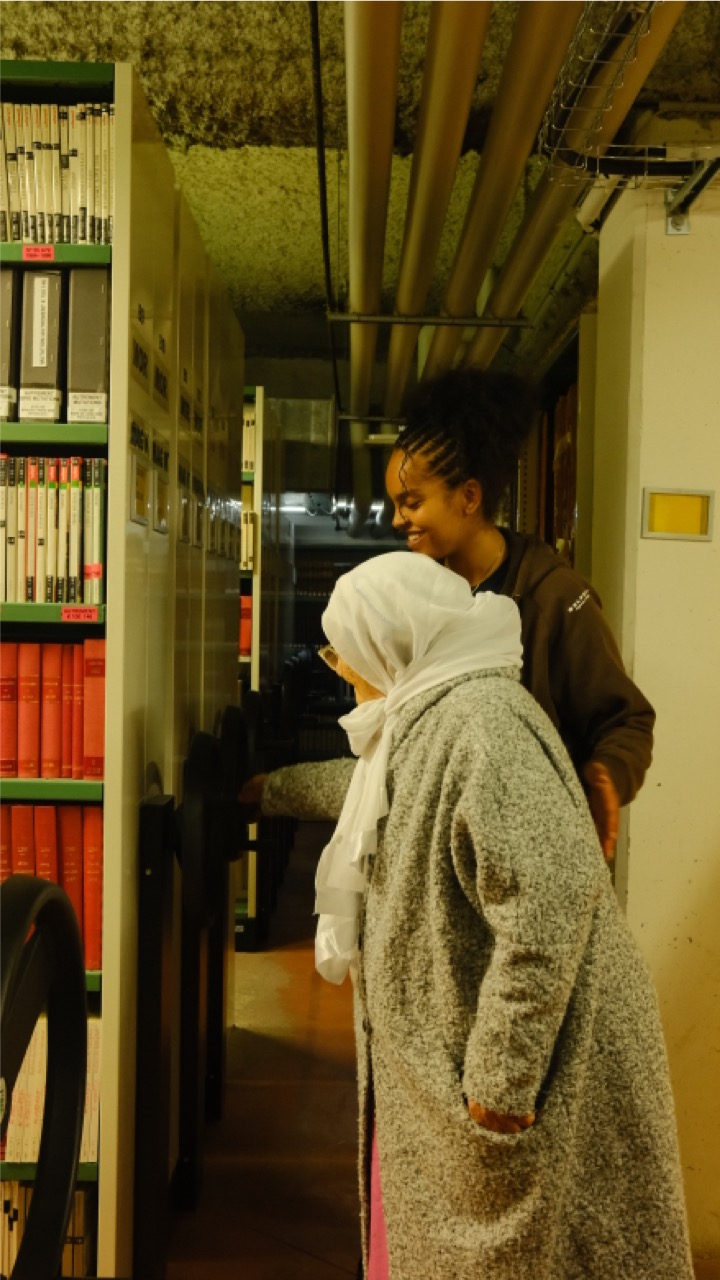
%20Large.jpeg)
5. Is there a place in your family that you’re not sure you’re allowed to claim? Why?
Jonathan Labirin, Guadeloupe
Je pense que tout ce qui est lieu physique je me sens moins légitime de revendiquer, parce que ya trop de frères et sœurs côté papa et ils ne sont pas unanimes. Du coup pour l’instant je préfère éviter.
I think when it comes to physical places, I feel less legitimate claiming them, because there are so many brothers and sisters on my father’s side, and they’re not united. So for now, I’d rather stay away from it.
Karl Obakeng Ndebele, South Africa/Zimbabwe
The father who raised me, his family has that house on the hill that I’ve always thought I would, you know, live on one day. But since I’m not a child of that family… My gran loves me like her own grandchild as well. She invites me, she wants me to come see her, and I really do want to go see her. It’s just really far. It’s something that I really do want to go do.
That part, as an illegitimate child, it’s like, you know, that layer of you that you do not have the right to.
I never knew I wasn’t my father’s child until I was told, because they never made me feel that way. At all. Nobody did. So it’s something very interesting because this home has been passed down tribally, by tribal law, and within tribal law, I am not allowed to it. It’s complicated.
It’s the same as Ikemefuna in Things Fall Apart (1958), by Chinua Achebe, Okonkwo’s adopted son. Once Okonkwo’s son became a missionary and a Christian, the son he had adopted became the son he always wanted. He was able to do the field work. He enjoyed doing the field work. He enjoyed all of it. But then one day, Okonkwo had to banish him from the compound because tribal law said that he could not father this child. This child needed to go and find out where his home was, who his people were. And Okonkwo understood that his story needed to be completed by his own people. When that moment came, yes, Okonkwo was heartbroken on that long journey they walked together, when he finally had to say, “You keep going. I’m turning around now.”
And that boy was heartbroken too, to be put in that situation. Because when they left the compound, the boy had no idea where they were going.
So I’m that child. I had to go and find my father and see what is rightfully inherited by me.
In terms of what is his, more specifically, what belongs to his family, I cannot inherit. I cannot inherit morally, tribally, and, if we can also say, legally. He did pay the bride price for my mom. And within that, there’s also a bride price for the child. But I believe he didn’t pay that one.
But he was there when I was born. He brought flowers and teddy bears for my mother when I was born. He took me as his own from birth. He looked after her during labor and in the months leading up to maternity. He was the one with her.
But I do not have his surname. I use my mother’s surname. All of us used my mother’s surname, actually, because it was easier in South Africa to have this surname than my father’s surname. But in retrospect, that wasn’t the only reason. I did not get that blessing of having his surname.
I remember when I was in Canada one day, I sent him a message: “When I come back to South Africa, I actually want to change my surname to your surname.” At that time, I did not know that I was not his son. But his response was funny to me. He just said, “Okay, my baby.” That’s what he said to me. I was expecting more. He just said, “Okay, my baby.”
And I was just like, “Okay… I guess it is done. I will change it.” It was kind of a vague response. But eventually, it made sense. He was probably also questioning, like, “Damn, this kid really thinks he is my own. And his story is incomplete now. He feels he is incomplete without my surname. But he is actually incomplete in another way that he does not know yet.”
His response was basically saying: soon you will find out.
I never got to see him when I came back. But when we ask this question of “you are not allowed,” these are the kinds of things that get tangled into it when you are that son of Okonkwo. His own son is brilliant, but chooses to use his brilliance in another way. You know what I mean?
I would always ask myself: how come I never inherited this brain that my father had? He was great at math, great at science, great at technical things. I am also technical-minded, but I’m more artistic. And then he was also great at art.
Before his death, he became a huge tribal music promoter in South Africa. He would host events at his hotel. Even when he died, he was in the newspaper in Zimbabwe, the main newspaper, page after the president, saying, “A giant has fallen.” I was like, whoa.
It also taught me to be patient with my goals. I don’t need to be a world-class musician now. There will be a day when you have enough capital to build a studio in a house, publish your own music, and put money behind the branding and marketing of it. You don’t need to go asking labels for handouts.
Because the way my father did it was he waited until he had his own venue. He didn’t have to go around booking venues for shows. He just bought his own venue and booked all the artists we listened to in the car on our way to Zimbabwe throughout my childhood. All those artists performed at that hotel.
That’s another story. I want to tell it another way, some other day. But he did that. Legends came there and played. Legends whose music you even know. If I played the songs, you’d know them. Those people sat in my house, on the couch where I sometimes fell asleep. Those legends slept there. Sat there.
Anyways, I think there we are. There is a homeland that I feel very attached to, but I cannot be more attached to it than I already am. I cannot own it. I cannot inherit it. It cannot be passed down to me. There are many other grandchildren who are legitimate members of the family. I am welcome. But not allowed to play.
That part, as an illegitimate child, it’s like, you know, that layer of you that you do not have the right to.
I never knew I wasn’t my father’s child until I was told, because they never made me feel that way. At all. Nobody did. So it’s something very interesting because this home has been passed down tribally, by tribal law, and within tribal law, I am not allowed to it. It’s complicated.
It’s the same as Ikemefuna in Things Fall Apart (1958), by Chinua Achebe, Okonkwo’s adopted son. Once Okonkwo’s son became a missionary and a Christian, the son he had adopted became the son he always wanted. He was able to do the field work. He enjoyed doing the field work. He enjoyed all of it. But then one day, Okonkwo had to banish him from the compound because tribal law said that he could not father this child. This child needed to go and find out where his home was, who his people were. And Okonkwo understood that his story needed to be completed by his own people. When that moment came, yes, Okonkwo was heartbroken on that long journey they walked together, when he finally had to say, “You keep going. I’m turning around now.”
And that boy was heartbroken too, to be put in that situation. Because when they left the compound, the boy had no idea where they were going.
So I’m that child. I had to go and find my father and see what is rightfully inherited by me.
In terms of what is his, more specifically, what belongs to his family, I cannot inherit. I cannot inherit morally, tribally, and, if we can also say, legally. He did pay the bride price for my mom. And within that, there’s also a bride price for the child. But I believe he didn’t pay that one.
But he was there when I was born. He brought flowers and teddy bears for my mother when I was born. He took me as his own from birth. He looked after her during labor and in the months leading up to maternity. He was the one with her.
But I do not have his surname. I use my mother’s surname. All of us used my mother’s surname, actually, because it was easier in South Africa to have this surname than my father’s surname. But in retrospect, that wasn’t the only reason. I did not get that blessing of having his surname.
I remember when I was in Canada one day, I sent him a message: “When I come back to South Africa, I actually want to change my surname to your surname.” At that time, I did not know that I was not his son. But his response was funny to me. He just said, “Okay, my baby.” That’s what he said to me. I was expecting more. He just said, “Okay, my baby.”
And I was just like, “Okay… I guess it is done. I will change it.” It was kind of a vague response. But eventually, it made sense. He was probably also questioning, like, “Damn, this kid really thinks he is my own. And his story is incomplete now. He feels he is incomplete without my surname. But he is actually incomplete in another way that he does not know yet.”
His response was basically saying: soon you will find out.
I never got to see him when I came back. But when we ask this question of “you are not allowed,” these are the kinds of things that get tangled into it when you are that son of Okonkwo. His own son is brilliant, but chooses to use his brilliance in another way. You know what I mean?
I would always ask myself: how come I never inherited this brain that my father had? He was great at math, great at science, great at technical things. I am also technical-minded, but I’m more artistic. And then he was also great at art.
Before his death, he became a huge tribal music promoter in South Africa. He would host events at his hotel. Even when he died, he was in the newspaper in Zimbabwe, the main newspaper, page after the president, saying, “A giant has fallen.” I was like, whoa.
It also taught me to be patient with my goals. I don’t need to be a world-class musician now. There will be a day when you have enough capital to build a studio in a house, publish your own music, and put money behind the branding and marketing of it. You don’t need to go asking labels for handouts.
Because the way my father did it was he waited until he had his own venue. He didn’t have to go around booking venues for shows. He just bought his own venue and booked all the artists we listened to in the car on our way to Zimbabwe throughout my childhood. All those artists performed at that hotel.
That’s another story. I want to tell it another way, some other day. But he did that. Legends came there and played. Legends whose music you even know. If I played the songs, you’d know them. Those people sat in my house, on the couch where I sometimes fell asleep. Those legends slept there. Sat there.
Anyways, I think there we are. There is a homeland that I feel very attached to, but I cannot be more attached to it than I already am. I cannot own it. I cannot inherit it. It cannot be passed down to me. There are many other grandchildren who are legitimate members of the family. I am welcome. But not allowed to play.
Inès-Aswan Abdirahman Mohamed Moussa, Djibouti/Algeria/France
Tous les lieux. Et en même temps, je me sens absolument légitime de les revendiquer - tous. C’est peut-être contradictoire, mais c’est exactement ça, la condition diasporique : tu doutes de ta légitimité partout, et pourtant tu sais que ces lieux sont les tiens parce qu’ils ont fabriqué ce que tu es. Saint-Étienne, Djibouti, l’Algérie. Pour moi, la revendication ne passe pas par le droit. Elle passe par la présence, par le récit, la préservation, par le fait de continuer à nommer ces lieux comme les miens.
All of them. And at the same time, I feel absolutely legitimate in claiming them, all of them. Maybe that sounds contradictory, but that is exactly what the diasporic condition feels like: you question your legitimacy everywhere, and yet you know these places belong to you because they shaped who you are. Saint-Étienne, Djibouti, Algeria. For me, claiming a place is not about legal ownership. It is about presence, about storytelling, about preservation, about continuing to name these places as mine.
Yannis Guibinga, Gabon/Canada
I don’t feel like I am not allowed to claim any place that is part of my family’s history but I do wish I knew more about some of them and particularly about my grandmother’s village Kabembu which is a place we heard a lot about growing up but that we haven’t been able to visit ourselves due to the environment and terrain to get to the village changing over the years.
Pascale Chroné, Martinique
Je me dis… je me sens légitime, mais après, c’est ma personnalité : moi, je n’ai jamais fait comme si j’étais chez moi si ce n’est pas vraiment chez moi.
Même quand, par exemple, au Vauclin, je vais chez mes taties, je ne suis pas chez moi. Je vais quand même me fondre, me faire petite, aider, faire en sorte qu’on ressente moins ma présence. Je sais que c’est délicat. Il y a une connotation très émotionnelle avec les biens. Et surtout avec les terres, là où tu as grandi, tu as des souvenirs.
Si par exemple ma mère décide de faire l’héritage avec ma sœur et de séparer les terres, je vais davantage écouter ce que ma sœur veut et m’adapter. Je vais m’adapter si elle veut absolument quelque chose. Moi, j’aimerais bien avoir le Vauclin, mais si elle veut le Vauclin, je vais soit lui demander pourquoi. Et selon tout ce qu’elle dira, si je trouve que c’est plus crédible que ce que moi je pourrais dire, alors je vais le lui laisser, et quand même l’aider.
Même quand, par exemple, au Vauclin, je vais chez mes taties, je ne suis pas chez moi. Je vais quand même me fondre, me faire petite, aider, faire en sorte qu’on ressente moins ma présence. Je sais que c’est délicat. Il y a une connotation très émotionnelle avec les biens. Et surtout avec les terres, là où tu as grandi, tu as des souvenirs.
Si par exemple ma mère décide de faire l’héritage avec ma sœur et de séparer les terres, je vais davantage écouter ce que ma sœur veut et m’adapter. Je vais m’adapter si elle veut absolument quelque chose. Moi, j’aimerais bien avoir le Vauclin, mais si elle veut le Vauclin, je vais soit lui demander pourquoi. Et selon tout ce qu’elle dira, si je trouve que c’est plus crédible que ce que moi je pourrais dire, alors je vais le lui laisser, et quand même l’aider.
I tell myself… I do feel legitimate, but then again, it’s also just who I am: I’ve never acted as though I were at home when it isn’t truly my home.
Even when, for example, I go to my aunties’ place in Vauclin, I don’t feel like I’m in my own home. I still try to blend in, make myself small, help out, make my presence felt as little as possible. I know these things are delicate. There’s such an emotional weight attached to property. And even more so to land, the place where you grew up, where all your memories are.
So if, for instance, my mother decided to divide the inheritance between my sister and me, I would probably listen more closely to what my sister wants and adapt to that. If there’s something she absolutely wants, I’ll adjust. Personally, I’d really love to have Vauclin, but if she wanted it too, I would first ask her why. And depending on everything she says, if I feel her reasons are more compelling than what I myself could say, then I would let her have it, and still support her.
Even when, for example, I go to my aunties’ place in Vauclin, I don’t feel like I’m in my own home. I still try to blend in, make myself small, help out, make my presence felt as little as possible. I know these things are delicate. There’s such an emotional weight attached to property. And even more so to land, the place where you grew up, where all your memories are.
So if, for instance, my mother decided to divide the inheritance between my sister and me, I would probably listen more closely to what my sister wants and adapt to that. If there’s something she absolutely wants, I’ll adjust. Personally, I’d really love to have Vauclin, but if she wanted it too, I would first ask her why. And depending on everything she says, if I feel her reasons are more compelling than what I myself could say, then I would let her have it, and still support her.
%20Large.jpeg)
6. If you could build, keep, or transform a family space for future generations, where and what would it be?
Karl Obakeng Ndebele, South Africa/Zimbabwe
Basically, there is the inheritance of that hotel. Before my dad died, he did say, “I want you to have this. I think you can move this thing forward further than I have.” In terms of it being a venue, I don’t know. I am just thinking of apartments at this point. I have seen a concept of apartments with a jazz lounge on the top. I could also do that one day. I really like the idea of that. I can keep his legacy going in that building that way. I think I like the lounge better than what he had. He had a concert hall. He had people jumping. He had people drunk. The music itself was this special sound from Zimbabwe called sungura. It’s a fast-paced music where they play the guitar in this rumba tone, in a very Zimbabwean way.
It is that hotel, number one. And number two is a piece of land my mother has just bought in Victoria Falls. Victoria Falls is the world’s largest waterfall, on the border of Zambia and Zimbabwe, and Tanzania as well. This river has a resort area around it with many hotels, many guest houses, because people come for this waterfall from all around the world.
My mom bought tribal land. Tribal land is very cheap, but you have to have a meeting with the chief for you to buy the house, and you have to have a tribal claim on it. My mother was accepted, and she bought it upon referral from another person who gratefully got it, and he said he wants his neighbor to be my mom.
So that’s the land that we have now, and it’s got nothing on it right now, but my mom has said, “I think you can do this thing really beautifully,” and I would love to do that one.
The last question, like the second to last question about places in your family that you’re not sure you’re allowed to claim, is my favorite. I think for the journey that it took me on, I think it’s a stimulating question. I had never thought of the Okonkwo analogy until after I read that question. It’s a question that answered things for me. I enjoyed it. Quite a, what do you call it, self-opening question.
It is that hotel, number one. And number two is a piece of land my mother has just bought in Victoria Falls. Victoria Falls is the world’s largest waterfall, on the border of Zambia and Zimbabwe, and Tanzania as well. This river has a resort area around it with many hotels, many guest houses, because people come for this waterfall from all around the world.
My mom bought tribal land. Tribal land is very cheap, but you have to have a meeting with the chief for you to buy the house, and you have to have a tribal claim on it. My mother was accepted, and she bought it upon referral from another person who gratefully got it, and he said he wants his neighbor to be my mom.
So that’s the land that we have now, and it’s got nothing on it right now, but my mom has said, “I think you can do this thing really beautifully,” and I would love to do that one.
The last question, like the second to last question about places in your family that you’re not sure you’re allowed to claim, is my favorite. I think for the journey that it took me on, I think it’s a stimulating question. I had never thought of the Okonkwo analogy until after I read that question. It’s a question that answered things for me. I enjoyed it. Quite a, what do you call it, self-opening question.
Inès-Aswan Abdirahman Mohamed Moussa, Djibouti/Algeria/France
Je choisirais de construire. Un espace large, ouvert, avec de la hauteur - je ne sais pas encore où l’ancrer, mais j’en vois les matériaux, la lumière, la fonction - quelque chose qui dure, qui accueille, qui conserve. Un lieu où ma famille pourrait se retrouver - pas seulement au sens géographique, mais au sens existentiel du mot.
Le monde d’aujourd’hui me paraît menaçant. J’aimerais qu’il existe un lieu où l’on puisse faire des réserves - mémorielles et vitales. Un endroit où conserver ce qu’il nous reste encore, retrouver les archives familiales, les noms de nos ancêtres. Mais aussi un endroit où se ressourcer, reprendre des forces, retrouver le sens de ce qu’on porte.
Je l’imagine comme un refuge. James Baldwin posait cette question : What would happen to all that beauty? - qu’adviendrait-il de toute cette beauté ? C’est cette inquiétude qui me traverse aussi. Comment préserver ce que des générations ont porté, traversé malgré la violence de l’histoire ? Que fait-on de cette mémoire, de cette dignité, de ces traces qui constituent encore notre beauté collective ?
Peut-être faut-il construire un espace capable de la préserver.
Le monde d’aujourd’hui me paraît menaçant. J’aimerais qu’il existe un lieu où l’on puisse faire des réserves - mémorielles et vitales. Un endroit où conserver ce qu’il nous reste encore, retrouver les archives familiales, les noms de nos ancêtres. Mais aussi un endroit où se ressourcer, reprendre des forces, retrouver le sens de ce qu’on porte.
Je l’imagine comme un refuge. James Baldwin posait cette question : What would happen to all that beauty? - qu’adviendrait-il de toute cette beauté ? C’est cette inquiétude qui me traverse aussi. Comment préserver ce que des générations ont porté, traversé malgré la violence de l’histoire ? Que fait-on de cette mémoire, de cette dignité, de ces traces qui constituent encore notre beauté collective ?
Peut-être faut-il construire un espace capable de la préserver.
I would choose to build. A wide, open space, with height - I don’t yet know where to anchor it, but I can already see its materials, its light, its purpose - something enduring, something that welcomes, that preserves. A place where my family could gather - not only in the geographical sense, but in the existential sense of the word.
The world today feels threatening to me. I wish there could exist a place where we might keep reserves - both vital and memorial. A place where we could safeguard what still remains to us, recover family archives, the names of our ancestors. But also a place to restore oneself, to regain strength, to reconnect with the meaning of what we carry within us.
I imagine it as a refuge. James Baldwin once asked: “What would happen to all that beauty?” That question unsettles me too. How do we preserve all that generations before us carried and endured despite the violence of history? What do we do with that memory, that dignity, those traces that still make up our collective beauty?
Perhaps what we need is to build a space capable of protecting it.
The world today feels threatening to me. I wish there could exist a place where we might keep reserves - both vital and memorial. A place where we could safeguard what still remains to us, recover family archives, the names of our ancestors. But also a place to restore oneself, to regain strength, to reconnect with the meaning of what we carry within us.
I imagine it as a refuge. James Baldwin once asked: “What would happen to all that beauty?” That question unsettles me too. How do we preserve all that generations before us carried and endured despite the violence of history? What do we do with that memory, that dignity, those traces that still make up our collective beauty?
Perhaps what we need is to build a space capable of protecting it.
Yannis Guibinga, Gabon/Canada
I would preserve my grandmother’s house in a way that makes it sustainable for the generations to come. Renovating to make it a place that is more in tune with the local environment and the local culture through the choice of particular materials would be a dream as well.
Pascale Chroné, Martinique
En vrai, j’aimerais bien construire, mais je me suis toujours demandé : est-ce que ce serait bien de construire ou de le garder juste pour un terrain agricole? Je n’ai pas encore la réponse. Je suis mitigée parce que je me dis que c’est un beau terrain.
Peut-être que ce serait plutôt planter. Peut-être construire quelque chose, un espace ou une maison qui me ressemble, quelque chose de différent. Moi, je pense tout de suite en bois ou en bambou. Mais après, je sais que ce sont des techniques qui sont rares. Ça dépend du lieu, ça dépend de la terre.
Mais j’aimerais bien une maison style bambou, assez minimaliste. Quelque chose qui se fond dans la masse. Un espace assez grand. Quand je dis grand, pas forcément une grande maison, mais un espace libre et quelque chose d’assez brut.
Je pense que j’essaierais de planter de tout, pour avoir une alimentation équilibrée.Je n’ai pas besoin de tout planter parce que je sais qu’il y aurait déjà aussi sur les terrains de mes taties, donc je me dis peut-être plus tout ce qui est légumes, si possible, et que ça pousse bien. Et puis les herbes aromatiques, médicinales. Très important.
Ce serait plus continuer à ajouter des choses. Et puis, moi, j’aimerais bien avoir des poules. J’aimerais avoir des animaux. Des poules, un lapin. C’est ce qu’il faut : animaux, fruits, légumes. Et puis une petite maison. Peut-être pas ma maison de base, mais une maison où je peux aller. Quelque chose de simple. Où je peux me recueillir. Créer.
J’aimerais vivre dans une maison. Je veux pouvoir sortir le matin dans le jardin. Faire des mouvements, des étirements, au soleil, sur l’herbe. J’ai envie de me réveiller et de voir la nature devant moi. Hauteur, terre. J’aimerais bien. Je manifeste.
Peut-être que ce serait plutôt planter. Peut-être construire quelque chose, un espace ou une maison qui me ressemble, quelque chose de différent. Moi, je pense tout de suite en bois ou en bambou. Mais après, je sais que ce sont des techniques qui sont rares. Ça dépend du lieu, ça dépend de la terre.
Mais j’aimerais bien une maison style bambou, assez minimaliste. Quelque chose qui se fond dans la masse. Un espace assez grand. Quand je dis grand, pas forcément une grande maison, mais un espace libre et quelque chose d’assez brut.
Je pense que j’essaierais de planter de tout, pour avoir une alimentation équilibrée.Je n’ai pas besoin de tout planter parce que je sais qu’il y aurait déjà aussi sur les terrains de mes taties, donc je me dis peut-être plus tout ce qui est légumes, si possible, et que ça pousse bien. Et puis les herbes aromatiques, médicinales. Très important.
Ce serait plus continuer à ajouter des choses. Et puis, moi, j’aimerais bien avoir des poules. J’aimerais avoir des animaux. Des poules, un lapin. C’est ce qu’il faut : animaux, fruits, légumes. Et puis une petite maison. Peut-être pas ma maison de base, mais une maison où je peux aller. Quelque chose de simple. Où je peux me recueillir. Créer.
J’aimerais vivre dans une maison. Je veux pouvoir sortir le matin dans le jardin. Faire des mouvements, des étirements, au soleil, sur l’herbe. J’ai envie de me réveiller et de voir la nature devant moi. Hauteur, terre. J’aimerais bien. Je manifeste.
Honestly, I’d really like to build something, but I’ve always wondered: would it be better to build, or just keep it as farmland? I still don’t have the answer. I feel torn because I think to myself that it’s such a beautiful piece of land.
Maybe it would be more about planting. Maybe building something, a space or a house that feels like me, something different. My mind immediately goes to wood or bamboo. But then again, I know those techniques are rare. It depends on the place, it depends on the land.
But I would love a bamboo-style house, something quite minimalist. Something that blends into its surroundings. A fairly large space. And when I say large, I don’t necessarily mean a big house, but rather an open space, something raw and unpolished.
I think I’d try to plant a bit of everything. I wouldn’t need to plant absolutely everything because I know there would already be things growing on my aunties’ land too, so maybe I’d focus more on vegetables, if possible, and things that grow well there. And then aromatic and medicinal herbs. Very important.
It would really be about continuing to add things. And then, I’d really like to have chickens. I’d like to have animals. Chickens, a rabbit. That’s what’s needed: animals, fruits, vegetables. And then a small house. Maybe not my main home, but a house I can go to. Something simple. A place where I can retreat. Create.
I’d like to live in a house. I want to be able to step outside into the garden in the morning. To move, to stretch, in the sunlight, on the grass. I want to wake up and see nature in front of me. Height, earth. I’d really like that. I’m manifesting it.
Maybe it would be more about planting. Maybe building something, a space or a house that feels like me, something different. My mind immediately goes to wood or bamboo. But then again, I know those techniques are rare. It depends on the place, it depends on the land.
But I would love a bamboo-style house, something quite minimalist. Something that blends into its surroundings. A fairly large space. And when I say large, I don’t necessarily mean a big house, but rather an open space, something raw and unpolished.
I think I’d try to plant a bit of everything. I wouldn’t need to plant absolutely everything because I know there would already be things growing on my aunties’ land too, so maybe I’d focus more on vegetables, if possible, and things that grow well there. And then aromatic and medicinal herbs. Very important.
It would really be about continuing to add things. And then, I’d really like to have chickens. I’d like to have animals. Chickens, a rabbit. That’s what’s needed: animals, fruits, vegetables. And then a small house. Maybe not my main home, but a house I can go to. Something simple. A place where I can retreat. Create.
I’d like to live in a house. I want to be able to step outside into the garden in the morning. To move, to stretch, in the sunlight, on the grass. I want to wake up and see nature in front of me. Height, earth. I’d really like that. I’m manifesting it.

ibiyanε is a collaborative design studio founded by Tania Doumbe Fines (b. 1994, Cameroon) and Elodie Dérond (b. 1998, Martinique). Seeded in Montreal in 2020, ibiyanε is now based in Martinique. Framing their work as “sculptural furniture,” ibiyanε’s offerings rest at the nexus of the functional and the sublime wherein they serve as “architects of beauty” (a vocation professed by Alioune Diop) and harbingers of new imaginaries. Their ideology is rooted in repair, recuperation, and respect; thus, as opposed to relating to the locally sourced wood they shape as an object they can bend to their will, they recognise that their primary material possesses its own vocality, which they seek to sculpt in chorus with.
Across six years of sustained co-dreaming, Doumbe Fines and Dérond have developed a sincere cadence of creative exchange, exemplified by the etymology of their shared name: ibiyanε is derived from the Batanga word “to know one another.” Their titular methodology revolves around the term elombe, which translates to “conversation,” which further highlights the dialogic nature of their work. For Doumbe Fines and Dérond, the definitions of ibiyanε and elombe serve as landmarks amidst their shared commitment to not only invoke but enact their name’s meaning.
ibiyanε’s work has been included in numerous exhibitions across a global array of institutions and contexts such as The Carpenters Workshop Gallery (New York, USA), Design Miami (Miami, USA), Milan Design Week (Milan, IT), and The Centre Pompidou (Paris, FR), where their work was also recently acquired. Additionally, they have collaborated with esteemed curators and critics such as Afi Venessa Appiah, Camille Bacon, and Anna Carnick and have been both praised and rigorously theorized in numerous publications including Air Afrique, Dwell, FEU Magazine, The Funambulist, and Wallpaper*, among others.
Photo: Pascale Chroné, courtesy of ibiyanε
Across six years of sustained co-dreaming, Doumbe Fines and Dérond have developed a sincere cadence of creative exchange, exemplified by the etymology of their shared name: ibiyanε is derived from the Batanga word “to know one another.” Their titular methodology revolves around the term elombe, which translates to “conversation,” which further highlights the dialogic nature of their work. For Doumbe Fines and Dérond, the definitions of ibiyanε and elombe serve as landmarks amidst their shared commitment to not only invoke but enact their name’s meaning.
ibiyanε’s work has been included in numerous exhibitions across a global array of institutions and contexts such as The Carpenters Workshop Gallery (New York, USA), Design Miami (Miami, USA), Milan Design Week (Milan, IT), and The Centre Pompidou (Paris, FR), where their work was also recently acquired. Additionally, they have collaborated with esteemed curators and critics such as Afi Venessa Appiah, Camille Bacon, and Anna Carnick and have been both praised and rigorously theorized in numerous publications including Air Afrique, Dwell, FEU Magazine, The Funambulist, and Wallpaper*, among others.
Photo: Pascale Chroné, courtesy of ibiyanε
