Mies and The Mecca: an interview with Roland Knowlden Jr.
On an unforgivingly humid day, the artist Roland Knowlden Jr. and I walked the perimeter of architect Mies van der Rohe’s S. R. Crown Hall as he regaled me with a story about a bittersweet revelation.
In 2018, Roland—then a pupil at Illinois Institute of Technology (IIT)—was studying to become an architect. He attended classes at Crown Hall, situated in the dazzling center of IIT’s campus, which is often considered a chief exemplar of the modernist tradition he extensively studied. Following a series of fateful events, Roland became one of the first to witness the disinterment of fragments from The Mecca Flats—a haven of Black social and domestic life in the early 20th century—out from the ground under Crown Hall’s foundation.
The interview below details how, as floor tiles, glass soda bottles, and marbles (a material archive of the lives The Mecca nurtured) were unearthed from beneath his feet, everything he was taught in school about the virtue of modernist philosophies and aesthetics as well as the scope of an architect’s responsibility was called into question.
*a note on form: The opening lines of Gwendolyn Brooks’s seminal poem In The Mecca (1968) read “Sit where the light corrupts your face. / Mies Van der Rohe retires from grace.” This evocation is not only an epic gesture of Black feminist shade, but expresses how Brooks’s love for her people was, in and of itself, architectural in magnitude. In an effort to place her and Roland in a historical continuum, I have syncopated his responses to my questions with quotes culled directly from Brooks’s poem. This experiment in form, which creates a palimpsest of Roland and Brooks’s voices, also seeks to serve as an additional site where the histories of Crown Hall and The Mecca concatenate.
—Camille Bacon
In 2018, Roland—then a pupil at Illinois Institute of Technology (IIT)—was studying to become an architect. He attended classes at Crown Hall, situated in the dazzling center of IIT’s campus, which is often considered a chief exemplar of the modernist tradition he extensively studied. Following a series of fateful events, Roland became one of the first to witness the disinterment of fragments from The Mecca Flats—a haven of Black social and domestic life in the early 20th century—out from the ground under Crown Hall’s foundation.
The interview below details how, as floor tiles, glass soda bottles, and marbles (a material archive of the lives The Mecca nurtured) were unearthed from beneath his feet, everything he was taught in school about the virtue of modernist philosophies and aesthetics as well as the scope of an architect’s responsibility was called into question.
*a note on form: The opening lines of Gwendolyn Brooks’s seminal poem In The Mecca (1968) read “Sit where the light corrupts your face. / Mies Van der Rohe retires from grace.” This evocation is not only an epic gesture of Black feminist shade, but expresses how Brooks’s love for her people was, in and of itself, architectural in magnitude. In an effort to place her and Roland in a historical continuum, I have syncopated his responses to my questions with quotes culled directly from Brooks’s poem. This experiment in form, which creates a palimpsest of Roland and Brooks’s voices, also seeks to serve as an additional site where the histories of Crown Hall and The Mecca concatenate.
—Camille Bacon
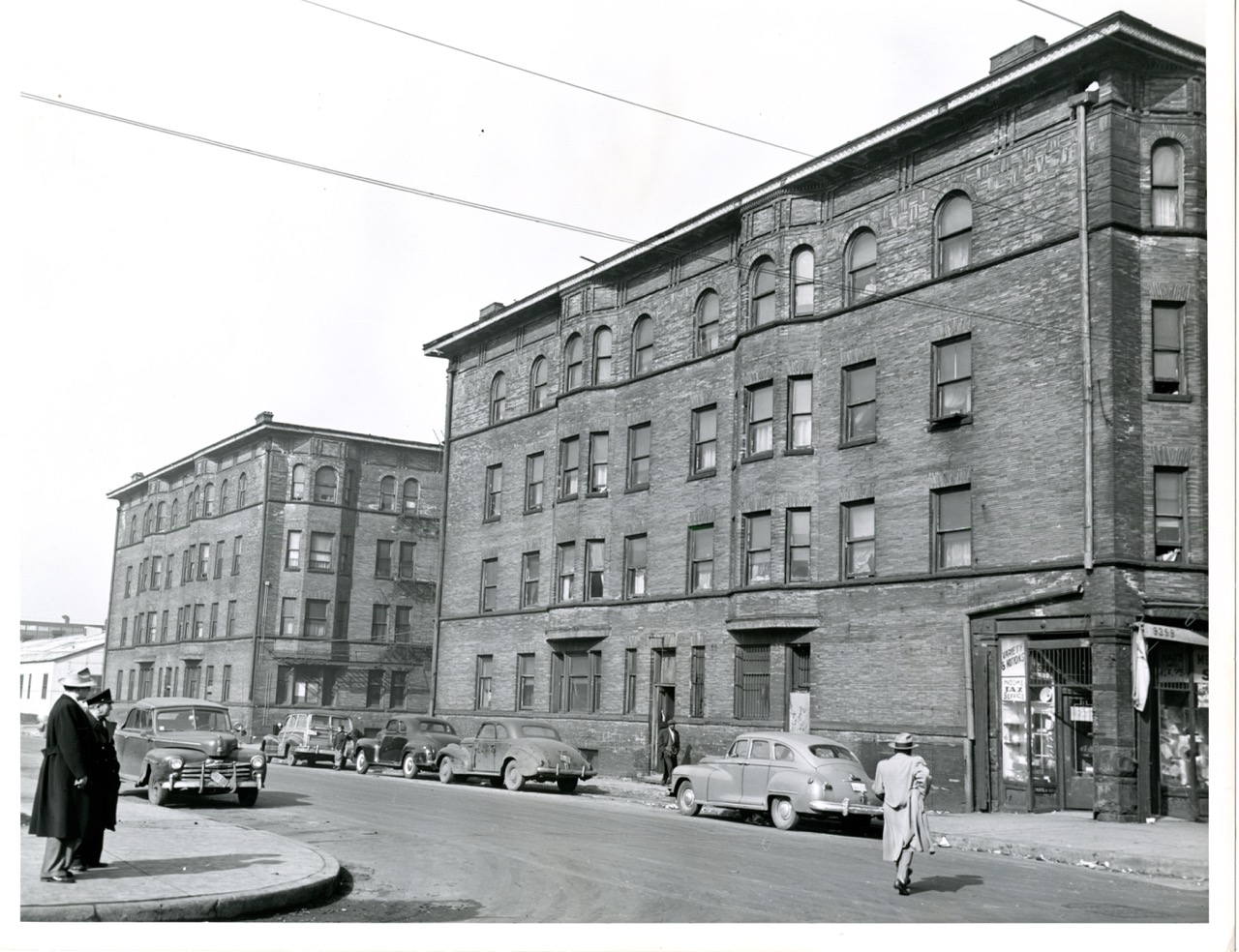
Mecca Apartments, Chicago, Ill., 1951, Robert Yuskaitis. Courtesy of University Archives and Special Collections, Paul V. Galvin Library, Illinois Institute of Technology.
“Sit where the light corrupts your face. / Mies Van der Rohe retires from grace.” (p. 5)
The Mecca Flats were built in 1892 for the World’s Columbian Exposition. It’s really a jewel architecturally in that it’s one of the first interior courtyard buildings, which is something that Chicago later came to be known for. But in another way, where it sits is what I think is most important. This jewel of a building was situated in Bronzeville on the South Side of Chicago and, more specifically, within the State Street Stroll (where 34th and State Street meet) which was one of the epicenters of Black life in the city. Binga Bank, the Regal Theater, the Chicago Defender office, and the South Side Community Art Center (SSCAC) were all in the vicinity. There were also several jazz clubs on State Street that animated the air of the neighborhood and The Mecca acted as a center for Black domestic and social life amidst all that. In that sense, the significance of Bronzeville as a center of culture is the essence and the spirit of The Mecca beyond its architecture.
Some of those sites are still there now, but so much is gone. And that’s the thing, you kind of can’t hear the music of Bronzeville anymore. I imagine Archibald Motley’s paintings that depict the Chicago of that time. You can hear the music in those compositions. All of the energy embedded in his marks is what I imagine was there.
The Mecca Flats were built in 1892 for the World’s Columbian Exposition. It’s really a jewel architecturally in that it’s one of the first interior courtyard buildings, which is something that Chicago later came to be known for. But in another way, where it sits is what I think is most important. This jewel of a building was situated in Bronzeville on the South Side of Chicago and, more specifically, within the State Street Stroll (where 34th and State Street meet) which was one of the epicenters of Black life in the city. Binga Bank, the Regal Theater, the Chicago Defender office, and the South Side Community Art Center (SSCAC) were all in the vicinity. There were also several jazz clubs on State Street that animated the air of the neighborhood and The Mecca acted as a center for Black domestic and social life amidst all that. In that sense, the significance of Bronzeville as a center of culture is the essence and the spirit of The Mecca beyond its architecture.
Some of those sites are still there now, but so much is gone. And that’s the thing, you kind of can’t hear the music of Bronzeville anymore. I imagine Archibald Motley’s paintings that depict the Chicago of that time. You can hear the music in those compositions. All of the energy embedded in his marks is what I imagine was there.
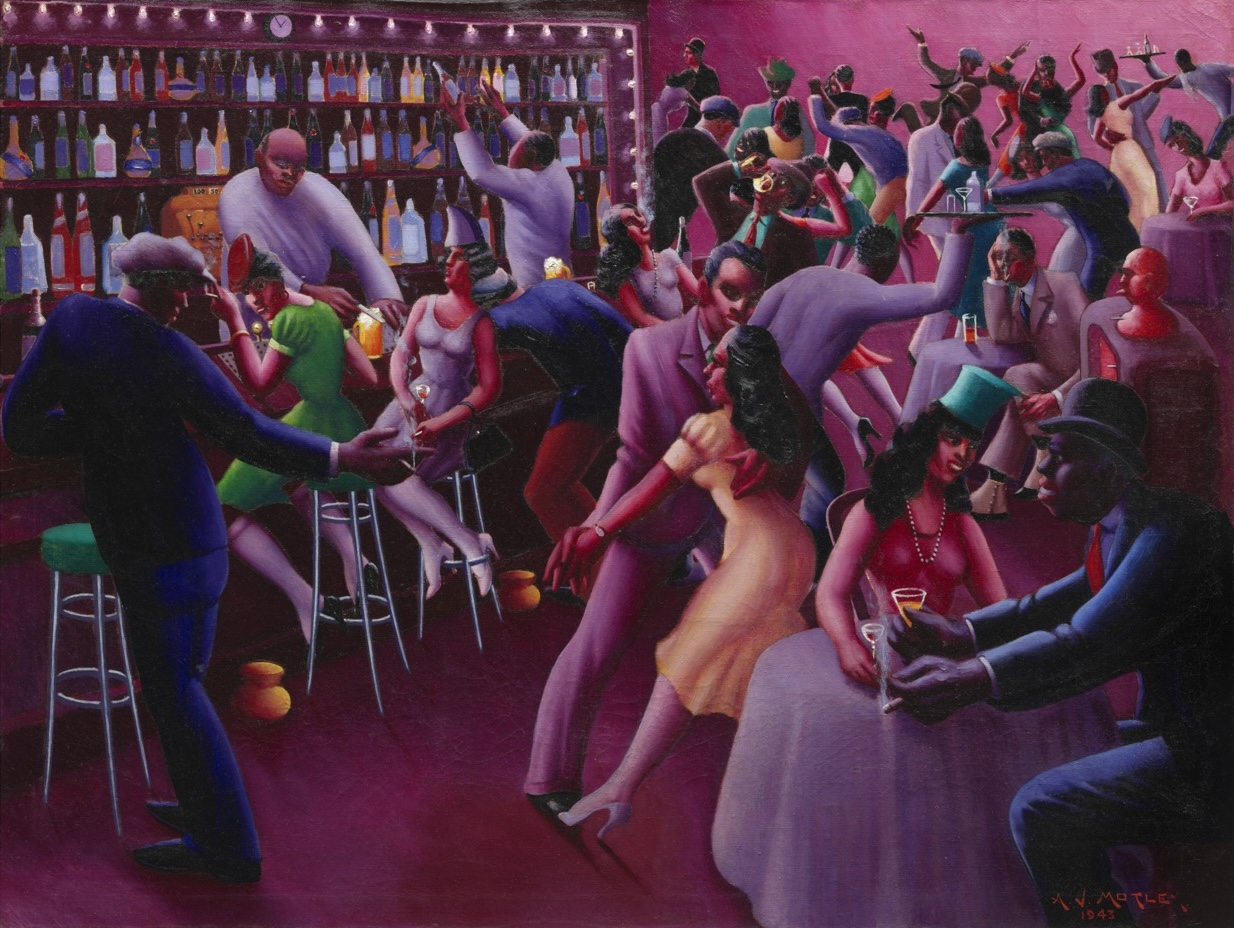
Nightlife, 1943 (oil on canvas), Motley Jr., Archibald J. (1891-1981) / The Art Institute of Chicago, IL, USA © Chicago History Museum / © Estate of Archibald John Motley Jr. All reserved rights 2026 / Bridgeman Images
“And the fair fables fall.” (p. 5)
Ah Mies… he’s one of the founders of modernist architecture in the United States. Before World War II, a lot of architects fled Europe, namely Germany, and he was one of them. Both László Moholy-Nagy and Mies van der Rohe ended up in Chicago. Mies proposed this idea of “less is more” to the field and the conception of steel and glass architecture that is so prominent today. While he served as dean of IIT’s College of Architecture between 1938–58 he tested those ideas out on campus and, while I was a student at IIT, I learned about modernist architecture inside of one of the world’s foremost emblems of it: Mies’s Crown Hall.
Ah Mies… he’s one of the founders of modernist architecture in the United States. Before World War II, a lot of architects fled Europe, namely Germany, and he was one of them. Both László Moholy-Nagy and Mies van der Rohe ended up in Chicago. Mies proposed this idea of “less is more” to the field and the conception of steel and glass architecture that is so prominent today. While he served as dean of IIT’s College of Architecture between 1938–58 he tested those ideas out on campus and, while I was a student at IIT, I learned about modernist architecture inside of one of the world’s foremost emblems of it: Mies’s Crown Hall.
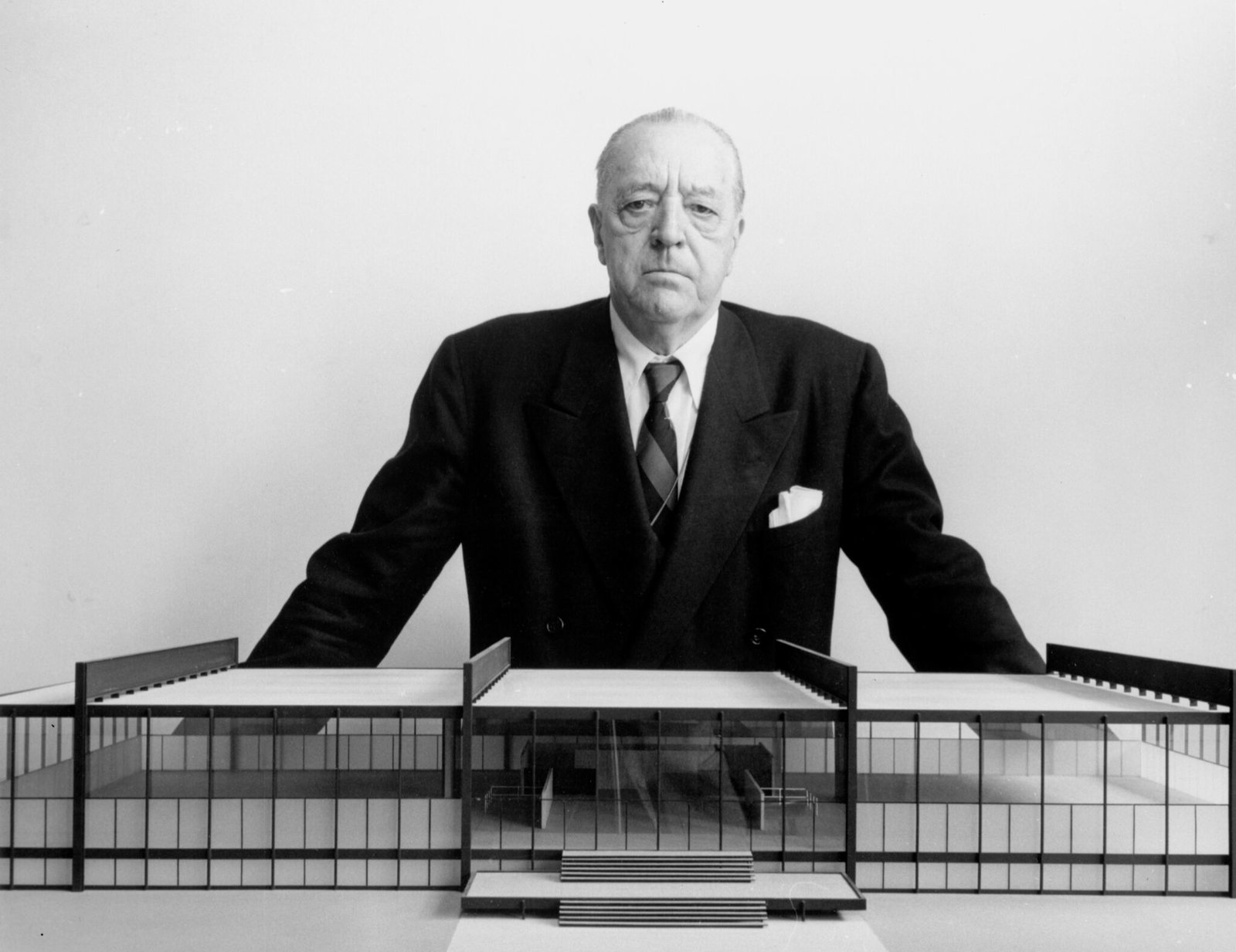
Architect Ludwig Mies van der Rohe with an architectural model of Crown Hall at the Illinois Institute of Technology, Chicago, Illinois, June 11, 1954. Photograph by Arthur Siegel. Courtesy of Chicago History Museum.
In some ways, Crown Hall as a building is undeniably gorgeous. Fit with the anatomy of a Miesian building—expansive steel and glass planes, a suspended roof, towering ceilings, an absence of interior columns—the site operates as a horizontal plane for architecture students to move across and exemplifies Mies’s attention to what makes a space adaptable and conducive to contemplation. But, part of what he brought with him was an assumption around the ostensible prestige of modernist architecture and his perception of the incompatibility between that cachet and the Black neighborhood in which he was working.
His tenure at the institution coincided with the shift of IIT’s presence in Bronzeville and their imposition onto the aura of the neighborhood became really prominent. Under his leadership, a lot of that strip on State Street—including The Mecca Flats—was bought by IIT and redeveloped under the auspices of “urban renewal.” And yet, our curriculum largely posited Mies himself and also modernism (both its conceptual underpinnings and its physical manifestations in space) as neutral actors. We were not explicitly taught information about his disregard for the kind of verve that existed in Bronzeville and the violence that the imposition of his ideas caused. That being said, I felt the residue of that tension before I came to consciously know its source.
His tenure at the institution coincided with the shift of IIT’s presence in Bronzeville and their imposition onto the aura of the neighborhood became really prominent. Under his leadership, a lot of that strip on State Street—including The Mecca Flats—was bought by IIT and redeveloped under the auspices of “urban renewal.” And yet, our curriculum largely posited Mies himself and also modernism (both its conceptual underpinnings and its physical manifestations in space) as neutral actors. We were not explicitly taught information about his disregard for the kind of verve that existed in Bronzeville and the violence that the imposition of his ideas caused. That being said, I felt the residue of that tension before I came to consciously know its source.
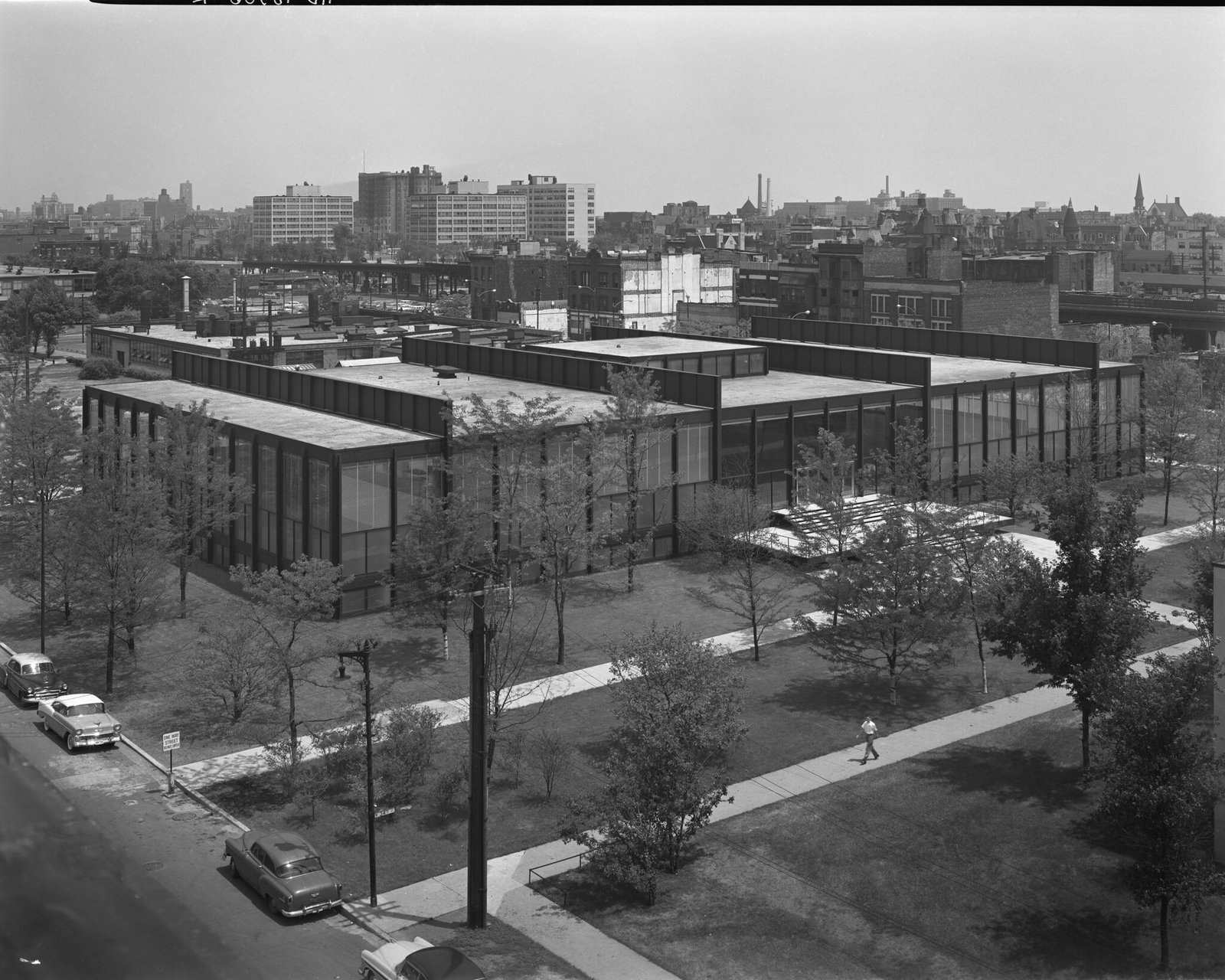
Aerial view of S. R. Crown Hall ca. 1956. Photograph by William S. Engdahl. Courtesy of Chicago History Museum, Hedrich-Blessing Collection.
When I arrived in 2017, I recognized immediately that the reality of moving in and out of campus was really jarring. One moment, you’re in Bronzeville, and then you cross onto 35th Street and have to pass a police station and a bunch of vacant lots, then you get to IIT. That’s a really harsh line to move through every day. That division of space felt very deliberately segregated and it’s something I could sense even before I knew The Mecca existed.
In class, I encountered the collages Mies made of his plan for IIT’s campus wherein he took a white square and placed it on top of State Street. I started to realize that these are actually some of the most violent drawings I’ve ever seen. They showed me one side of the true potential and power that architectural ideas can have. What could seem like an innocuous drawing, a simple piece of paper laid over another piece of paper, led to an irreversible action: demolishing several buildings—including The Mecca Flats—and, along with them, the displacement of all this culture, all this Black life. That realization really shattered my understanding of architecture as a neutral tool. Those lines become concrete. That concrete both shapes and creates material conditions.
In class, I encountered the collages Mies made of his plan for IIT’s campus wherein he took a white square and placed it on top of State Street. I started to realize that these are actually some of the most violent drawings I’ve ever seen. They showed me one side of the true potential and power that architectural ideas can have. What could seem like an innocuous drawing, a simple piece of paper laid over another piece of paper, led to an irreversible action: demolishing several buildings—including The Mecca Flats—and, along with them, the displacement of all this culture, all this Black life. That realization really shattered my understanding of architecture as a neutral tool. Those lines become concrete. That concrete both shapes and creates material conditions.
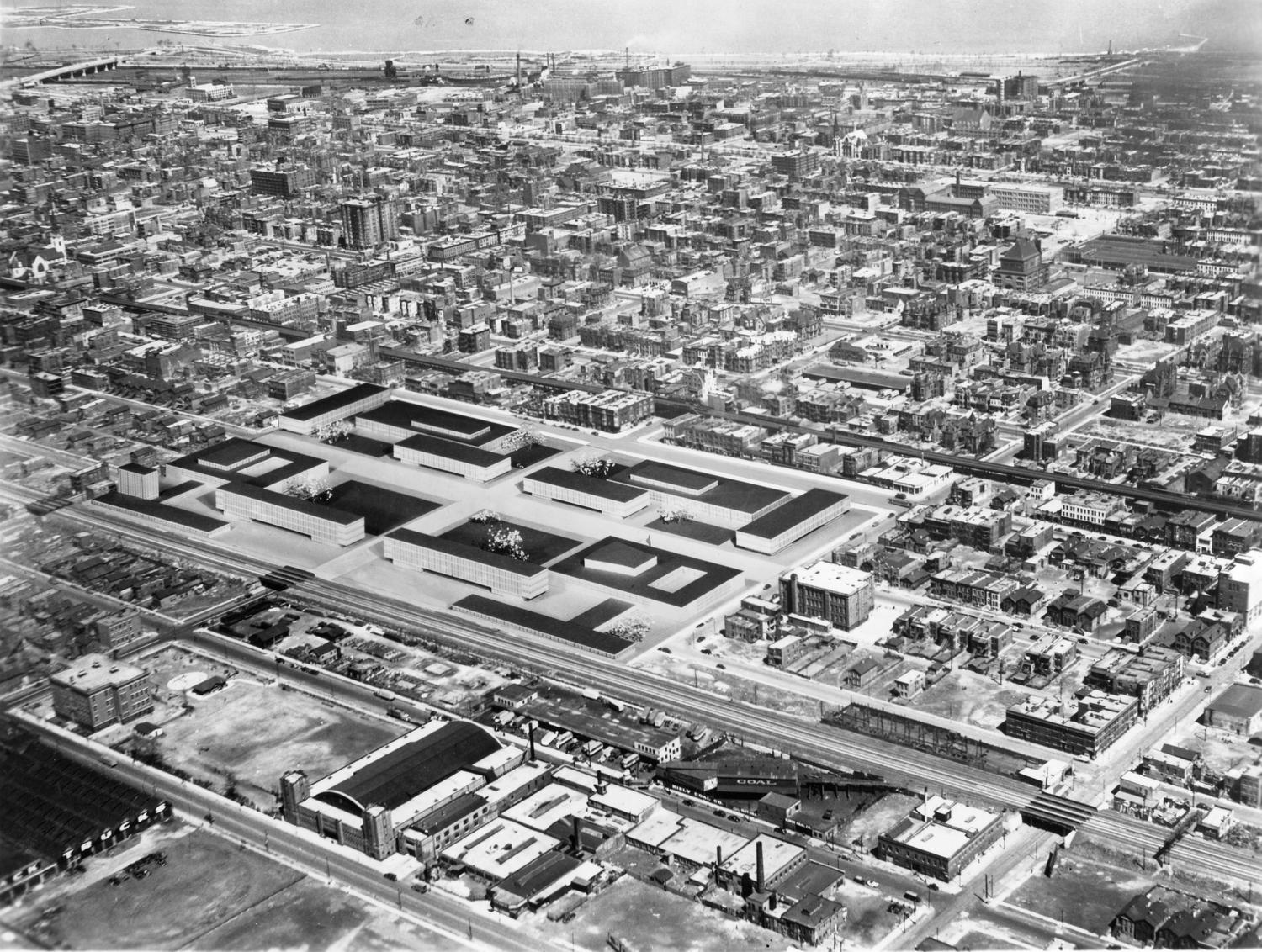
Collage by Mies van der Rohe, 1941.
“a rhythm of stillness / above the nuances.” (p. 25)
What was perhaps most profoundly reorienting for me was learning that the debris of The Mecca Flats literally became Crown Hall’s foundation, both materially and spiritually. The buildings share almost the exact same footprint. This purportedly utopian, supposedly neutral building was erected at the expense of The Mecca Flats and, by extension, at the expense of the Black domestic and social life that the apartment building embodied. With this, I began to realize that the actualization of Mies’s utopian campus was synonymous with forcing the rhythm of Bronzeville as a neighborhood, and as a spirit, underground.
What was perhaps most profoundly reorienting for me was learning that the debris of The Mecca Flats literally became Crown Hall’s foundation, both materially and spiritually. The buildings share almost the exact same footprint. This purportedly utopian, supposedly neutral building was erected at the expense of The Mecca Flats and, by extension, at the expense of the Black domestic and social life that the apartment building embodied. With this, I began to realize that the actualization of Mies’s utopian campus was synonymous with forcing the rhythm of Bronzeville as a neighborhood, and as a spirit, underground.
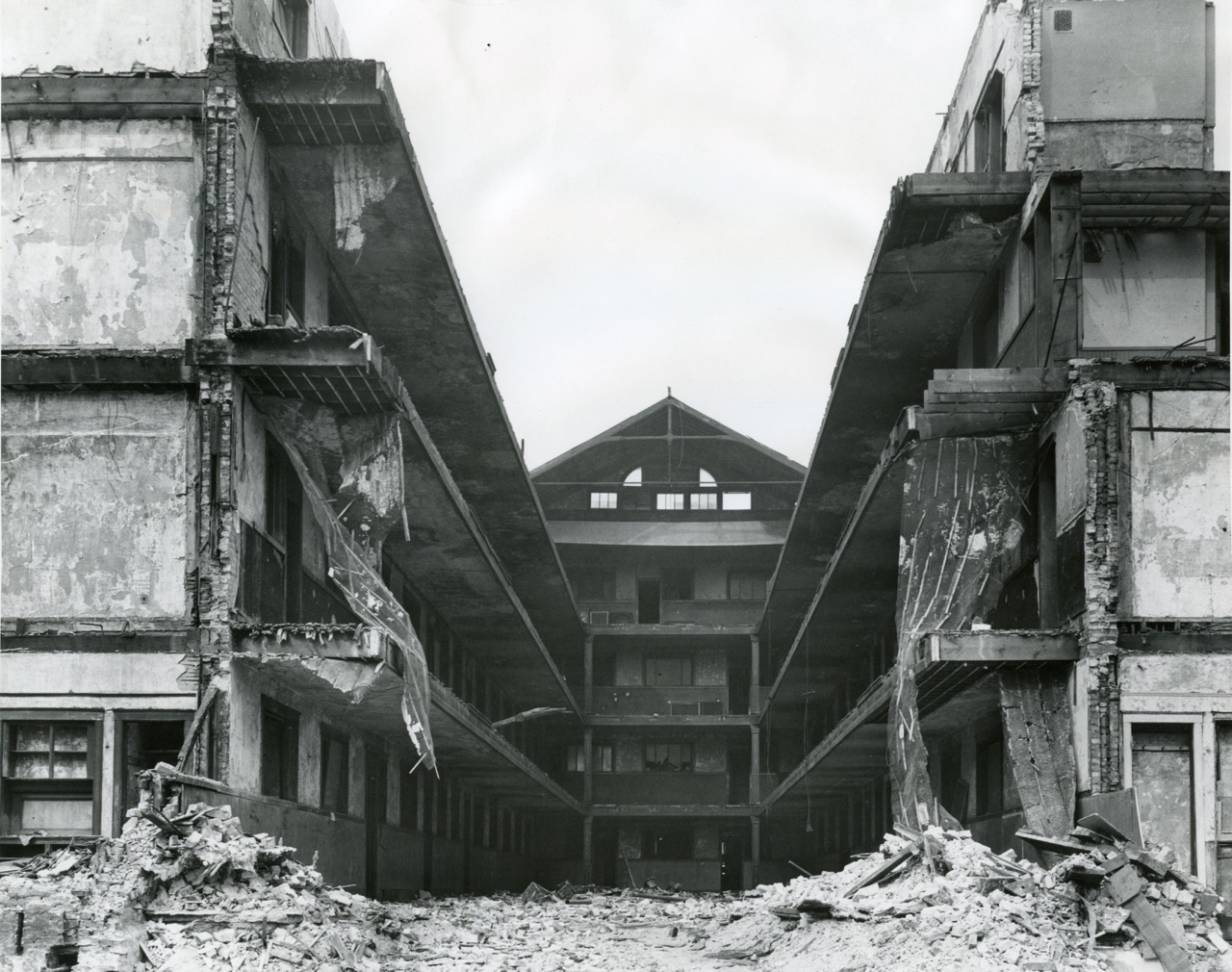
Mecca Apartments during demolition, Chicago, Ill., 1952, Charles H. Stade. Courtesy of University Archives and Special Collections, Paul V. Galvin Library, Illinois Institute of Technology.
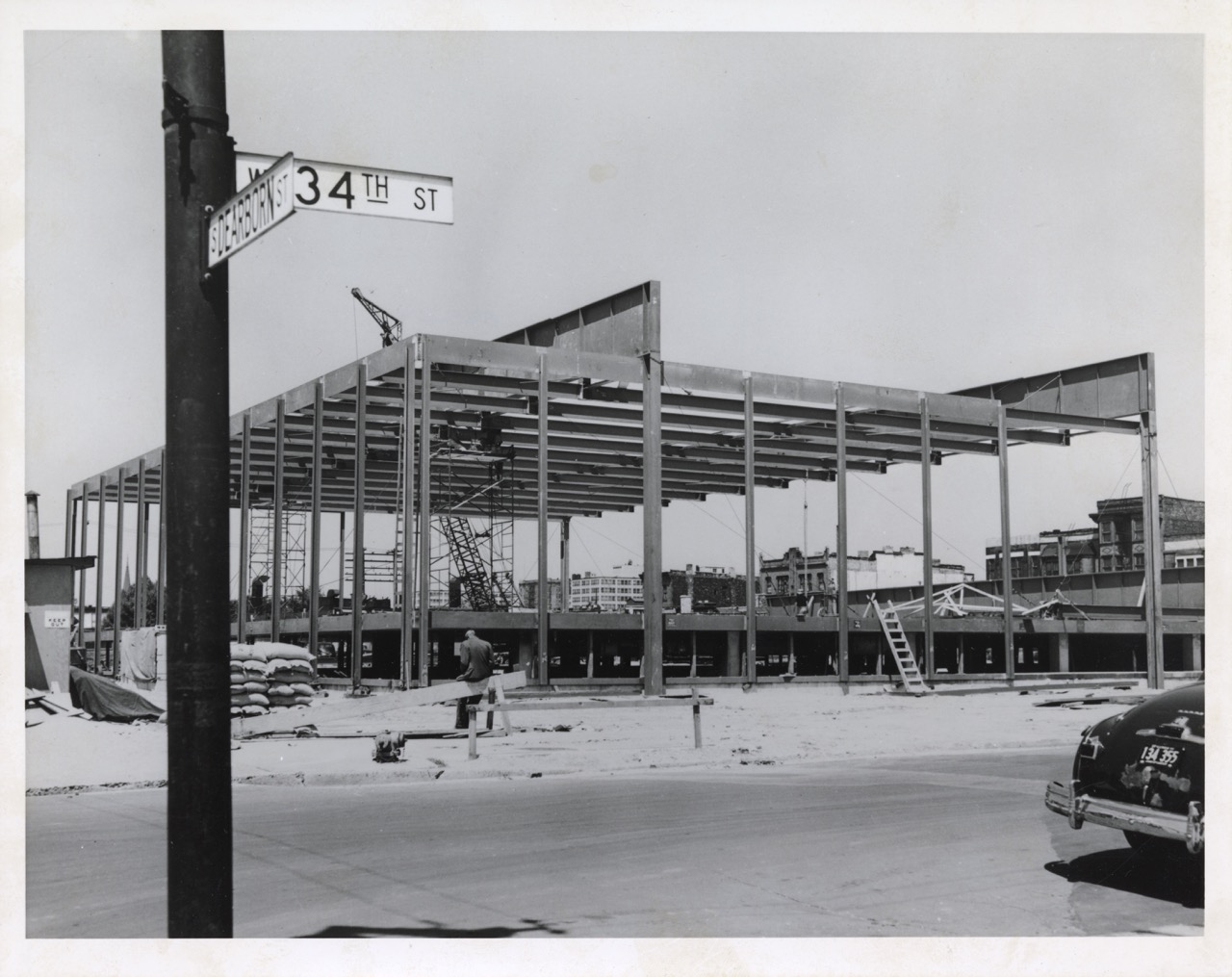
S.R. Crown Hall under construction, Illinois Institute of Technology, Chicago, Illinois, ca. 1950-56, photographer unknown. Courtesy of University Archives and Special Collections, Paul V. Galvin Library, Illinois Institute of Technology.
For Mies, modernism as an idea came inherently with erasure, again, this idea of “less is more.” But what is “less?” What (and who) is being subtracted? In this case, it was the subtraction of The Mecca Flats. In the case of Bronzeville more broadly, the advancement of modernism insisted upon the absence of Black life that existed there. At the same time, the modernist idea was to be universal, but at whose expense? I would say Mies had an antagonistic relationship with blackness as the inverse coin of those modernist ideas that we’re told in school to idealize in an architectural context, and that ways modernism was predicated on erasure is lost in the story we’re traditionally told of how the lineage advanced itself.
For example, I was at architecture school for a year before I even knew about The Mecca. The interim dean at the time, Michelangelo Sabatino, reached out to me one Saturday morning and asked me to come to campus. When I arrived, people were digging a moat of sorts in the ground around Crown Hall. When I got close to the edge and looked down into it, they were spraying water over what appeared to be a tiled floor. It was the tiles of The Mecca Flats… these blues, these oranges, these reds, these neutral tones, and the water running over them. The tiles were glimmering and shining, almost bursting out of the ground, you know? I spent the day sifting through piles of rubble, pulling out bottles, little marbles people used to play with, and these tiles… I learned all the initial seeds of what The Mecca was that day, standing in a hole in the ground.
For example, I was at architecture school for a year before I even knew about The Mecca. The interim dean at the time, Michelangelo Sabatino, reached out to me one Saturday morning and asked me to come to campus. When I arrived, people were digging a moat of sorts in the ground around Crown Hall. When I got close to the edge and looked down into it, they were spraying water over what appeared to be a tiled floor. It was the tiles of The Mecca Flats… these blues, these oranges, these reds, these neutral tones, and the water running over them. The tiles were glimmering and shining, almost bursting out of the ground, you know? I spent the day sifting through piles of rubble, pulling out bottles, little marbles people used to play with, and these tiles… I learned all the initial seeds of what The Mecca was that day, standing in a hole in the ground.
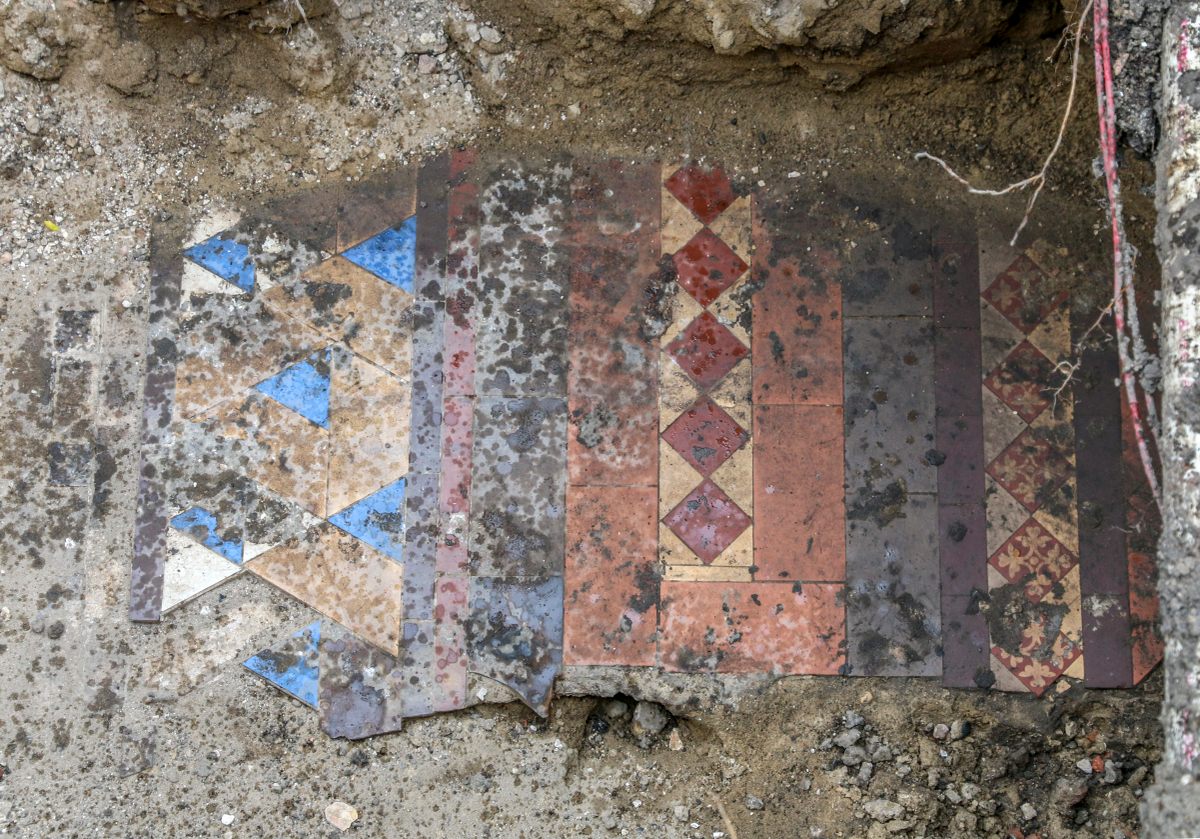
Basement tiles from the Mecca Flats uncovered during archaeological dig. Photograph by Rebecca S. Graff.
And, again, as an IIT student I was in Crown Hall almost every day. The whole time, this evidence of life, of Black life, was literally submerged beneath my feet. That, for me, completely and radically shifted my understanding of architecture and my understanding of the world, to be honest with you. It was upsetting, absolutely frustrating, and in another way, it made so much sense. It was almost comforting to know that I wasn’t crazy. I had been moving through this space, knowing, feeling that something had happened here, or that there’s some other presence, you know what I mean? Like I mentioned before, there was some kind of tension that I didn’t have language for and I didn’t have context for. It became an opportunity to really confront Mies’s legacy and to develop a standpoint that embraces contradiction, that is both celebratory and critical.
The college organized a symposium on The Mecca after those artifacts were uncovered. The reason they were found is because mechanical work was being done on Crown Hall, which necessitated the digging of the moat. IIT could have just closed the hole and acted like it didn’t exist but Sabatino really pushed for this to be explored further. A bunch of historians spoke at the symposium and it was very tumultuous. Some people felt that the demolition of The Mecca Flats was a necessity in order to advance a certain vision of “progress” and were really intolerant to the prospect of Mies’s legacy being tarnished or de-pedestalized. When it comes to complicating perceptions of his contributions to the field, it’s been really instructive to think alongside Gwendolyn Brooks’s poem In The Mecca.
The college organized a symposium on The Mecca after those artifacts were uncovered. The reason they were found is because mechanical work was being done on Crown Hall, which necessitated the digging of the moat. IIT could have just closed the hole and acted like it didn’t exist but Sabatino really pushed for this to be explored further. A bunch of historians spoke at the symposium and it was very tumultuous. Some people felt that the demolition of The Mecca Flats was a necessity in order to advance a certain vision of “progress” and were really intolerant to the prospect of Mies’s legacy being tarnished or de-pedestalized. When it comes to complicating perceptions of his contributions to the field, it’s been really instructive to think alongside Gwendolyn Brooks’s poem In The Mecca.
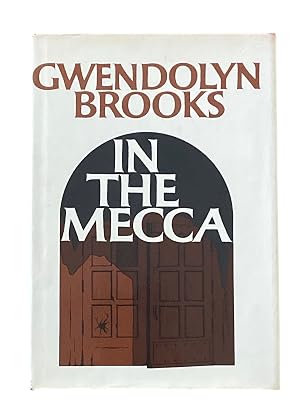
In The Mecca by Gwendolyn Brooks (first edition). Courtesy of the Jupiter Magazine Library.
“Life sits or blazes in this Mecca.” (p. 18)
I found out about her poem a little while after encountering the remnants of The Mecca. The fact that it was Gwendolyn Brooks, in particular, who wrote this is significant. In addition to being one of the world’s greatest poets, she is very Chicago; she lived in Bronzeville, deeply understood its energy, and wrote about it for much of her career.
The first line referencing Mies, his “retire[ment] from grace,” is a jab at the kind of erasure he propagated. After IIT bought The Mecca Flats in 1941, they starved it out by putting it through this decade-long process of letting the building become dilapidated; some of the residents left, some were slowly kicked out, and others fought the slow erosion of their home. The only images I’ve found of the interior were rendered in stark black and white and published in 1951 alongside an article that called the building a “fabulous slum.” It described the remaining residents and their living conditions through a lens that pathologized them and, in turn, justified the demolition of the building. That’s kind of all I had until I found Brooks’s poem, which was published in 1968.
The story of The Mecca Flats and Crown Hall could be framed as a story of building versus building. A project like Brooks’s poem allows us to think about this story as not only a confrontation between two buildings, but as a confrontation between these two masterpieces, being Brooks’s In The Mecca and Mies’s Crown Hall. For me, In The Mecca outweighs Crown Hall 1000 times. She used language to defeat this building. That, for me, is the story. In The Mecca reanimates, commemorates, and mourns the loss of the building not only as a physical structure but, again, as a hotbed of Black life. It focuses on the inhabitants and describes their concerns, their quirks, their routines, their relationships with one another, and grounds the reader in an imperative to imagine the interior lives of the residents.
I found out about her poem a little while after encountering the remnants of The Mecca. The fact that it was Gwendolyn Brooks, in particular, who wrote this is significant. In addition to being one of the world’s greatest poets, she is very Chicago; she lived in Bronzeville, deeply understood its energy, and wrote about it for much of her career.
The first line referencing Mies, his “retire[ment] from grace,” is a jab at the kind of erasure he propagated. After IIT bought The Mecca Flats in 1941, they starved it out by putting it through this decade-long process of letting the building become dilapidated; some of the residents left, some were slowly kicked out, and others fought the slow erosion of their home. The only images I’ve found of the interior were rendered in stark black and white and published in 1951 alongside an article that called the building a “fabulous slum.” It described the remaining residents and their living conditions through a lens that pathologized them and, in turn, justified the demolition of the building. That’s kind of all I had until I found Brooks’s poem, which was published in 1968.
The story of The Mecca Flats and Crown Hall could be framed as a story of building versus building. A project like Brooks’s poem allows us to think about this story as not only a confrontation between two buildings, but as a confrontation between these two masterpieces, being Brooks’s In The Mecca and Mies’s Crown Hall. For me, In The Mecca outweighs Crown Hall 1000 times. She used language to defeat this building. That, for me, is the story. In The Mecca reanimates, commemorates, and mourns the loss of the building not only as a physical structure but, again, as a hotbed of Black life. It focuses on the inhabitants and describes their concerns, their quirks, their routines, their relationships with one another, and grounds the reader in an imperative to imagine the interior lives of the residents.

Children at railing on the Interior court of The Mecca Flats. Courtesy of the Gordon Coster/The LIFE Picture Collection, 1944.
Encountering the poem did the same thing for me as encountering the tiles. It brought light. It brought color. If you’re looking closer at Mies’s gesture, you see these traces of a rooting in dominance. Brooks’s gesture, grounded in the spirit of Black feminism, is the inverse of that. I can look at those black and white photographs of The Mecca’s interior alongside the music of In The Mecca and suddenly the images slide into high-definition, into technicolor. There’s so much power in that for me.
A year after I graduated from IIT, I was included in a show curated by Lola Ayisha Ogbara alongside Andres L. Hernandez and Tonika Lewis Johnson at SSCAC called where the light corrupts your face, after the opening line of In The Mecca. The day of the opening, I walked upstairs to the room where Brooks, who spent a lot of time there, used to write and saw a fragment of the floor tiles from The Mecca resting in the light, just like I imagine Brooks might have been when she wrote the poem. Lola and LaMar R. Gayles Jr., the archivist who worked at SSCAC at the time, had placed the tiles there as an accompaniment to the exhibition. It was my first time reencountering those fragments since the day of the dig and for it to be in the exact space where Brooks potentially wrote In The Mecca (including that line that is a rebuttal of sorts to Mies) is immense to me.
A year after I graduated from IIT, I was included in a show curated by Lola Ayisha Ogbara alongside Andres L. Hernandez and Tonika Lewis Johnson at SSCAC called where the light corrupts your face, after the opening line of In The Mecca. The day of the opening, I walked upstairs to the room where Brooks, who spent a lot of time there, used to write and saw a fragment of the floor tiles from The Mecca resting in the light, just like I imagine Brooks might have been when she wrote the poem. Lola and LaMar R. Gayles Jr., the archivist who worked at SSCAC at the time, had placed the tiles there as an accompaniment to the exhibition. It was my first time reencountering those fragments since the day of the dig and for it to be in the exact space where Brooks potentially wrote In The Mecca (including that line that is a rebuttal of sorts to Mies) is immense to me.
“Now the way of the Mecca was on this wise.” (p. 4)
There’s this story someone told me (and I’ve been searching for the source of the story forever) where one of Mies’s students was saying that they listen to jazz at the clubs on State Street. Mies supposedly said, “Oh, you have to be careful with that jazz music. You have to be careful with improvisation.” I think there was a distance he established between himself and what was actually happening on the block, right outside his window. His drawings were distanced from the context they existed within. His inability to go experience was such a huge failure that robbed that whole area of so much beauty.
The formal qualities of his modernist language are almost so contrary to the formal qualities of jazz and a whole other lineage of art history and cultural production that comes out of Black life. The cadence of Gwendolyn Brooks’s writing and her oration, these words and how she spoke them do not fit within the grid of Mies’s modernist architecture. The thing about the geometry of Black expression is an acceptance of asymmetry, and things that destabilize in a generative way. Dissonance and these strategies that create jazz, for instance, don’t function well in the perfectly symmetrical rubric of a building like Crown Hall because they can’t be contained, controlled, or codified. It’s rhythmic and based around ritual, which is based around life.
The normative modernist vision is architecture just for itself. You know, building just for itself. Crown Hall wasn’t for the people of Bronzeville. It was for itself. This journey of learning about The Mecca has been like retracing steps and understanding how the simple architectural tool of drawing a line shapes people’s lives and trying to imagine space that can be of service to something and someone outside of itself.
There’s this story someone told me (and I’ve been searching for the source of the story forever) where one of Mies’s students was saying that they listen to jazz at the clubs on State Street. Mies supposedly said, “Oh, you have to be careful with that jazz music. You have to be careful with improvisation.” I think there was a distance he established between himself and what was actually happening on the block, right outside his window. His drawings were distanced from the context they existed within. His inability to go experience was such a huge failure that robbed that whole area of so much beauty.
The formal qualities of his modernist language are almost so contrary to the formal qualities of jazz and a whole other lineage of art history and cultural production that comes out of Black life. The cadence of Gwendolyn Brooks’s writing and her oration, these words and how she spoke them do not fit within the grid of Mies’s modernist architecture. The thing about the geometry of Black expression is an acceptance of asymmetry, and things that destabilize in a generative way. Dissonance and these strategies that create jazz, for instance, don’t function well in the perfectly symmetrical rubric of a building like Crown Hall because they can’t be contained, controlled, or codified. It’s rhythmic and based around ritual, which is based around life.
The normative modernist vision is architecture just for itself. You know, building just for itself. Crown Hall wasn’t for the people of Bronzeville. It was for itself. This journey of learning about The Mecca has been like retracing steps and understanding how the simple architectural tool of drawing a line shapes people’s lives and trying to imagine space that can be of service to something and someone outside of itself.
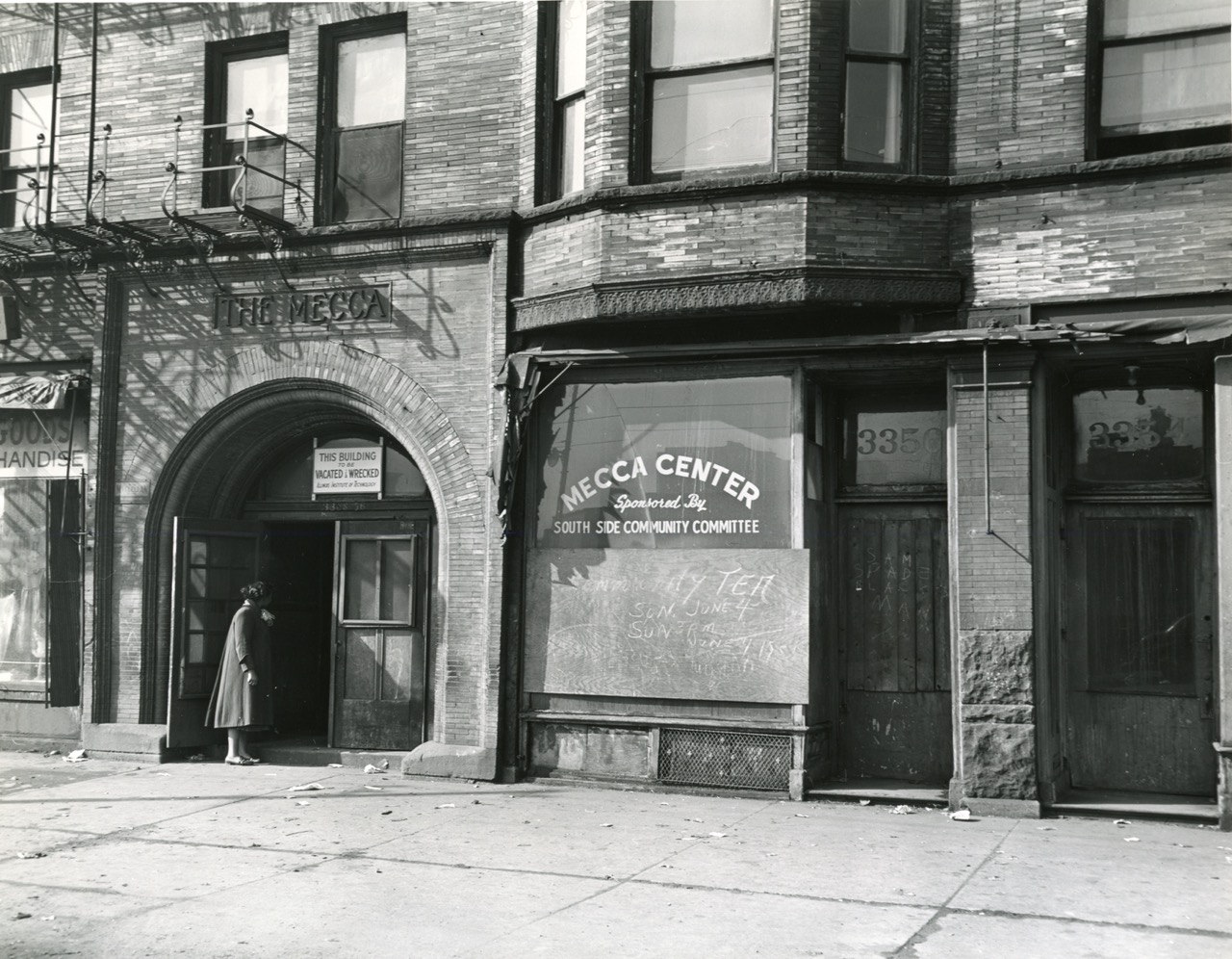
Mecca Flats, Chicago, Illinois, Robert Yuskaitis, ca. 1951. Courtesy of University Archives and Special Collections, Paul V. Galvin Library, Illinois Institute of Technology.
“something, something in Mecca / continues to call!” (p. 31)
When I was at school, my strategy was to proliferate the story. I was around a lot of people that didn’t know what was under their feet, which is such an irreconcilable thing. I wanted to raise consciousness around that. To me, Crown Hall is an architectural marvel that is only made more complicated, and thus more beautiful, by telling the story of The Mecca. Because of the work that a lot of people have been doing, the current students now, by and large, know the history. There are great projects like the Floating Museum’s inflatable replica of The Mecca, for example. But, you still have people who visit Chicago and walk through Crown Hall, appreciate this glass and steel building and leave without understanding the existence of The Mecca at all. So, for me, the long term goal that my brain cannot stop insisting upon is to, in some way, make the history of The Mecca materially and visually present at Crown Hall.
My most ideal goal has to do with my first encounter with The Mecca by way of those tiles. Mies was so obsessed with the travertine steps that lead up into Crown Hall and I want to reinsert some of the fragments of the tiles into that travertine. I think it would allow people to experience a piece of what’s actually beneath their feet. Because the tiles are so colorful and because the steps are so unwaveringly neutral, it would also create a visual interruption that would be compositionally interesting and perhaps get people to pay more attention to the context from which Crown Hall was manifested.
When I was at school, my strategy was to proliferate the story. I was around a lot of people that didn’t know what was under their feet, which is such an irreconcilable thing. I wanted to raise consciousness around that. To me, Crown Hall is an architectural marvel that is only made more complicated, and thus more beautiful, by telling the story of The Mecca. Because of the work that a lot of people have been doing, the current students now, by and large, know the history. There are great projects like the Floating Museum’s inflatable replica of The Mecca, for example. But, you still have people who visit Chicago and walk through Crown Hall, appreciate this glass and steel building and leave without understanding the existence of The Mecca at all. So, for me, the long term goal that my brain cannot stop insisting upon is to, in some way, make the history of The Mecca materially and visually present at Crown Hall.
My most ideal goal has to do with my first encounter with The Mecca by way of those tiles. Mies was so obsessed with the travertine steps that lead up into Crown Hall and I want to reinsert some of the fragments of the tiles into that travertine. I think it would allow people to experience a piece of what’s actually beneath their feet. Because the tiles are so colorful and because the steps are so unwaveringly neutral, it would also create a visual interruption that would be compositionally interesting and perhaps get people to pay more attention to the context from which Crown Hall was manifested.
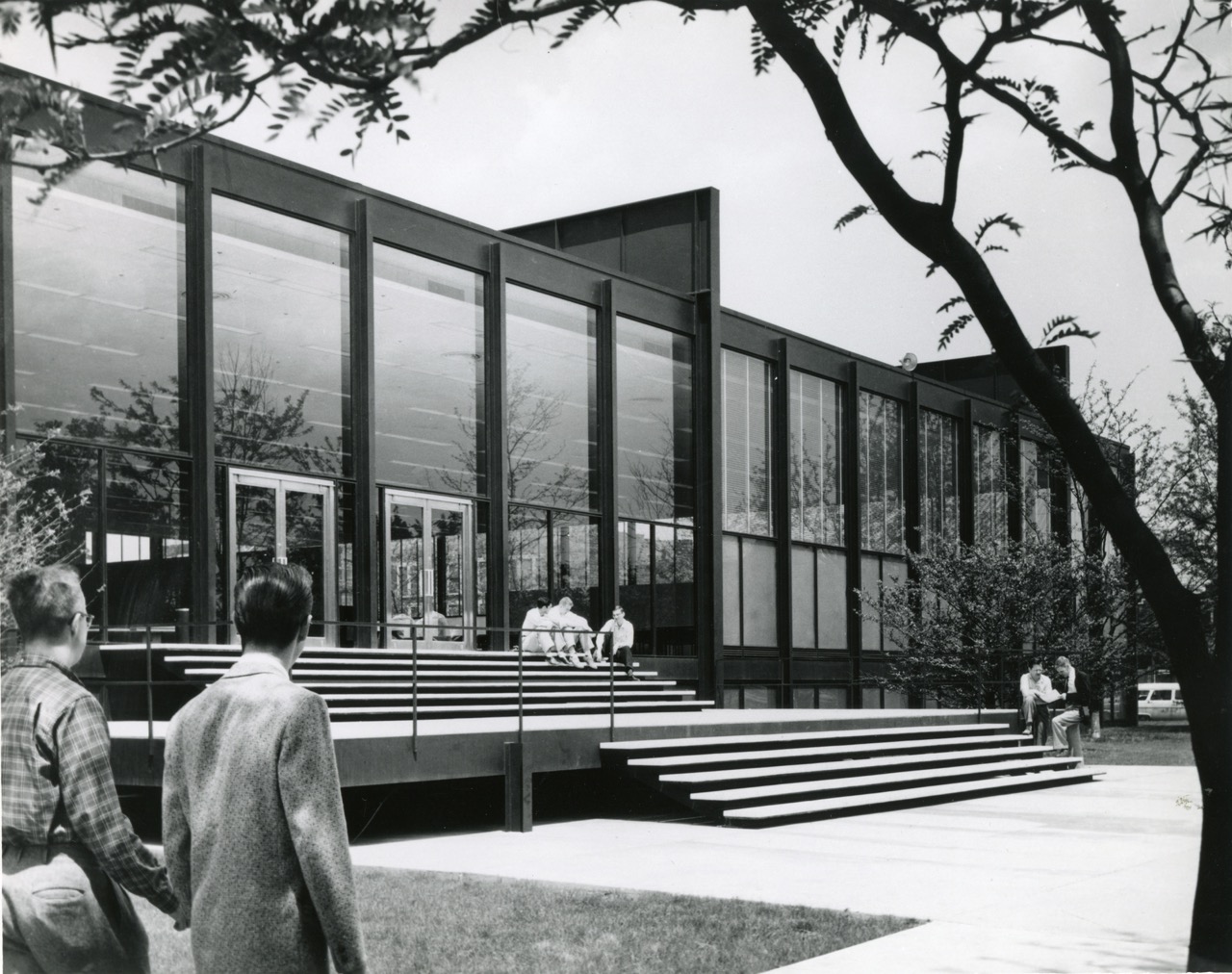
S. R. Crown Hall, Illinois Institute of Technology, Chicago, Ill., ca. 1960s-1970s, photographer unknown. Courtesy of University Archives and Special Collections, Paul V. Galvin Library, Illinois Institute of Technology.
We must imagine otherwise and hold faith in futurity. Like we were talking about earlier, Gwendolyn Brooks wrote In The Mecca in 1968 and here we are obsessing about it, you know? There’s so much hope in that. I think it’s that process of imagining otherwise that leaves space to think about 50 years from now. There’s so much energy still buried beneath the building and it’s still blazing nonetheless. It’s important to bring some of that up above ground. That’s the process. What happened happened but we need to push from here. It’s invigorating to see these conversations happening.
This interview was generously supported by De Gray.

Knowlden (b.1995, New Jersey) is a Liberian-American artist and architectural designer currently based in London. Exploring a material poetics—his practice engages the unknown, the absent, and the chaotic in tension with systems of order and control. Knowlden utilizes processes of collage and assemblage across painting, drawing, film, and sculpture—destabilizing objects and materials through their convergences/divergences.
Knowlden is a 2026 MFA Fine Art candidate at Goldsmiths, University of London and received his B.Arch in 2020 from the Illinois Institute of Technology. His work has been exhibited in multiple art spaces across Chicago and London, where he was previously and is currently based, including DePaul Art Museum (Chicago), Elmhurst Art Museum (Chicago), South Side Community Arts Center (Chicago), Public Gallery (London), and House Works Presents (London), among others.
Photo: Tinatin Shaburishvili
Knowlden is a 2026 MFA Fine Art candidate at Goldsmiths, University of London and received his B.Arch in 2020 from the Illinois Institute of Technology. His work has been exhibited in multiple art spaces across Chicago and London, where he was previously and is currently based, including DePaul Art Museum (Chicago), Elmhurst Art Museum (Chicago), South Side Community Arts Center (Chicago), Public Gallery (London), and House Works Presents (London), among others.
Photo: Tinatin Shaburishvili
