Between Medical Emergencies
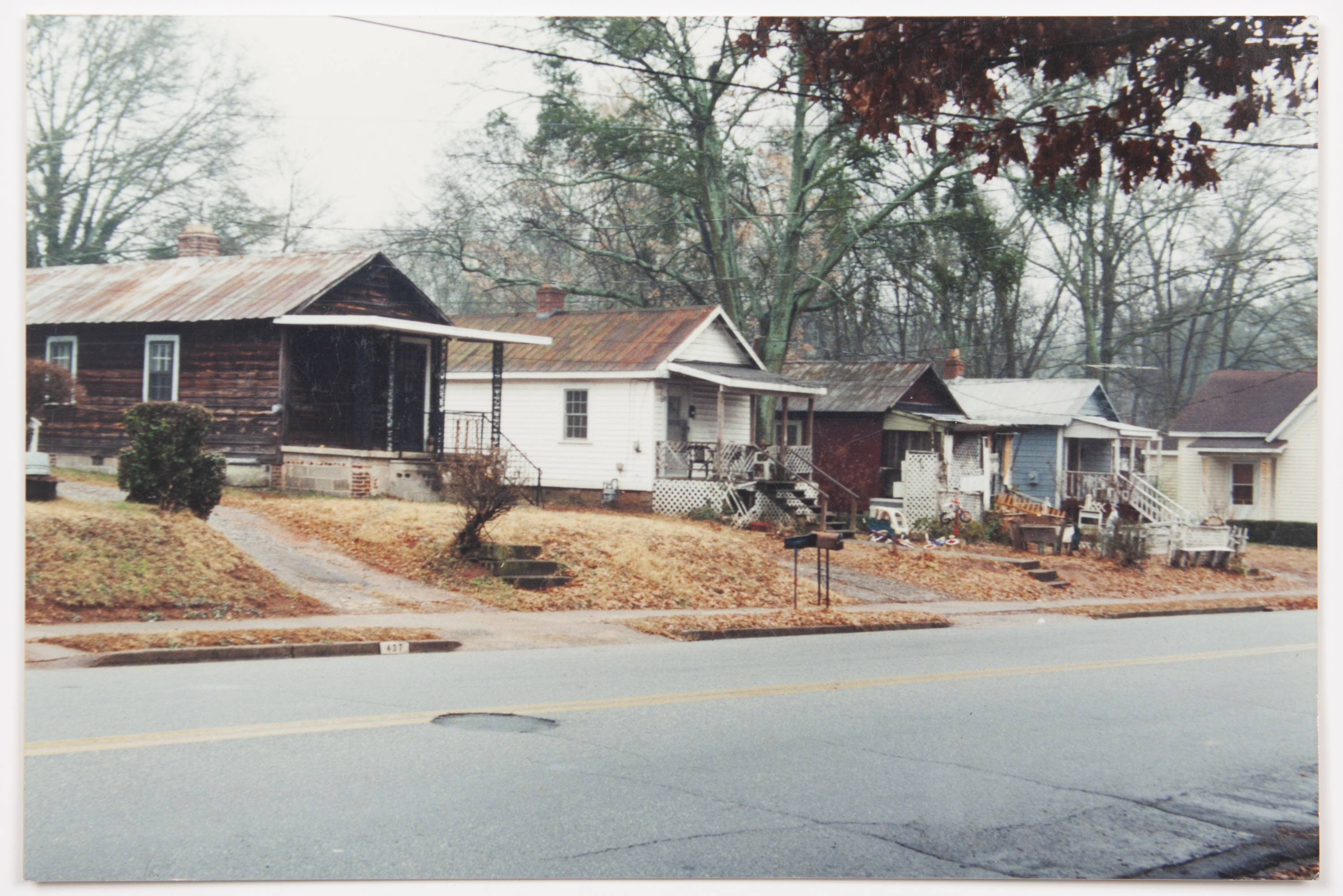
Beverly Buchanan, Untitled, Undated [circa 1990s]. Color photograph, 4 x 6 in. Courtesy of Prudence Lopp.
Beverly Buchanan’s practice deftly explored material ruination and black continuation. She navigated numerous, overlapping chronic illnesses, placing her in a sprawling lineage of sick and disabled black women artists who inform my knowing that alternative worlds can and will exist. The labor it takes to make a life as a sick black woman—piecing together whole intricate ecosystems from fragments in the face of institutional, social, and physical desertion—is, in some ways, what Buchanan made art about and studied her entire career.
A land artist, sculptor, architect, public health educator, parasitologist, painter, and self-professed “race car advocate,” Buchanan was born in Fuquay, North Carolina.1 She then lived and worked mostly in Georgia and across the american South, in addition to training as an artist in New York. Her work was preoccupied with abandoned architectures and people. Bound up in the tradition of African American survival, Buchanan’s maquette-like shack sculptures, cobbled together from found material, and her site-specific tabby compositions commemorate unflattened versions of history, carving into stone those who were discarded and their methodologies of endurance—paying particular attention to formerly enslaved peoples’ making of homes within the margins of the margins. Knowing that she was chronically ill, I want to consider how drawing a bridge between the sick body, Buchanan’s sick body in particular, and the artist’s enamorment with dwellings made from remnants and off-cuts might guide us in how we speak to histories of survival without glamorizing black (disabled) suffering.
A land artist, sculptor, architect, public health educator, parasitologist, painter, and self-professed “race car advocate,” Buchanan was born in Fuquay, North Carolina.1 She then lived and worked mostly in Georgia and across the american South, in addition to training as an artist in New York. Her work was preoccupied with abandoned architectures and people. Bound up in the tradition of African American survival, Buchanan’s maquette-like shack sculptures, cobbled together from found material, and her site-specific tabby compositions commemorate unflattened versions of history, carving into stone those who were discarded and their methodologies of endurance—paying particular attention to formerly enslaved peoples’ making of homes within the margins of the margins. Knowing that she was chronically ill, I want to consider how drawing a bridge between the sick body, Buchanan’s sick body in particular, and the artist’s enamorment with dwellings made from remnants and off-cuts might guide us in how we speak to histories of survival without glamorizing black (disabled) suffering.
The final paragraph of Buchanan’s “What’s Up?”, a first-person dispatch written by the artist in September 2001, opens with a dedication to “those of you who have no idea of what I’m doing and have been doing between medical emergencies. I use a lot of gas and travel alone.”2 Nestling her polymathic artistic and scientific work in the seams of chronic illness and an enduring need for serious medical care, the letter narrates the then-60-year-old’s rigorous method of researching and documenting black southern vernacular architecture and craft. Beyond acknowledging that readers may be more clued into her health exigencies than her artistic process—as chronic illness tends to overshadow even our finest achievements—Buchanan discusses the dangers and thrills of traveling county to county in the american South in search of saddlebag houses. She recalls her run-ins with not-so-friendly tenants and expresses her undying love for these structures more generally.3 Buchanan’s language in “What’s Up?” shines a light on how she maneuvered her earth- and memory-based practice around a body in revolt. The memo is among the abundant minor works included in the exhibition Beverly’s Athens that give way to a fuller picture of how the late artist’s work intersected with her experience being chronically ill and disabled.
Curated by Mo Costello and Katz Tepper, and previously on view at the Athenaeum at the University of Georgia through March 2026, Beverly’s Athens explores the artist’s nearly twenty-five years in Athens, Georgia, beginning in 1987. Through a curatorial lens that accentuates the relationships that sustained both Buchanan as an artist and an individual, Costello and Tepper culled drawings, notes, unseen and unfinished works, video footage, letters, and domestic objects from former caregivers, informal collectors, friends, her pulmonologist, and local Athens businesses. The show mostly sidestepped major institutional loans in favor of objects and archival ephemera that the artist circulated as gifts or bartered for medical services. This curatorial embrace of locally propagated works not only illustrates the profound, reciprocal accord between Buchanan and Athens, but also physically represents the knotted intersection of the artist’s body-mind with her artistic practice.
Curated by Mo Costello and Katz Tepper, and previously on view at the Athenaeum at the University of Georgia through March 2026, Beverly’s Athens explores the artist’s nearly twenty-five years in Athens, Georgia, beginning in 1987. Through a curatorial lens that accentuates the relationships that sustained both Buchanan as an artist and an individual, Costello and Tepper culled drawings, notes, unseen and unfinished works, video footage, letters, and domestic objects from former caregivers, informal collectors, friends, her pulmonologist, and local Athens businesses. The show mostly sidestepped major institutional loans in favor of objects and archival ephemera that the artist circulated as gifts or bartered for medical services. This curatorial embrace of locally propagated works not only illustrates the profound, reciprocal accord between Buchanan and Athens, but also physically represents the knotted intersection of the artist’s body-mind with her artistic practice.
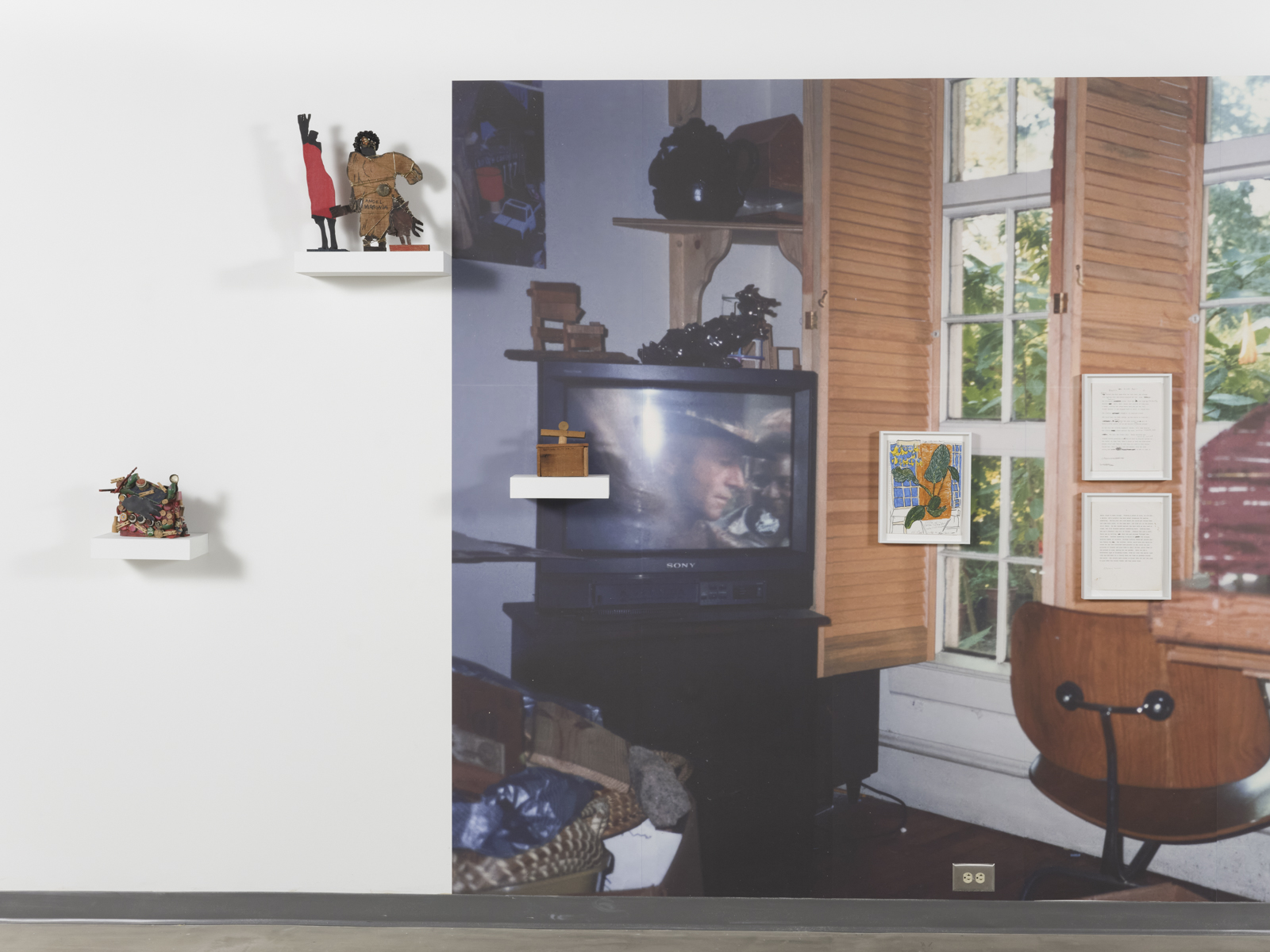
Beverly’s Athens: Beverly Buchanan in Athens, GA, The Athenaeum, University of Georgia, Athens, GA, 2026. Image courtesy of The Athenaeum, Image Credit: Walker Bankson.
During a virtual exhibition walk-through with the curators in January 2026, speaking to the physical abundance of archival ephemera, Costello and Tepper emphasized that “language fails to account for the consistency of Buchanan’s research practice.” The primary source material exhibited in Beverly’s Athens reveals that the fastidiousness with which Buchanan approached the shack or the shotgun home was mirrored in the artist’s self-documentation. A stunning example of this is an untitled, disassembled calendar from 1996, on which the artist drew herself both in and out of the hospital over the course of thirteen months. Arranged against a framed, wooden board, ten larger self-portraits drawn on the blank backsides of calendar pages are arranged horizontally in a grid with March, April, and September’s calendars facing right side up. Within the confines of the white sheets, Buchanan routinely drew herself from the shoulders up with deep brown skin, oval glasses, and an afro that expands and contracts as the months pass. Each portrait has a different energy, all signed and dated. Some include notes such as “out of hospital” or “new haircut.”
Her mark-making changes throughout the year, oscillating between detailed, purple- and brown-packed drawings where Buchanan physically fills the frame to simple line sketches that vibrate frenetically, keeping the viewer at a distance. The generic office calendar is both the perfect blank canvas for creative intervention and a diaristic document of how illness morphs time and the body. Like the countless drawings, photographs, and sculptures the artist made of homespun housing—some of which Costello and Tepper enlarged to wrap the walls of the exhibition with—Buchanan made images of herself, materially deteriorating in her own right, with a similar rote persistence.
A small untitled sculpture by Buchanan from 1990 merges the materiality of the shack with a familiar disabled architecture. Mimicking a single bed with an oversized headboard, the sculpture is about seven inches long by four inches tall, made of little, overlapping wooden rectangles and held together by glue and silver nails. The bed “frame” has an indentation where a mattress should lie. Without something soft to land on, the recessed area’s rough texture contradicts the common association of beds with leisure or rest. In conversation with the plentiful drawings of Buchanan in a hospital bed featured in Beverly’s Athens, this sculpture reflects the discomfort of being bedbound. When the luxury of being horizontal wears off, and the chronic aspect of the illness sets in, the bed no longer exemplifies pleasure. The sick bed transforms into a ruin and a place to decay away from the rest of the world.
Her mark-making changes throughout the year, oscillating between detailed, purple- and brown-packed drawings where Buchanan physically fills the frame to simple line sketches that vibrate frenetically, keeping the viewer at a distance. The generic office calendar is both the perfect blank canvas for creative intervention and a diaristic document of how illness morphs time and the body. Like the countless drawings, photographs, and sculptures the artist made of homespun housing—some of which Costello and Tepper enlarged to wrap the walls of the exhibition with—Buchanan made images of herself, materially deteriorating in her own right, with a similar rote persistence.
A small untitled sculpture by Buchanan from 1990 merges the materiality of the shack with a familiar disabled architecture. Mimicking a single bed with an oversized headboard, the sculpture is about seven inches long by four inches tall, made of little, overlapping wooden rectangles and held together by glue and silver nails. The bed “frame” has an indentation where a mattress should lie. Without something soft to land on, the recessed area’s rough texture contradicts the common association of beds with leisure or rest. In conversation with the plentiful drawings of Buchanan in a hospital bed featured in Beverly’s Athens, this sculpture reflects the discomfort of being bedbound. When the luxury of being horizontal wears off, and the chronic aspect of the illness sets in, the bed no longer exemplifies pleasure. The sick bed transforms into a ruin and a place to decay away from the rest of the world.
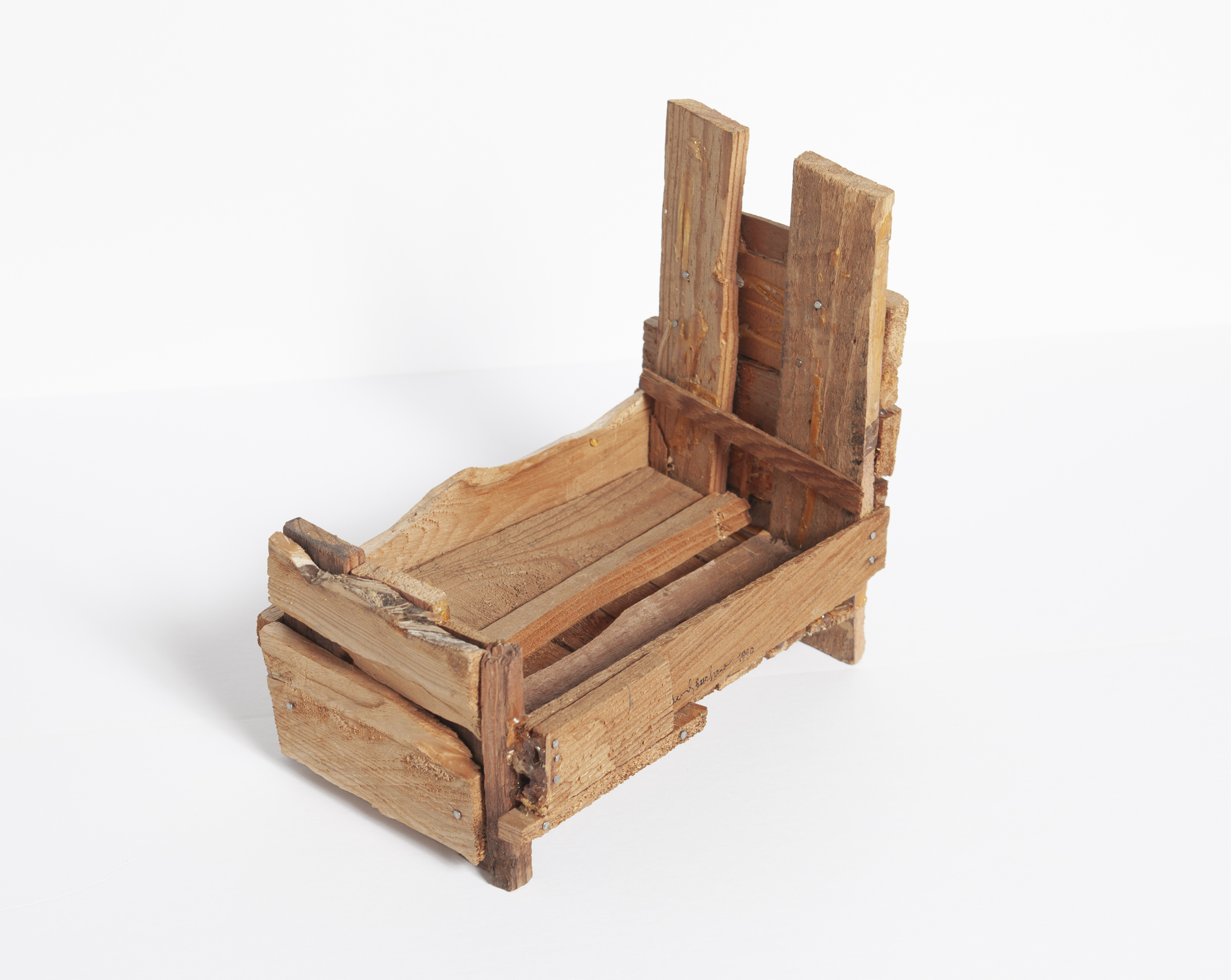
Beverly Buchanan, Untitled, 1990. Wood, nails, glue, graphite and ink, 7.25 x 4.5 x 4.25 in. Courtesy of Rob and Lisa Tuttle.
As scholar Andy Campbell writes, “Buchanan’s sculptural ruins consistently resist nostalgic reverie and romantic retrenchments into the past… They seem allergic to the kinds of affective attachments charm relies upon; neither pitiable nor picturesque, they are ugly (and not simply so), insistent, craggy.”4 Though Campbell was speaking specifically about Buchanan’s site-specific installation Unity Stones (1983), I want to extend this line of thinking to her whole body of work. The bed sculpture rejects the dangerous sentimentality—born out of white supremacy—that requires people to tell tidy and resolved stories about their own marginalization. Similar to the photographs of sun-beaten shacks on the edge of town or the cement memorials left to moss over or the artist’s uncensored musings on illness, the maquette bed, with its uneven splintering wood, is a tributary exercise for Buchanan. Collectively, these works emphasize the survival of their builders or inhabitants while actively refusing to sugarcoat the lived reality within and of these structures.
Buchanan wrote at length about how her hospital stays and, in a wider sense, her chronic illnesses, intersected with and complicated her life and artistic practice. In a 1992 letter addressed to a friend named Trinkett, while reflecting on the impact being sick had on a research project, she writes, “chronic illness doesn’t care about your agenda. It moves around and reacts to its own field plan.”5 Like much of the ephemera penned by the artist, she speaks plainly about how these setbacks depress and anger her. She describes being unable to work, underinsured, and living in poverty due to the side effects of her diabetes and chronic asthma treatments. The candor with which Buchanan detailed her ailments, allowing the brutality of our medical systems and the unwell state of her condition to be clear, replicates the artist’s insistence upon her own artworks reflecting the true material conditions of black subsistence in america. These uncensored renderings of a black woman seeking and failing to receive adequate care were curatorially contrasted with drawings and papers that reflected the artist’s dreams of alternative artistic and healthcare ecosystems. By physically situating ephemera that narrate the artist’s bleak circumstances with papers and drawings such as Buchanan’s vision for a hospital specifically for chronically ill artists, the curators successfully pushed visitors to simultaneously conceive of Buchanan as deeply marginalized and an architect of her own future.
Buchanan wrote at length about how her hospital stays and, in a wider sense, her chronic illnesses, intersected with and complicated her life and artistic practice. In a 1992 letter addressed to a friend named Trinkett, while reflecting on the impact being sick had on a research project, she writes, “chronic illness doesn’t care about your agenda. It moves around and reacts to its own field plan.”5 Like much of the ephemera penned by the artist, she speaks plainly about how these setbacks depress and anger her. She describes being unable to work, underinsured, and living in poverty due to the side effects of her diabetes and chronic asthma treatments. The candor with which Buchanan detailed her ailments, allowing the brutality of our medical systems and the unwell state of her condition to be clear, replicates the artist’s insistence upon her own artworks reflecting the true material conditions of black subsistence in america. These uncensored renderings of a black woman seeking and failing to receive adequate care were curatorially contrasted with drawings and papers that reflected the artist’s dreams of alternative artistic and healthcare ecosystems. By physically situating ephemera that narrate the artist’s bleak circumstances with papers and drawings such as Buchanan’s vision for a hospital specifically for chronically ill artists, the curators successfully pushed visitors to simultaneously conceive of Buchanan as deeply marginalized and an architect of her own future.
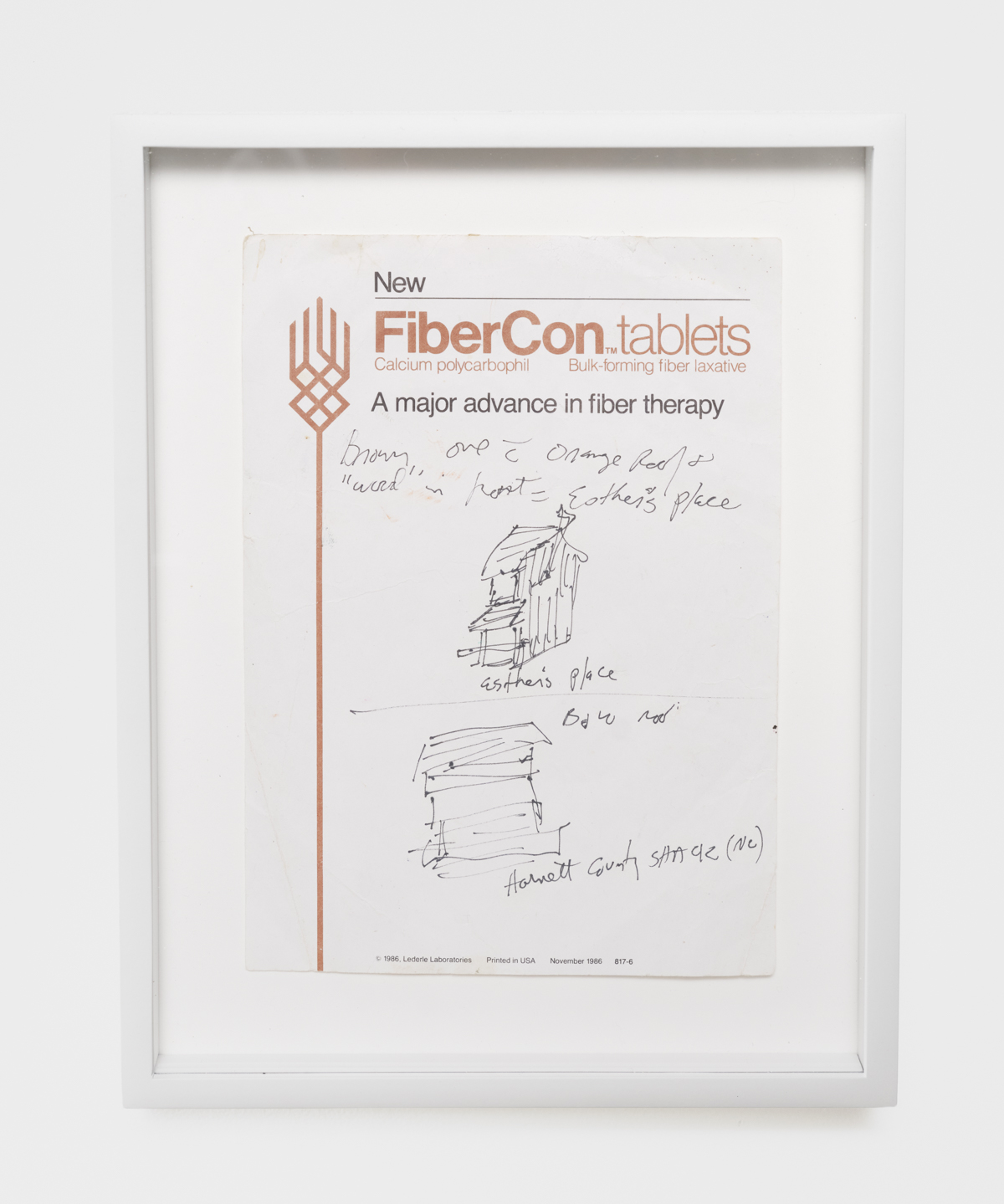
Beverly’s Athens: Beverly Buchanan in Athens, GA, The Athenaeum, University of Georgia, Athens, GA, 2026. Image courtesy of The Athenaeum, Image Credit: Walker Bankson.
If we rightfully name chattel slavery as a mass disabling event, it becomes apparent that Buchanan was reckoning with black disability—as a methodology, as a positionality, and as a form—all along. The shack, the shotgun house, the row houses, the saddlebag homes all live on the edge of total abandonment, built from resuscitated material by (disabled) black people attempting to survive “post” slavery. Beverly’s Athens brings to the fore the scaffolding between these vernacular structures and their architects, which Buchanan was passionately preoccupied with, and her conditions as a sick black woman. The physical and social circumstances of coinciding chronic illnesses that left the artist hospitalized (or bedbound or simply unable to create work in the normative, able-bodied capacity) brush against her continued material exploration of the afterlives of chattel slavery, further contextualizing the themes of survival and erosion that Buchanan reverently returned to. Her body, much like the domiciles she paid homage to through her artistic practice, was sustained through black ancestral ingenuity. Literally making something out of nothing with few other choices.
In an essay commissioned by the exhibition’s curators for the Winter 2025 issue of The Georgia Review, scholar Patricia Ekpo crucially emphasizes that the content of Beverly’s Athens exists (in part) as a result of the artist’s precarious living conditions as a black disabled woman and what she had to do to survive. On the artist exchanging artworks for life-saving resources such as medication, Ekpo writes, “This blackened lack is endlessly productive and Buchanan created richly from this place, a needful, world-making generativity that cannot be dissociated from her pained body nor from the still-growing cultural and financial value it provides those who received it.”6 As were then and even more so today, the working conditions of being a disabled artist, a southern artist, a black woman artist are truly untenable. It’s easy to make the content of this exhibition solely about “community care,” stressing a mutual aid angle that magnifies how her doctors, friends, and neighbors accepted art objects in place of payment or selectively honing in on a unilateral reliance on her support system in Athens. But such a read skips over Buchanan’s embodied struggle to survive in an attempt to render a feel-good story that overemphasizes the generosity of the people around her without accounting for what it means to trade your life’s work for adequate care. Doing so dilutes the potency of the exhibition and her archives as a whole.
Beverly’s Athens revealed to me, through its inclusion of works that illuminate Buchanan’s art as deeply disabled in praxis and focus, the extent to which the artist was consciously constructing a bridge between her lived experience as a chronically ill black southern woman and her fixation with documenting survivorship without embellishment. Disability, as it pertains to enduring capitalism’s taut clutches, is constant negotiation. Swapping this for that, bartering that for this. Give a lot, get a pinch. Beverly Buchanan’s many-sided artistic practice asks us to bear witness to this exchange, recognizing the genius modes of black survival without forgetting why we are tasked with building new worlds in the first place.
In an essay commissioned by the exhibition’s curators for the Winter 2025 issue of The Georgia Review, scholar Patricia Ekpo crucially emphasizes that the content of Beverly’s Athens exists (in part) as a result of the artist’s precarious living conditions as a black disabled woman and what she had to do to survive. On the artist exchanging artworks for life-saving resources such as medication, Ekpo writes, “This blackened lack is endlessly productive and Buchanan created richly from this place, a needful, world-making generativity that cannot be dissociated from her pained body nor from the still-growing cultural and financial value it provides those who received it.”6 As were then and even more so today, the working conditions of being a disabled artist, a southern artist, a black woman artist are truly untenable. It’s easy to make the content of this exhibition solely about “community care,” stressing a mutual aid angle that magnifies how her doctors, friends, and neighbors accepted art objects in place of payment or selectively honing in on a unilateral reliance on her support system in Athens. But such a read skips over Buchanan’s embodied struggle to survive in an attempt to render a feel-good story that overemphasizes the generosity of the people around her without accounting for what it means to trade your life’s work for adequate care. Doing so dilutes the potency of the exhibition and her archives as a whole.
Beverly’s Athens revealed to me, through its inclusion of works that illuminate Buchanan’s art as deeply disabled in praxis and focus, the extent to which the artist was consciously constructing a bridge between her lived experience as a chronically ill black southern woman and her fixation with documenting survivorship without embellishment. Disability, as it pertains to enduring capitalism’s taut clutches, is constant negotiation. Swapping this for that, bartering that for this. Give a lot, get a pinch. Beverly Buchanan’s many-sided artistic practice asks us to bear witness to this exchange, recognizing the genius modes of black survival without forgetting why we are tasked with building new worlds in the first place.
1. Beverly Buchanan had “race car advocate” listed as one of her occupations on many of her business cards that were included within Beverly’s Athens.
2. Beverly Buchanan, “What’s Up?”, September 23, 2001.
3.The saddlebag home—named for the centrally built chimney that divides the dwelling into two separate single room homes—was a fixture of rural black, american architecture in the nineteenth, into the twentieth century. Unfortunately most of these structures were destroyed through antiblack “urban renewal” programs. Buchanan became familiar with this style of home while traveling with her father, then Dean of the School of Agriculture at South Carolina State University, as he advised sharecroppers and tenant farmers. At the time of the letter, these nineteenth- and early twentieth-century dwellings were often found on the outskirts, evolving from the log cabins of enslaved people to sharecroppers’ homes and then into time- and weather-worn tenant-farmer housing.
4. Andy Campbell, “‘We’re Going To See Blood On Them Next’: Beverly Buchanan’s Georgia Ruins and Black Negativity,” Rhizomes Issue 29, 2016, https://rhizomes.net/issue29/campbell/index.html.
5. Letter to Trinkett, June 31, 1992, “Series: Correspondence,” Box 1, Folder 25: Beverly Buchanan, 1981-2003, Beverly Buchanan papers, 1912-2017, bulk 1970s-1990s, Archives of American Art, Smithsonian Institution Washington, D.C. 20560.. Accessed digitally, https://www.aaa.si.edu/collections/beverly-buchanan-papers-17599.
6. Patricia Ekpo, “A Little Shortness of Breath”: The Open Black Body as Southern Landscape, The Georgia Review, Winter 2025 Issue, https://www.thegeorgiareview.com/posts/a-little-shortness-of-breath-the-open-black-body-as-southern-landscape/.
2. Beverly Buchanan, “What’s Up?”, September 23, 2001.
3.The saddlebag home—named for the centrally built chimney that divides the dwelling into two separate single room homes—was a fixture of rural black, american architecture in the nineteenth, into the twentieth century. Unfortunately most of these structures were destroyed through antiblack “urban renewal” programs. Buchanan became familiar with this style of home while traveling with her father, then Dean of the School of Agriculture at South Carolina State University, as he advised sharecroppers and tenant farmers. At the time of the letter, these nineteenth- and early twentieth-century dwellings were often found on the outskirts, evolving from the log cabins of enslaved people to sharecroppers’ homes and then into time- and weather-worn tenant-farmer housing.
4. Andy Campbell, “‘We’re Going To See Blood On Them Next’: Beverly Buchanan’s Georgia Ruins and Black Negativity,” Rhizomes Issue 29, 2016, https://rhizomes.net/issue29/campbell/index.html.
5. Letter to Trinkett, June 31, 1992, “Series: Correspondence,” Box 1, Folder 25: Beverly Buchanan, 1981-2003, Beverly Buchanan papers, 1912-2017, bulk 1970s-1990s, Archives of American Art, Smithsonian Institution Washington, D.C. 20560.. Accessed digitally, https://www.aaa.si.edu/collections/beverly-buchanan-papers-17599.
6. Patricia Ekpo, “A Little Shortness of Breath”: The Open Black Body as Southern Landscape, The Georgia Review, Winter 2025 Issue, https://www.thegeorgiareview.com/posts/a-little-shortness-of-breath-the-open-black-body-as-southern-landscape/.
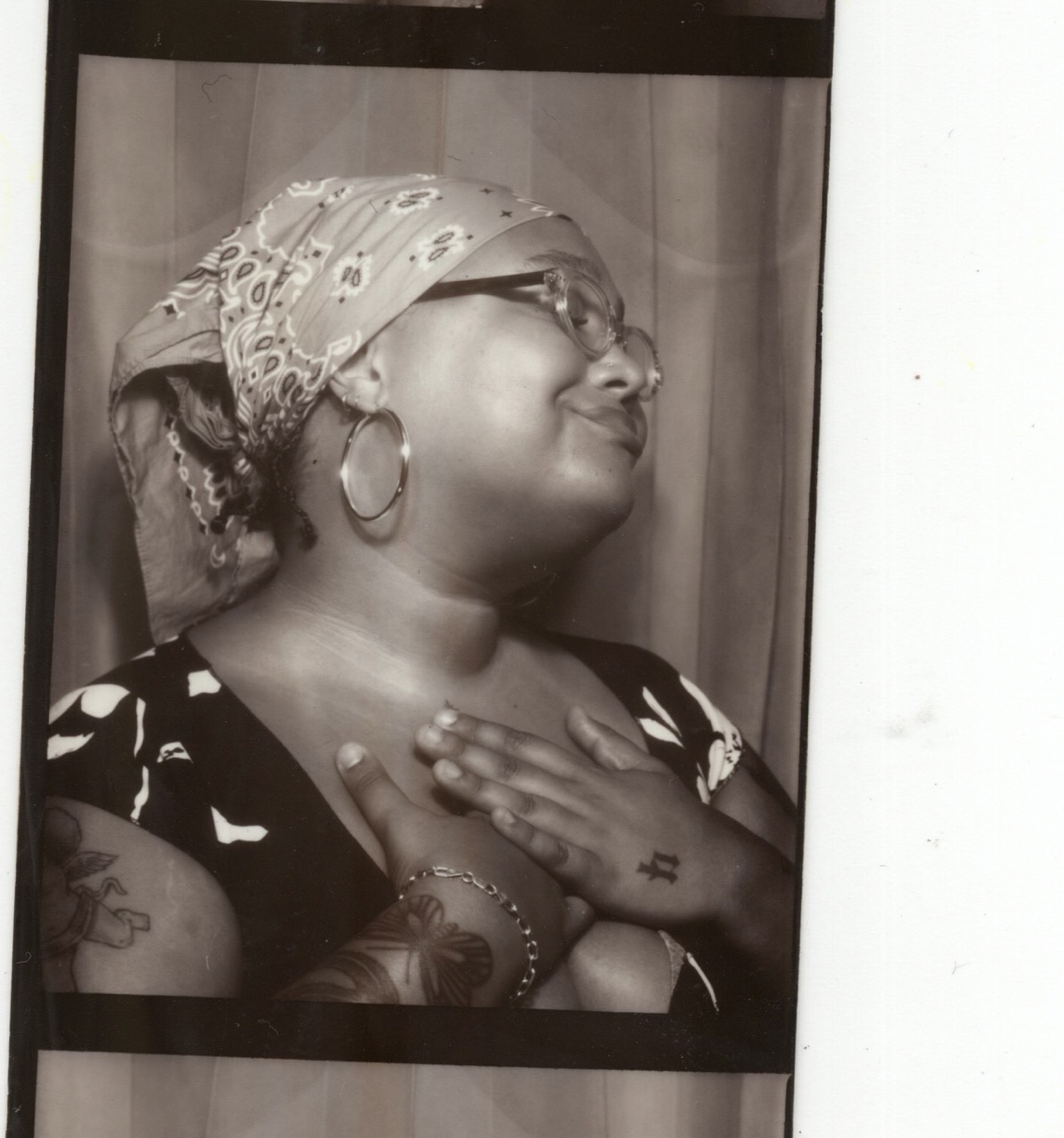
Ella Ray is a writer, editor, and full-spectrum doula based in Portland, Oregon. Through independent publishing, community librarianship, and accessible scholarship, Ray’s work carves out space for everyday people to cultivate literacy and engage in meaningful cultural criticism. This multi-passionate practice is indebted to a cosmology of black, disabled cultural workers.
In 2026, Ella Ray launched Marginalia. Using accessible educational ephemera and in-person literacy programming, Marginalia destigmatizes and prioritizes (re)learning in an era defined by dangerous anti-intellectualism. From 2023–2026, Ray was the Associate Editor of Variable West. They aided the development of an editorial program that embraced substantive and accessible arts criticism by non-traditional writers.
In 2026, Ella Ray launched Marginalia. Using accessible educational ephemera and in-person literacy programming, Marginalia destigmatizes and prioritizes (re)learning in an era defined by dangerous anti-intellectualism. From 2023–2026, Ray was the Associate Editor of Variable West. They aided the development of an editorial program that embraced substantive and accessible arts criticism by non-traditional writers.
